Lithium-Ion Battery Fires in 2026: Why E-Bike Packs and Power Banks Go Into Thermal Runaway, What UL 2849 and UL 2271 Certification Actually Prove, and How to Charge Without Burning Down the Office
- Equipo de Internet Pros
- October 6, 2026
- Business
Este artículo está disponible solo en inglés.
Lithium-ion batteries are in almost everything a modern office or home relies on: laptops, phones, power banks, wireless headsets, cordless tools, scooters and e-bikes. Almost all of them work for years without trouble. When one does fail, though, it rarely just stops working. It can vent burning gas, throw out cells like small rockets and start a fire that a standard extinguisher struggles to put out. Fire departments in large cities now count lithium-ion batteries among the leading causes of fatal fires, and almost every case follows the same pattern: thermal runaway, usually in a cheap, damaged or badly charged pack.
What Thermal Runaway Actually Is
A lithium-ion cell packs a lot of energy into a small space. A thin plastic separator, often thinner than a human hair, keeps the positive and negative electrodes apart. If that separator is breached by a manufacturing defect, a crushed casing or metal growth from overcharging, the two sides short circuit internally and the cell starts to heat up.
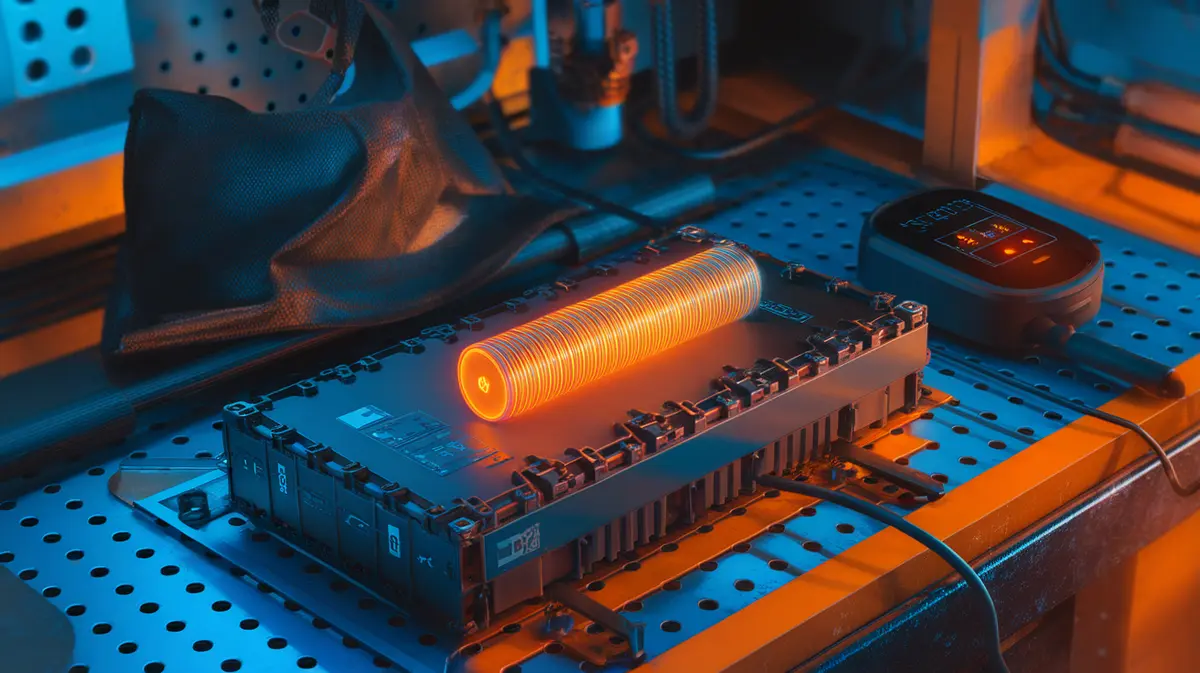
Past roughly 80 to 120°C the chemistry begins to feed itself. The protective layer on the anode breaks down, the electrolyte decomposes into flammable gases, and the separator melts, which makes the short worse. The cell is now making its own heat faster than it can lose it. Temperatures can pass 600°C within seconds, the cell vents a jet of flammable, toxic gas, and the heat sets off the cells next to it. That chain reaction from cell to cell is called propagation. It is the reason a 50-cell e-bike pack is so much more dangerous than a single phone battery.
A lithium-ion fire does not need air from the room to keep going. The cell produces its own heat and its own fuel, so the job is to cool the pack and stop the spread, not to smother the flames.
Why E-Bikes and Power Banks Dominate the Headlines
Phones and laptops from major brands are heavily engineered and tested. The riskiest batteries are the large, cheap and frequently abused ones. They include aftermarket e-bike and scooter packs, no-name power banks and replacement batteries bought online to save money. Problems tend to come from a few sources:
- Low-grade or recycled cells. Some packs are built from reclaimed or rejected cells that do not match one another, so the weakest cell gets overworked.
- A weak or missing battery management system (BMS). The BMS is the circuit that stops overcharging, over-discharging and overheating. On cheap packs it is often the first part to be cut.
- Mismatched chargers. A charger built for another voltage, or one with no automatic cut-off, can push a pack past its safe limit.
- Physical damage. Potholes, drops and water getting in can deform cells or corrode connections long before anything looks wrong from the outside.
- DIY modifications. Packs rebuilt or “upgraded” for extra range skip the testing that the original design went through.
The New York City Fire Department has reported dozens of deaths linked to e-bike and e-scooter batteries since 2021. In 2023 the city made it illegal to sell or rent e-bikes and scooters that are not certified to a recognized safety standard. Other cities, airlines and building managers have since added their own rules.
What the Certification Labels Actually Prove
A safety mark means that a sample of the product passed specific tests at an accredited lab. It is not a guarantee that every unit is safe, but it rules out the worst designs. Check the certificate holder in the lab’s public directory, because counterfeit marks are common on marketplace listings.
| Standard | Covers | What it tests |
|---|---|---|
| UL 2849 | The whole e-bike electrical system | Battery, charger and motor tested together, including overcharge, short circuit, vibration and water exposure |
| UL 2271 | Batteries for light electric vehicles | The pack itself: crush, impact, overcharge, imbalanced charging and whether one failed cell spreads fire to the rest |
| UL 2272 | Hoverboards and e-scooters | The complete personal mobility device and its charger |
| IEC 62133 / UL 62133 | Portable cells and packs (power banks, laptops) | Safety under abuse, drops, heat and external short circuits |
| UN 38.3 | Any lithium battery being shipped | Transport tests such as altitude, vibration and shock. This is a shipping requirement, not a consumer safety rating |
The detail that matters most is system versus component. A UL 2271 battery paired with an uncertified charger is still a gamble. UL 2849 tests the charger, the pack and the electronics as one system, so it is the label to look for when buying an e-bike.
Chemistry Matters Too
Not all lithium-ion cells behave the same way. Most phones, laptops and performance e-bikes use NMC or NCA cells, which store a lot of energy but give off oxygen as they break down. That makes thermal runaway more violent. LFP (lithium iron phosphate) cells store less energy by weight, but their chemistry is far more stable. They run away at higher temperatures and usually smoke rather than burst into flames. That is why LFP now dominates home batteries, many power stations and a growing share of EVs. If weight is not critical, LFP is the safer choice.
Warning Signs a Battery Is Failing
- Swelling, bulging, or a laptop trackpad or phone screen that is being pushed out of its frame
- A pack that gets noticeably hot during normal charging or use
- Hissing, popping, a sweet chemical smell or visible leaking
- Range or runtime dropping suddenly, or the charger cutting out again and again
Stop using a swollen battery immediately. Do not puncture or squeeze it. Unplug it and move it somewhere outside and away from anything that can burn, if you can do that safely, and take it to a battery drop-off point. Never put lithium batteries in household trash or curbside recycling. Crushed batteries now cause a large share of fires in garbage trucks and recycling plants.
Checklist: Battery Safety for Homes and Offices
- Buy certified. Look for UL 2849 on e-bikes, UL 2272 on scooters and a recognized mark on power banks, and check it in the lab’s directory.
- Use the matching charger. Use the charger made for the device, or an equivalent certified replacement, and never a cheap universal one.
- Charge where you can see it. Charge on a hard surface, away from exits, beds and piles of paper, and unplug once full. Do not leave large packs charging overnight or in an empty office.
- Mind the temperature. Do not charge a pack that is below freezing or hot from a ride. Let it come to room temperature first.
- Set office rules. Give e-bikes and scooters a designated charging area that is not in a stairwell, hallway or server room, and tell staff where it is.
- Store at partial charge. For long storage, keep packs around 40 to 60 percent charged in a cool, dry place.
- Recycle properly. Tape the terminals and take old batteries to an approved drop-off point.
- Plan the response. In a fire, get people out and call emergency services. Large amounts of water cool the pack, but a burning e-bike pack can reignite hours later.
En resumen
Lithium-ion batteries are safe when they are well designed, matched to the right charger and treated with some care. Most of the fires come from a predictable set of causes: uncertified packs, the wrong chargers, physical damage and charging where nobody is around. Buy certified systems, charge where someone can see the pack, retire swollen batteries straight away and give e-bikes a proper home in the office. Those steps remove most of the risk without giving up the devices your business depends on.