Office Access Badges in 2026: Why a 125 kHz Proximity Card Can Be Cloned From a Few Inches Away, What DESFire EV3, Seos and Mobile Credentials Actually Fix, and How to Upgrade Your Doors Without Replacing Every Reader
- Equipo de Internet Pros
- November 28, 2026
- Redes y Seguridad
Este artículo está disponible solo en inglés.
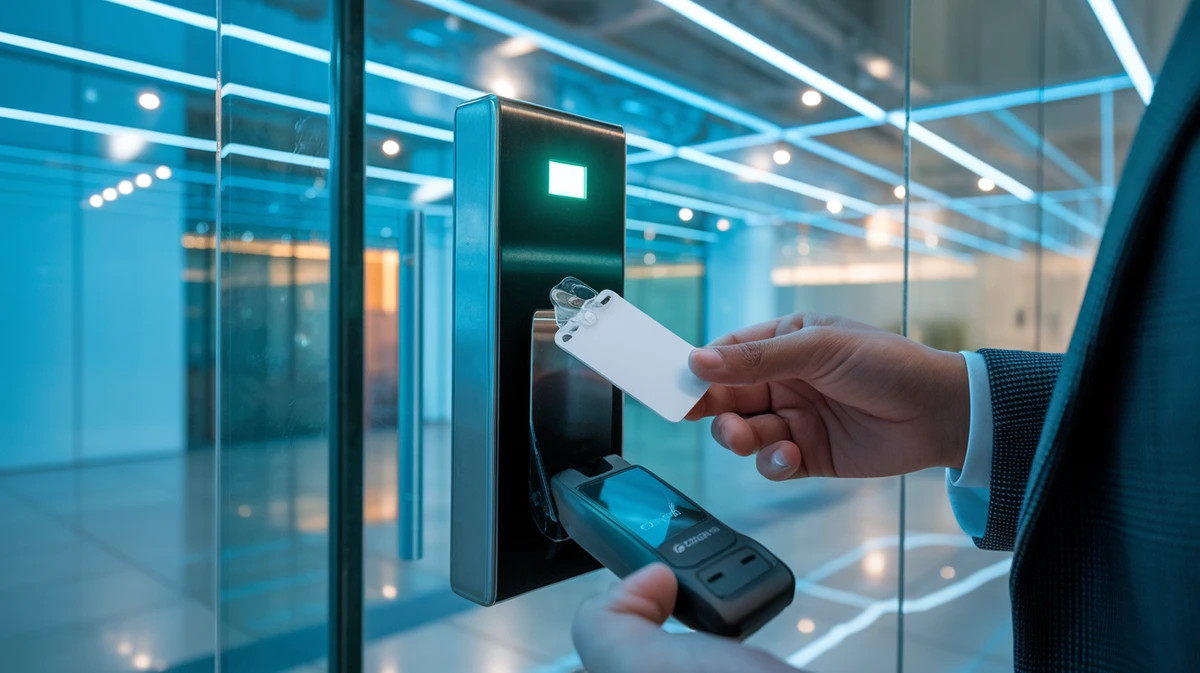
Most offices spend real money on firewalls, MFA and endpoint protection, then let anyone into the building with a plastic card that has not changed since the 1990s. The common 125 kHz proximity badge broadcasts the same unencrypted number every time it is held near a reader. Anyone who gets a few inches away with a cheap handheld tool can copy it onto a blank card in seconds, while standing behind you in the coffee line or in the elevator. For many businesses the front door is now the weakest login they have.
Why Old Proximity Cards Are So Easy to Copy
Classic prox cards, such as HID ProxCard II, ISOProx and EM4100-style key fobs, are not really credentials. They are serial numbers. When a reader powers the card with its radio field, the card replies with a fixed ID, usually 26 to 37 bits. There is no encryption, no challenge and no secret key. The reader cannot tell the original from a copy because there is nothing to tell apart.
- Cheap, legal tools read them. Research and hobby devices such as the Proxmark3 and Flipper Zero read a 125 kHz badge and write its number onto a rewritable T5577 blank. Online shops sell copy machines aimed at apartment fobs.
- Range is better than you think. A palm-sized reader works at a few inches. Long-range readers hidden in a bag have shown reads at a meter or more in security research.
- Nobody notices. The badge keeps working and there is no alert. The cloned card shows up in the door logs as the real employee, which also ruins any later investigation.
- Some 13.56 MHz cards are no better. MIFARE Classic encryption (Crypto1) was broken in 2008, and the master keys of legacy HID iCLASS were extracted years ago. “It is a smart card” does not mean it is secure.
A quick test: if your badge works on a reader that also opens a gym or apartment door with the same fob, or if the card has “Prox” printed on it, assume it can be cloned. If a door opens on the card number alone, the card is a password printed on plastic and read aloud to anyone nearby.
The Wire Behind the Reader Is a Second Weak Spot
Even a secure card can be undone by the cable between the reader and the door controller. Most installed systems use Wiegand, a 1980s signaling scheme that sends the card number in the clear over a few wires. An attacker who pops the reader off the wall can clip in a small sniffer, record every badge that passes, and replay one later. On many readers the wires are reachable from the unsecured side of the door.
The fix is OSDP (Open Supervised Device Protocol), a standard from the Security Industry Association that is also published as IEC 60839-11-5. With OSDP Secure Channel turned on, reader traffic is encrypted with AES-128, and the controller notices if a reader is removed or swapped. Many readers sold in the last five years support OSDP but were installed in Wiegand mode because that is what the old controller spoke.
What the Secure Options Actually Fix
| Credential | How it proves itself | Clone risk |
|---|---|---|
| 125 kHz prox (HID Prox, EM4100) | Sends a fixed number | High: seconds with a cheap tool |
| MIFARE Classic, legacy iCLASS | Broken or leaked encryption | High: attacks are public |
| MIFARE DESFire EV2 / EV3 | AES-128 mutual authentication with keys unique to your site | Low, if you use custom keys and not just the card serial number |
| HID Seos, iCLASS SE (SIO) | Encrypted, signed credential object | Low |
| Mobile credentials (Apple Wallet, Google Wallet, HID Mobile Access) | Key stored in the phone’s secure element, often with Face ID or fingerprint | Low, and lost phones can be revoked remotely |
One trap catches many upgrades. Some installers buy DESFire cards and then set the readers to read only the card’s serial number (UID), because it is easier to enroll. That throws away all the encryption. Anyone who can copy a UID onto a “magic” card is back in business. Ask your integrator to confirm in writing that the readers check a secure, keyed credential and not the UID.
How to Upgrade Without Replacing Every Door at Once
A Staged Badge Migration Plan
- Inventory what you have. List every reader model, the controller, the card type and who manages the system. Check whether the controller supports OSDP and whether the readers are multi-technology.
- Install multi-technology readers. Readers such as HID Signo or the multiCLASS SE line read old prox cards and new secure credentials at the same time. Start with exterior doors, server rooms and anywhere holding cash, records or inventory.
- Switch the wiring to OSDP. Where the controller supports it, move readers off Wiegand and turn on Secure Channel. Replacing the controller is often cheaper than people expect, and it is the piece that unlocks everything else.
- Reissue badges in waves. Hand out DESFire EV3, Seos or mobile credentials department by department. Dual-technology cards can bridge the gap at sites that still have old readers.
- Turn off 125 kHz. This step is the one people skip. Until legacy prox reading is disabled on every reader, a cloned old badge still opens the door. Set a firm cutoff date and collect the old cards.
- Tie badges to offboarding. Deactivate badges in the same checklist as email and laptop access, and review the door log for after-hours entries every month.
Habits That Help Right Now
- Keep badges out of sight in public. Wear them inside the office only, and use a shielded sleeve for prox cards until they are replaced.
- Never post badge photos. First-day selfies show the card design, and some cards print the number on the back.
- Stop tailgating. The best card in the world does nothing if staff politely hold the door for strangers. Make it normal to ask.
- Add a second factor for sensitive rooms. A PIN or biometric at the server room turns a stolen badge into a useless one.
En resumen
Physical access is identity security that happens to involve doors. A 125 kHz badge is a password anyone nearby can copy without touching it. The fix is well understood and can be done in stages: encrypted credentials, OSDP between reader and controller, and a firm date to switch off the old technology.
Not sure what your badges and readers are really checking? Contact Internet Pros and we will assess your access control system, test whether your cards can be cloned, and plan an upgrade that fits your budget and your doors.