AI-Powered Smart Cities: How Urban AI, IoT Sensors, and Digital Infrastructure Are Transforming City Living in 2026
- Internet Pros Team
- March 12, 2026
- AI & Technology
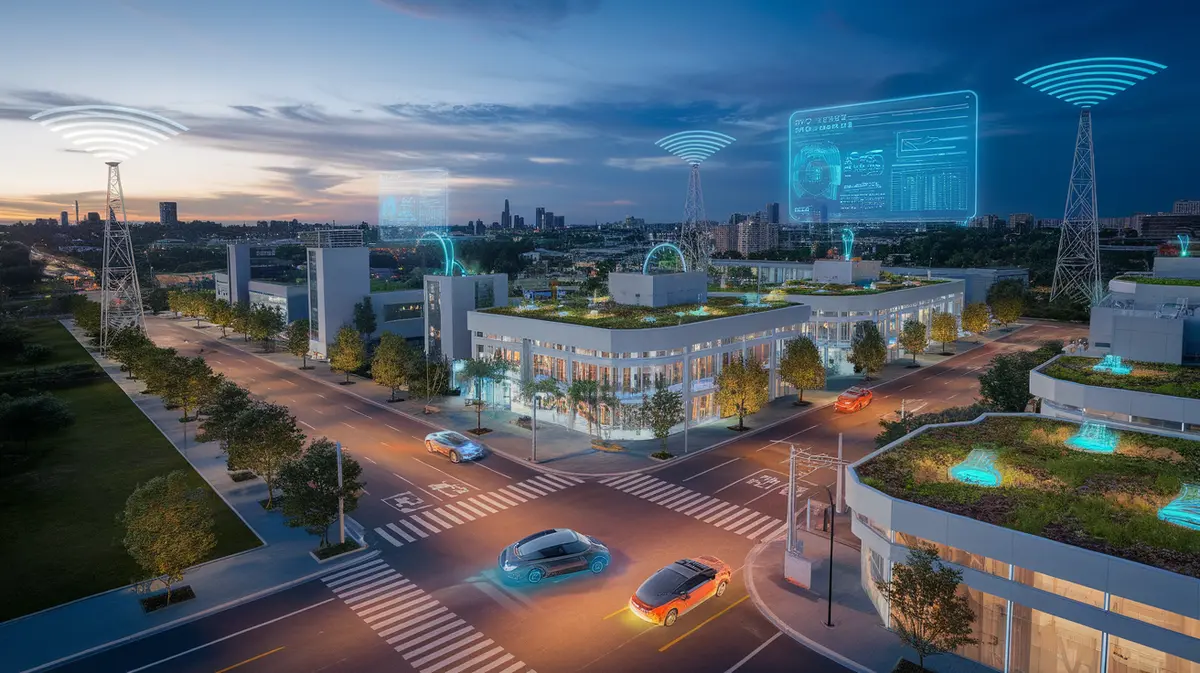
In February 2026, Barcelona's AI-powered traffic management system detected an unusual pattern: a water main break three blocks from a major intersection was about to cascade into a gridlock affecting 40,000 commuters. Within 90 seconds, the system rerouted buses, adjusted 147 traffic signals, dispatched a repair crew, and sent push notifications to 12,000 drivers — all before a single car hit congestion. The city estimates that this single automated intervention prevented 2.3 hours of average commuter delay and avoided 14 metric tons of idle-vehicle carbon emissions. This is not science fiction. It is the daily reality of AI-powered smart cities in 2026, where billions of IoT sensors, machine learning algorithms, and digital infrastructure work in concert to make urban life safer, cleaner, and more efficient.
The Scale of the Urban Challenge
By 2026, 4.4 billion people live in cities — 56 percent of the global population — and the United Nations projects that figure will reach 6.7 billion by 2050. Cities consume over 75 percent of global energy, produce 70 percent of carbon emissions, and face mounting pressure from aging infrastructure, housing shortages, and climate-driven extreme weather. Traditional approaches to urban management — manual monitoring, reactive maintenance, static traffic signals, siloed utility systems — simply cannot scale to meet these challenges. The convergence of affordable IoT sensors, 5G connectivity, edge computing, and artificial intelligence has created a new paradigm: cities that sense, think, and respond in real time.
The global smart city market has surged to 820 billion dollars in 2026, up from 530 billion in 2023, according to MarketsandMarkets. Governments worldwide are investing aggressively — the European Union's Horizon Europe program has allocated 12 billion euros for smart city initiatives, while China's 500-city smart city program has deployed over 2 billion connected sensors. The United States Infrastructure Investment and Jobs Act has directed 65 billion dollars toward broadband and smart infrastructure upgrades that form the backbone of urban AI systems.
"A smart city is not about technology for technology's sake. It is about using data and AI to make decisions that improve the quality of life for every resident — reducing commute times, improving air quality, preventing infrastructure failures before they happen, and ensuring public services reach those who need them most."
The AI Infrastructure Stack Behind Smart Cities
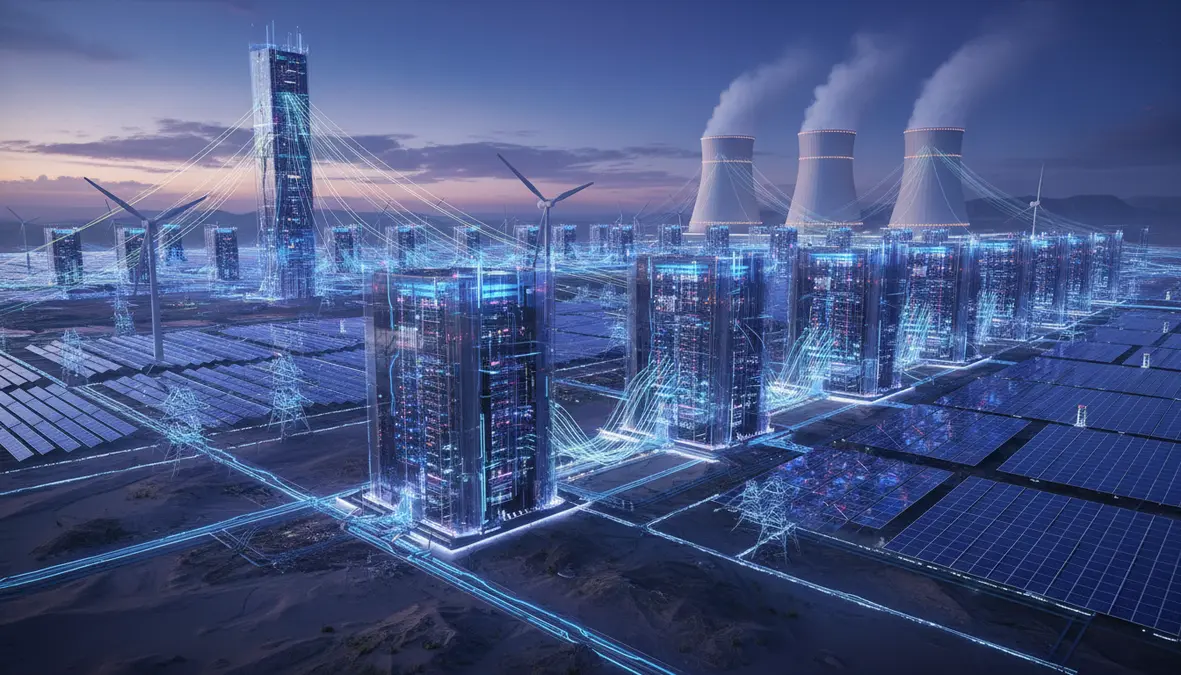
A modern smart city operates on a layered technology stack. At the base, billions of IoT sensors — embedded in roads, buildings, streetlights, water pipes, and air quality monitors — continuously collect data. A mid-sized city like Copenhagen now operates over 300,000 connected sensors generating 2.5 terabytes of data daily. This data flows through 5G and fiber networks to edge computing nodes distributed throughout the city, where time-sensitive AI inference happens in milliseconds. Non-urgent data aggregates in centralized cloud platforms where deeper analytics, city-wide optimization models, and digital twins run continuously.
| Smart City Domain | AI Application | Key Sensors | Measured Impact |
|---|---|---|---|
| Traffic & Mobility | Adaptive signal control, route optimization | Cameras, LIDAR, inductive loops, GPS | 25-35% congestion reduction |
| Energy & Utilities | Smart grid balancing, predictive maintenance | Smart meters, grid sensors, weather stations | 15-25% energy waste reduction |
| Public Safety | Predictive policing, gunshot detection, emergency dispatch | Acoustic sensors, surveillance cameras, 911 data | 20-30% faster response times |
| Water Management | Leak detection, demand forecasting, quality monitoring | Flow sensors, pressure monitors, chemical analyzers | 20-40% reduction in water loss |
| Waste Management | Route optimization, fill-level prediction | Ultrasonic bin sensors, GPS fleet trackers | 30% reduction in collection costs |
| Air Quality | Pollution source identification, health alerts | PM2.5/PM10 sensors, NO2/O3 monitors | Real-time hyperlocal air quality maps |
AI-Powered Traffic and Mobility
Traffic management has become the showcase application for urban AI. Traditional traffic signals operate on fixed timing cycles or simple vehicle-detection loops. AI-powered adaptive traffic control systems like Siemens Mobility's AI Traffic, Google's Project Green Light, and Alibaba's City Brain analyze real-time data from thousands of cameras, radar sensors, and connected vehicles to optimize signal timing across entire corridors simultaneously. Google's Project Green Light, deployed in 70 cities by early 2026, uses AI to optimize signal timing at intersections and has demonstrated a 30 percent reduction in stops and a 10 percent reduction in emissions at deployed locations.
Beyond signal optimization, AI mobility platforms are integrating public transit, ride-sharing, micro-mobility, and autonomous vehicle fleets into unified systems. Helsinki's Whim platform and Singapore's SimMobility use AI to provide citizens with multimodal trip planning that dynamically adapts to real-time conditions — suggesting a subway transfer when a bus is delayed or routing a shared autonomous vehicle when rail service is disrupted. The result is not just faster commutes but fundamentally more resilient transportation networks.
Predictive Utilities and Smart Grids
Smart Grid AI
AI-powered smart grids balance electricity supply and demand in real time across millions of endpoints. Machine learning models predict neighborhood-level energy consumption 24 hours ahead with 97 percent accuracy, enabling utilities to optimize generation, storage, and distribution. Cities like Austin, Texas, have reduced peak grid stress by 18 percent through AI-driven demand response programs that automatically adjust smart thermostats, EV charging schedules, and commercial building HVAC systems during high-demand periods.
Water Infrastructure AI
Cities lose an average of 30 percent of treated water to leaks in aging pipe networks. AI-powered acoustic sensors and pressure monitoring systems from companies like Xylem and Utilis detect underground leaks with meter-level precision before they surface. Tel Aviv's AI water management system has reduced water loss from 25 percent to under 8 percent, saving 42 million liters daily. Predictive models forecast pipe failure probability based on material age, soil conditions, pressure patterns, and historical break data, enabling proactive replacement before catastrophic failures occur.
Digital Twins: The City's Virtual Mirror
Perhaps the most transformative smart city technology is the urban digital twin — a real-time virtual replica of an entire city that integrates data from every sensor, utility system, building, and transportation network into a single interactive model. Singapore's Virtual Singapore platform, the most advanced urban digital twin in operation, incorporates 3D building models, real-time traffic flows, energy consumption data, and environmental sensors across the entire city-state. Urban planners use it to simulate the impact of new developments on traffic, shadow patterns, wind corridors, and pedestrian flows before a single shovel breaks ground.
NVIDIA's Omniverse platform has accelerated digital twin adoption by providing GPU-accelerated simulation capabilities that can model complex urban systems at unprecedented scale. Cities including Shanghai, Helsinki, and Las Vegas have deployed Omniverse-based digital twins that enable officials to simulate emergency evacuation scenarios, test autonomous vehicle routing strategies, and model the impact of climate events on infrastructure — all within a photorealistic virtual environment that updates continuously from live sensor data.
Privacy, Equity, and Governance Challenges
Critical Challenges for Smart City Deployments
- Surveillance and privacy: The same cameras and sensors that optimize traffic can enable mass surveillance. Cities must implement strong data governance frameworks, anonymization at the edge, and citizen oversight boards. The EU AI Act now classifies real-time biometric identification in public spaces as high-risk, requiring rigorous compliance.
- Digital equity: Smart city benefits must reach all neighborhoods equally. Without deliberate planning, AI-optimized services tend to concentrate in affluent areas with better sensor coverage, worsening the digital divide. Barcelona's Superblocks program explicitly prioritizes underserved neighborhoods for sensor deployment and green infrastructure investment.
- Cybersecurity: A city running on interconnected IoT devices presents an enormous attack surface. The 2025 ransomware attack on Atlanta's smart water system demonstrated that compromised urban infrastructure can endanger public health. Cities need zero-trust architectures, air-gapped critical systems, and continuous security monitoring across every connected device.
- Interoperability: Many cities have deployed smart systems from different vendors that cannot communicate with each other. Open standards like FIWARE, oneM2M, and CityGML are critical for enabling cross-domain data sharing and avoiding vendor lock-in that limits the transformative potential of urban AI.
Leading Smart Cities in 2026
Singapore continues to lead global rankings as the most comprehensive smart city implementation, with its Smart Nation initiative integrating AI across transportation, healthcare, government services, and urban planning. Seoul's Digital Mayor platform uses AI to process citizen feedback and automatically route service requests, resolving 78 percent of urban maintenance issues within 24 hours. Copenhagen aims to become the world's first carbon-neutral capital by 2025 using AI-optimized energy systems, smart building controls, and sensor-driven cycling infrastructure that has pushed bicycle commuting above 60 percent. Dubai's autonomous transport strategy has deployed AI-managed drone taxis and driverless metro extensions, targeting 25 percent of all trips via autonomous modes by 2030.
What This Means for Businesses and Communities
The smart city revolution creates enormous opportunities for technology providers, system integrators, and forward-thinking businesses. Companies that develop IoT sensors, AI analytics platforms, edge computing infrastructure, or urban software applications are serving a market growing at 25 percent annually. For businesses operating within smart cities, the benefits are tangible — reduced logistics costs from optimized traffic, lower energy bills from smart grid integration, and access to rich urban data that informs location decisions, customer analytics, and operational planning.
At Internet Pros, we help businesses and municipalities build the software infrastructure that powers smart city applications. From IoT data platforms and real-time analytics dashboards to citizen-facing mobile applications and API integrations with urban sensor networks, our team has the expertise to turn smart city ambitions into working systems. Contact us today to explore how your organization can participate in the urban AI revolution.