Autonomous Vehicles: How Self-Driving Technology Is Redefining Transportation in 2026
- Internet Pros Team
- February 18, 2026
- AI & Technology
For decades, the self-driving car was the perennial promise of technology — always five years away. In 2026, that promise has finally arrived. Autonomous vehicles are no longer confined to carefully mapped test corridors or sunny Phoenix suburbs. Robotaxis are operating commercially in over 30 cities worldwide. Autonomous trucks are hauling freight across interstate highways around the clock. And millions of private vehicles are navigating rush-hour traffic, construction zones, and rain-soaked roads with minimal human intervention. The age of autonomous transportation is here, and it is transforming how people, goods, and entire cities move.
Understanding Vehicle Autonomy Levels
The Society of Automotive Engineers (SAE) defines six levels of driving automation, from Level 0 (no automation) to Level 5 (full automation in all conditions). Understanding these levels is essential for making sense of the current landscape, because companies and vehicles are operating at different points on this spectrum.
| Level | Name | Description | 2026 Status |
|---|---|---|---|
| Level 0 | No Automation | Human controls everything | Legacy vehicles |
| Level 1 | Driver Assistance | Cruise control or lane keeping | Standard on most new cars |
| Level 2 | Partial Automation | Steering and acceleration assist, human monitors | Widely available |
| Level 3 | Conditional Automation | Car drives itself in certain conditions, human takes over on request | Mercedes, BMW certified in multiple markets |
| Level 4 | High Automation | Fully autonomous in defined areas, no human needed | Waymo and Cruise robotaxis in operation |
| Level 5 | Full Automation | Autonomous everywhere, all conditions | Still in research and testing |
The critical insight is that Level 4 — high automation within defined operational domains — is where the real commercial revolution is happening right now. Companies have stopped waiting for the perfection of Level 5 and are instead deploying highly capable systems in environments where they can operate safely and reliably.
The Major Players Driving the Revolution
A handful of companies have pulled ahead in the race to deploy autonomous vehicles at scale. Each takes a different technical and business approach, and their competition is accelerating progress across the entire industry.
Waymo (Alphabet)
Waymo's robotaxi service now operates in San Francisco, Los Angeles, Phoenix, Austin, Atlanta, and Miami, completing over 250,000 rides per week. Using a sensor suite that combines LIDAR, radar, and cameras, Waymo vehicles have accumulated over 50 million autonomous miles with a safety record that surpasses human drivers by a factor of six in their operational domains.
Tesla Full Self-Driving
Tesla's vision-only approach to autonomy has reached Version 14, and the company has begun operating its own robotaxi fleet in select cities. With over 10 billion miles of real-world driving data collected from its fleet, Tesla's neural networks have achieved Level 3 certification in several markets and are pushing toward supervised Level 4 capabilities.
Aurora Innovation
Aurora has focused on autonomous trucking, launching its commercial freight service on a corridor between Dallas and Houston. Its Aurora Driver system combines LIDAR, radar, and cameras to navigate highway driving, and partnerships with FedEx and Werner Enterprises are generating real revenue while expanding to new interstate routes.
The Technology Behind the Wheel
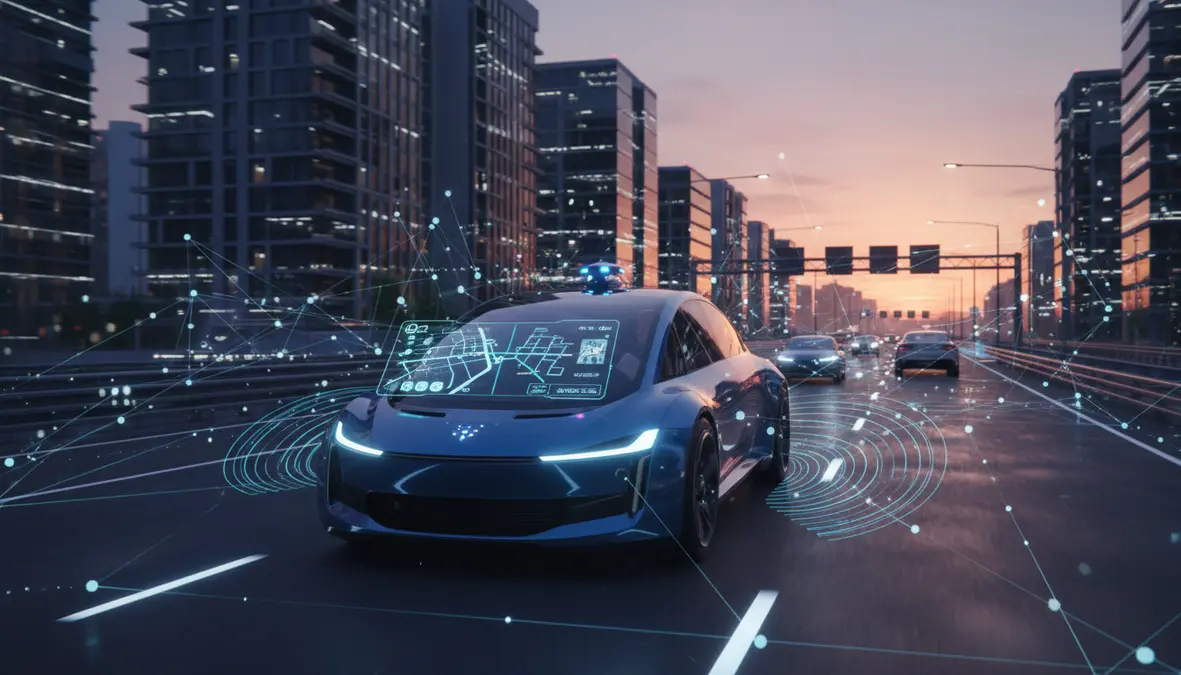
Autonomous vehicles rely on a complex stack of sensors, artificial intelligence, connectivity, and computing power that work together in real time. Understanding this technology stack explains both why self-driving cars work so well now and why certain edge cases remain challenging.
Core Technology Components
- LIDAR (Light Detection and Ranging): Fires millions of laser pulses per second to create precise 3D maps of the surrounding environment, accurate to within two centimeters — enabling the vehicle to detect pedestrians, cyclists, and obstacles in all lighting conditions
- Computer Vision and Cameras: High-resolution cameras combined with deep learning models read traffic signs, detect lane markings, recognize brake lights, and classify objects at distances exceeding 500 meters
- Radar and Ultrasonic Sensors: Radar penetrates rain, fog, and dust that can degrade camera and LIDAR performance, while ultrasonic sensors handle close-range detection for parking and low-speed maneuvers
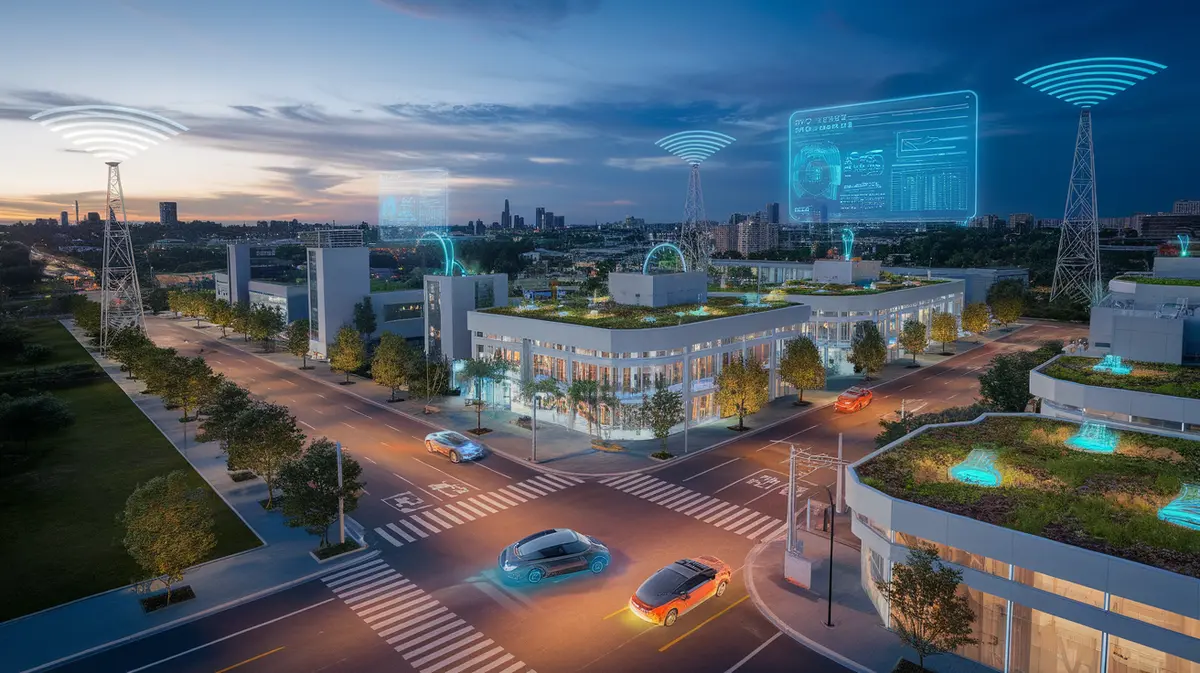
- V2X Communication: Vehicle-to-Everything technology lets autonomous cars communicate directly with traffic lights, other vehicles, pedestrians' devices, and road infrastructure — sharing position, speed, and intent in real time
- AI Decision Engine: Neural networks trained on billions of miles of driving data predict the behavior of every road user, plan optimal paths, and make split-second decisions that prioritize safety above all else
How Autonomous Vehicles Are Transforming Industries
Logistics and Freight
Autonomous trucking is solving one of the logistics industry's most pressing problems: the chronic shortage of long-haul truck drivers. Companies like Aurora, TuSimple, and Kodiak Robotics are running autonomous trucks on interstate corridors 24 hours a day, eliminating the need for mandatory rest stops and reducing coast-to-coast delivery times by 30 to 40 percent. Major retailers report fuel savings of 15 percent because autonomous trucks drive at optimally efficient speeds.
Urban Mobility and Robotaxis
Robotaxi services are reshaping urban transportation. In cities where Waymo operates, studies show a measurable decline in DUI incidents, a reduction in parking demand in downtown cores, and increased mobility for elderly and disabled residents who previously had limited transportation options. The cost per mile for a robotaxi ride has dropped below $1.50, making it competitive with private car ownership when factoring in insurance, maintenance, and parking.
Last-Mile Delivery
Autonomous delivery vehicles from Nuro, Serve Robotics, and Amazon are handling last-mile logistics in residential neighborhoods. These compact, low-speed vehicles deliver groceries, packages, and meals without requiring a human driver. Early data from 2026 pilots shows a 60 percent reduction in delivery costs and near-zero traffic incidents due to their conservative speed profiles and advanced sensor systems.
"The transition to autonomous transportation is not a question of if but when — and in 2026, the answer for many applications is now. We are witnessing the most significant transformation in mobility since the invention of the automobile itself."
Safety, Regulation, and Public Trust
The single most important factor determining the success of autonomous vehicles is safety — and the data from 2025 and early 2026 is encouraging. Waymo's public safety reports show that its vehicles are involved in significantly fewer injury-causing incidents per mile than human-driven vehicles. The NHTSA has established a federal framework for autonomous vehicle certification, replacing the patchwork of state-by-state regulations that previously slowed deployment.
Key regulatory developments include:
- The U.S. Autonomous Vehicle Act of 2025, which created a federal certification pathway for Level 4 vehicles
- The European Union's updated General Safety Regulation, which permits Level 4 operation on designated motorways
- China's nationwide autonomous driving permit system, which has enabled commercial robotaxi operations in over 15 cities
- Insurance industry frameworks that assign liability based on whether the human or the autonomous system was in control at the time of an incident
Challenges That Remain
Despite remarkable progress, autonomous vehicles still face significant hurdles. Severe weather — heavy snow, ice storms, and torrential rain — degrades sensor performance and remains the most difficult unsolved technical challenge. Urban environments with complex interactions between pedestrians, cyclists, scooters, and vehicles at unsignalized intersections push the limits of current AI systems. And public acceptance, while growing, is not universal — surveys show that approximately 40 percent of Americans still feel uncomfortable riding in a fully autonomous vehicle.
Cybersecurity is another frontier. A vehicle that is connected to the internet and relies on software for critical driving decisions presents a potential attack surface. Manufacturers are investing heavily in intrusion detection, encrypted communication, and over-the-air update authentication to ensure that autonomous vehicles cannot be remotely compromised.
What This Means for Businesses
The autonomous vehicle revolution creates opportunities far beyond the automotive industry. Businesses that understand and prepare for this shift will have significant competitive advantages.
How Businesses Should Prepare
- Logistics and supply chain: Evaluate autonomous trucking partnerships to reduce long-haul shipping costs and improve delivery reliability
- Real estate and urban planning: Anticipate reduced parking demand and reimagine commercial spaces currently dedicated to parking infrastructure
- Insurance and risk management: Prepare for the shift from driver-based liability to manufacturer and software-based liability models
- Retail and e-commerce: Integrate autonomous last-mile delivery options to reduce fulfillment costs and offer faster delivery windows
- Technology and software: Build expertise in V2X communication, fleet management platforms, and autonomous vehicle data analytics
The Road Ahead
By 2030, analysts project that autonomous vehicles will account for 15 percent of new vehicle sales and that robotaxi services will be available in every major metropolitan area globally. The economic impact is estimated at over $2 trillion annually when accounting for reduced accidents, improved logistics efficiency, reclaimed commute time, and new mobility-as-a-service business models.
The self-driving revolution is no longer a futuristic fantasy. It is an engineering reality that is scaling rapidly, transforming industries, and creating new opportunities for businesses willing to adapt. The vehicles are on the road. The question is no longer whether autonomous transportation will arrive — it is whether your business is ready for it.
At Internet Pros, we help businesses navigate the technology landscape and build the software infrastructure needed to integrate with emerging platforms — from fleet management APIs to real-time data analytics. Contact us to discuss how your organization can prepare for the autonomous future.