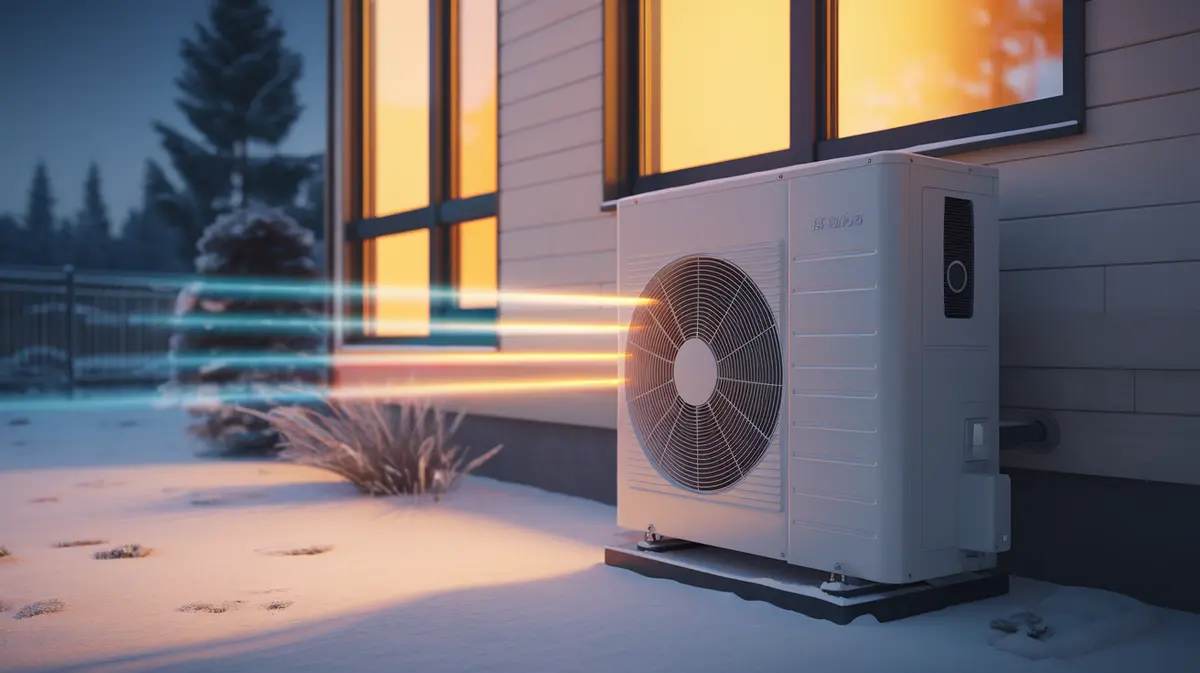
Heat Pumps in 2026: Why They Now Work Well Below Freezing, What COP and HSPF2 Actually Measure, and How to Tell Whether One Beats Your Furnace
- Equipo de Internet Pros
- September 27, 2026
- IA y Tecnología
Este artículo está disponible solo en inglés.
For years the standard advice about heat pumps came with an asterisk: great in mild climates, useless when it gets properly cold. That advice is now out of date. Variable-speed compressors, better refrigerants and smarter controls have produced units that keep delivering most of their rated heat at 5°F (-15°C) and keep running well below zero. In the United States heat pumps have outsold gas furnaces in recent years, and they now show up in offices, shops and small commercial buildings as often as in homes. The question is no longer whether a heat pump can heat your building. It is whether it will cost less than what you have now, and that depends on a handful of numbers most quotes never explain.
How a Heat Pump Makes Heat From Cold Air
A heat pump does not burn anything. It moves heat that already exists. Outdoor air at 20°F still contains plenty of thermal energy; the unit uses a refrigerant that boils at a far lower temperature to absorb it, a compressor to squeeze that vapour until it is hotter than your indoor air, and an indoor coil to release it. In summer the same machine runs in reverse and becomes an air conditioner.
Because it moves heat rather than generating it, a heat pump can deliver two to four units of heat for every unit of electricity it uses. A gas furnace at its very best turns about 97% of its fuel into heat. Electric baseboard heaters manage exactly 100%. That gap is the whole economic case.
A furnace makes heat. A heat pump moves it. Moving is cheaper, until the outdoor air gets cold enough that there is less heat left to move.
What Changed: Why Cold No Longer Means Useless
Older single-speed units ran flat out or not at all, and their output fell off a cliff as the temperature dropped, forcing expensive electric resistance backup to take over. Three improvements changed that.
- Inverter-driven compressors. A variable-speed compressor can spin faster when it is cold outside, holding capacity up instead of letting it collapse, and slow down in mild weather to run efficiently for long, quiet cycles.
- Vapour injection and better heat exchangers. Enhanced vapour injection, larger coils and smarter defrost logic let cold-climate models keep working efficiently at temperatures that would have stalled a 2010 unit.
- Tougher ratings. ENERGY STAR now has a cold-climate category that requires a unit to report its performance at 5°F and to keep at least 70% of its rated capacity there. The US Department of Energy’s Cold Climate Heat Pump Challenge pushed manufacturers further, with prototypes delivering full capacity at 5°F.
- Connected controls. Modern units report runtime, defrost cycles and energy use to an app or building management system, and many can respond to utility demand-response signals, which some utilities reward with lower rates.
The Numbers on the Spec Sheet, in Plain Terms
Heat pump quotes are full of acronyms. Only a few actually predict your bill.
| Rating | What it measures | What to look for |
|---|---|---|
| COP (coefficient of performance) | Heat delivered divided by electricity used, at one specific outdoor temperature | Ask for COP at 5°F and 17°F, not only at 47°F; a good cold-climate unit stays near 2 or above at 5°F |
| HSPF2 | Seasonal heating efficiency averaged over a standard test climate | The federal minimum for split systems is 7.5; strong units are in the 8.5 to 10 range |
| SEER2 | Seasonal cooling efficiency | Matters if you cool as much as you heat; 16 or more is a solid modern figure |
| Capacity at 5°F | How much heat the unit can still deliver on a very cold day | Compare it with your building’s design heat loss; this, not nameplate tonnage, decides whether backup heat kicks in |
If a contractor sizes the system from square footage alone, push back. A proper Manual J heat-loss calculation, or a room-by-room equivalent for commercial space, is what stops a unit from being too small in January or so oversized that it short-cycles all spring.
Does It Actually Beat Your Furnace?
The comparison comes down to your local electricity and gas prices and the COP your unit achieves across your winter. A simple worked example makes the logic clear.
A Back-of-the-Envelope Comparison
- Gas furnace. One therm of gas holds about 29.3 kWh of heat. At $1.50 per therm and 95% efficiency, each kWh of delivered heat costs about 5.4 cents.
- Heat pump on a mild day. At 17 cents per kWh and a COP of 3, each kWh of heat costs about 5.7 cents, roughly a tie with gas.
- Heat pump on a bitter day. At a COP of 2 the same heat costs about 8.5 cents, so gas wins on the coldest days.
- Against oil, propane or electric resistance. The heat pump usually wins clearly, often cutting heating costs by a third to a half, and you also replace an air conditioner in the same purchase.
That is why a dual-fuel setup, a heat pump paired with an existing furnace, is popular in cold regions with cheap gas. The thermostat uses the heat pump for most of the season and switches to gas below a balance point you choose. For buildings on oil, propane or baseboard heat, a ductless mini-split is often the fastest payback in the whole HVAC catalogue.
The Refrigerant Switch You Will Hear About
Since 2025, new residential and light commercial split systems sold in the US must use refrigerants with a global warming potential below 700 under the AIM Act, which retires R-410A in new equipment. Most manufacturers moved to R-454B or R-32, both mildly flammable and handled with extra leak-detection sensors. In Europe, revised F-gas rules are pushing monobloc units toward propane, R-290. None of this should stop you buying, but it matters in two ways: existing R-410A systems can still be serviced, though the refrigerant is getting pricier, and new systems need technicians trained on the new gases.
A Short Checklist Before You Sign
- Get a heat-loss calculation. Sizing from the old furnace is the most common and most expensive mistake.
- Ask for cold-weather performance data. Capacity and COP at 5°F from the manufacturer’s extended tables or the NEEP cold-climate list.
- Fix the envelope first where it is cheap. Air sealing and attic insulation can shrink the unit you need.
- Check your electrical panel. A heat pump plus an EV charger can exceed an older 100 A service.
- Look for incentives. The federal 25C tax credit ended with 2025, but many state programmes and utilities still offer rebates and discounted heat pump rates.
- Plan for monitoring. A connected thermostat or energy monitor tells you whether the system is performing as quoted or quietly running on backup heat.
En resumen
Heat pumps have stopped being a mild-climate compromise. A properly sized cold-climate unit will heat most buildings through a northern winter, cool them in summer, and usually cost less to run than oil, propane or electric resistance. Against cheap gas the savings are smaller, which is where dual-fuel earns its keep. Judge any quote on cold-weather capacity, real COP and sizing, not on the brochure.
Want to see what your building is actually using? Talk to Internet Pros. We connect smart thermostats, energy monitors and building systems to dashboards and alerts, so you can see whether your HVAC is delivering the savings you paid for.