Construction 3D Printing in 2026: How ICON, COBOD, and Additive Construction Are Printing Houses, Slashing Build Times, and Confronting the Housing Shortage
- Internet Pros Team
- June 30, 2026
- AI & Technology
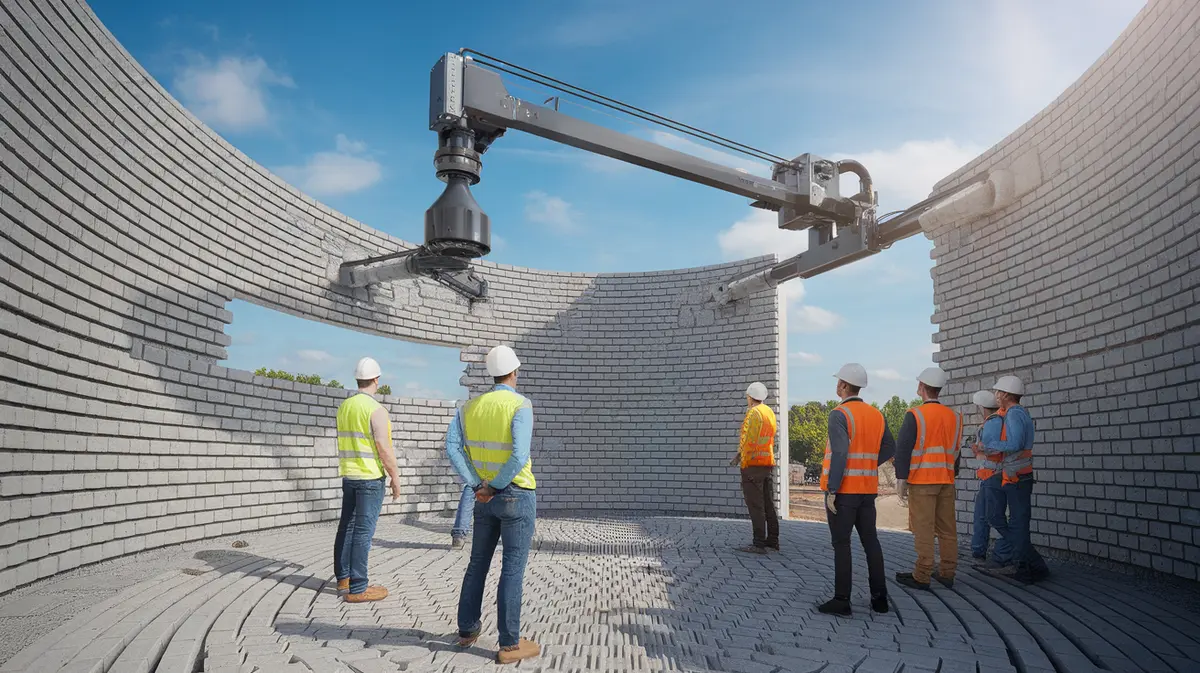
For most of human history, building a house has meant the same slow choreography: a crew frames walls stick by stick, or a mason sets block by block, in a process that is labor-heavy, weather-dependent, and stubbornly resistant to speeding up. In 2026 a different picture is appearing on job sites across the United States, Europe, the Middle East, and Africa - a robot the size of a shipping container, gliding back and forth on rails, squeezing out a continuous ribbon of concrete that stacks into a wall while almost no one is on site. This is construction 3D printing, also called additive construction, and after years of flashy demos it has become a real, permitted, mortgage-backed way to put up buildings.
What Additive Construction Actually Is
The core idea is the same one behind the desktop 3D printer that makes plastic trinkets, scaled up enormously and pointed at concrete. Instead of melted plastic, a large printer pushes a specially formulated cement-based mortar through a nozzle, laying it down in thin horizontal beads that stack on top of one another to form the walls of a structure. A digital model - the building's design file - tells the machine exactly where to move and how much material to extrude, so the walls rise layer by layer with no formwork to build and tear down, and no crew laying every block by hand.
There are two dominant machine shapes. A gantry printer rides on a rigid frame or rails set up around the build site, like an overhead crane that paints with concrete; it is precise and well suited to printing several homes in a row. A robotic-arm printer uses an articulated arm, sometimes mounted on a track or even a mobile base, trading a little setup simplicity for flexibility. Either way, what comes off the machine is the structural shell. Roofs, windows, doors, plumbing, wiring, and finishes are still installed by humans the conventional way.
Why Builders Are Paying Attention
Speed and Labor
A printer can lay the walls of a small home in roughly a day or two of print time, work through the night, and shrug off the labor shortage that has dogged construction for a decade - replacing the hardest-to-staff, most repetitive part of the job with a machine a small team supervises.
Waste and Design Freedom
Because the machine deposits material only where the model calls for it, there are no offcuts and far less jobsite waste. And since curves cost the printer nothing extra, architects can design rounded, organic walls that would be slow and expensive to frame by hand.
There is a durability bonus, too. Printed concrete walls stand up well to fire, wind, water, and pests - a meaningful advantage in regions facing hurricanes, wildfires, and a hotter, harsher climate.
"The printer doesn't get tired, doesn't call in sick, and doesn't care that it's two in the morning. It turns the slowest, most back-breaking stage of building a home into something closer to pressing print - and that changes the math on what we can afford to build, and where."
Who Is Building the Industry
What was a curiosity a few years ago is now a small but serious industry with real companies, real homes, and real customers:
- ICON - the Austin-based pioneer whose Vulcan printer has produced permitted communities of printed homes in Texas, developed a Mars-and-Moon construction program (Project Olympus) with NASA, and pushed printed housing into the mainstream U.S. market.
- COBOD - the Danish maker of the modular BOD2 gantry printer, the most widely deployed machine in the world, used to print homes, schools, and even wind-turbine bases across dozens of countries.
- Apis Cor - known for mobile, crane-style printers and for printing one of the largest 3D-printed buildings, an administrative structure in the Middle East.
- Black Buffalo 3D & Mighty Buildings - pushing printable materials and factory-printed, prefabricated panels that combine additive construction with off-site manufacturing.
Major cement and materials companies sit behind many of these efforts, supplying the engineered mortars that make a printed wall pass code - quietly turning additive construction into a piece of the mainstream building-materials business.
Printed vs. Traditional Construction
| Property | Traditional Framing / Masonry | 3D-Printed Walls |
|---|---|---|
| Wall construction time | Weeks of skilled labor | Days of mostly supervised print time |
| Labor needed | Large, specialized crew | Small team running the machine |
| Jobsite waste | Significant offcuts and scrap | Minimal - material placed only where needed |
| Design of curves | Slow and costly to frame | Free - the printer follows any path |
| What it covers | Whole structure | Mainly the structural shell |
The Honest Trade-Offs
Printed housing is real, but it is not a magic wand, and the builders running it in production are candid about the rough edges:
- It only prints the walls. Foundations, roofs, windows, and all the mechanical and electrical work still happen the traditional way, so total savings are smaller than a one-day wall print suggests.
- Concrete carries a carbon cost. Cement is emissions-heavy, so the green case depends on low-carbon mixes and on the waste and efficiency gains outweighing the material's footprint.
- Codes and skills are still catching up. Building codes were not written with printed walls in mind, and the workforce that can run, calibrate, and maintain these machines is still small.
- It shines at scale, not on one-offs. The economics work best printing many similar homes in a row; a single custom house may not beat conventional building once you count setup and machine transport.
"The breakthrough isn't that a robot can print a house. It's that printing the hundredth house costs barely more than the first - which is exactly the property you need if you're trying to put a real dent in a housing shortage rather than build one impressive showpiece."
What This Means for Your Business
You do not have to be a homebuilder for additive construction to matter. It is the clearest sign yet that automation is moving off the factory floor and onto the open-air job site, reshaping how quickly housing, schools, and shelters can go up after a disaster or in a tight market. For developers and builders, the practical move in 2026 is to treat printed construction as a tool for the right project - a community of similar homes, a hard-to-staff region, a tight timeline - rather than an all-or-nothing bet, and to start building the digital design and material know-how the machines depend on. The deeper shift is that a building is becoming a file you can send to a printer, and the organizations that learn to design for that now will help decide who gets housed faster, cheaper, and more sustainably in the decade ahead.
At Internet Pros, we help businesses cut through fast-moving technology and turn it into a practical roadmap - from digital strategy to the software and systems that tie new tools together. Get in touch to talk through how emerging technology could fit your operation, or explore more technology insights on our blog.