Humanoid Robots in 2026: How Figure, Tesla Optimus, Nvidia, 1X, and Agility Are Moving General-Purpose Robots From Demo Videos Into Real Factories
- Internet Pros Team
- June 24, 2026
- AI & Technology
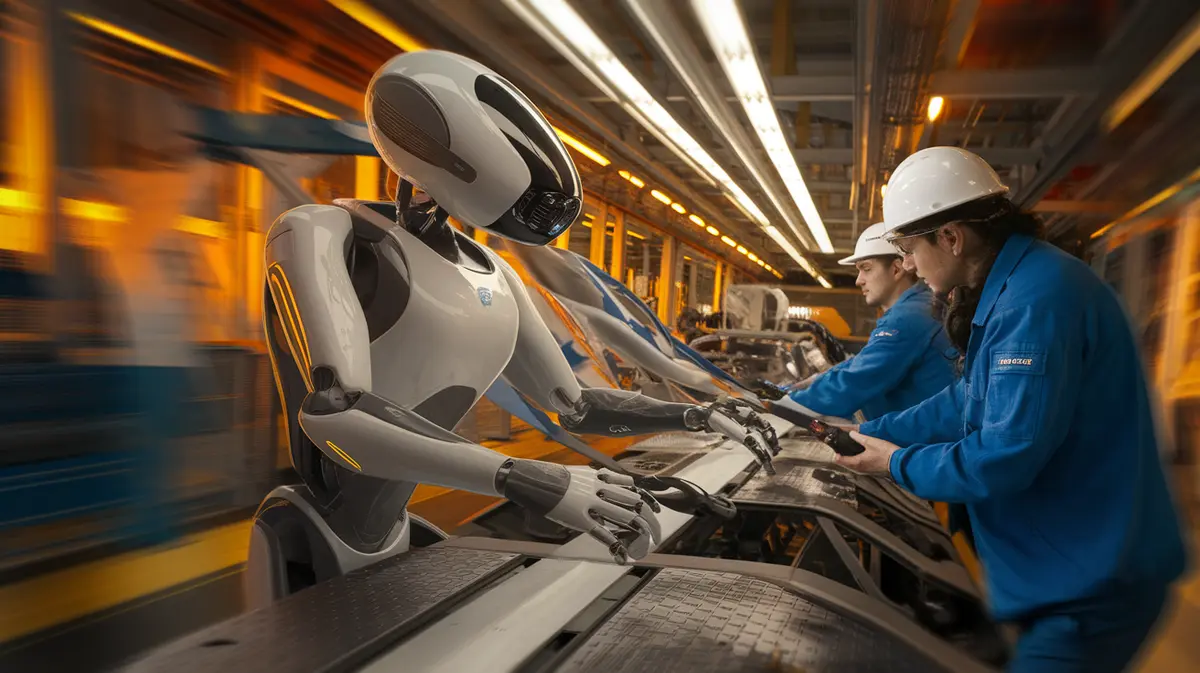
For sixty years, the robot that walks and talks like a person has been the property of science fiction. Real robots were bolted to factory floors - brilliant at welding the same seam ten thousand times, helpless at anything they had not been programmed for line by line. In 2026 that boundary is finally cracking. A new class of general-purpose humanoid robots from Figure, Tesla, Nvidia, 1X, and Agility Robotics has stopped being a viral demo video and started showing up, on a clock, doing paid work in real warehouses and factories. The machines are not perfect, but for the first time the question has shifted from "can they walk?" to "what is the hourly rate?"
What "General-Purpose" Actually Means
A traditional industrial robot is a single-purpose machine: a fixed arm that performs one motion, reprogrammed by an engineer whenever the task changes. A general-purpose robot is the opposite idea - one body that can be pointed at many different jobs, learning new tasks from demonstration or instruction rather than custom code. The reason these robots are shaped like people is not vanity. Our entire world - the height of shelves, the size of door handles, the spacing of stairs, the design of every tool and box - was built around the human body. A machine with two arms, two legs, and ten fingers can slot into that world without anyone rebuilding the factory around it.
The Two Breakthroughs That Made the Bodies Useful
Humanoid hardware has existed for years. What changed in the last two years is that the brains and the economics finally caught up to the bodies.
Vision-Language-Action Models
The same AI revolution that produced chatbots produced vision-language-action (VLA) models - foundation models that take in what a robot sees and a plain-English instruction, and output the motor commands to do it. Instead of scripting every motion, you show or tell the robot, and a single trained model generalizes across tasks it never saw in training.
Cheaper, Smarter Actuators
The joints that move a robot - its actuators - used to cost a fortune and burn through batteries. Mass-produced electric actuators, lighter materials, and lessons borrowed from the electric-car supply chain have driven the cost of a capable humanoid body down dramatically, putting a sub-six-figure price tag within reach.
Together these solved the deadlock. The body could move, but it was dumb and expensive; now it is getting smart and affordable at the same time. That is why 2026 feels different from every "robots are coming" cycle before it.
Who Is Leading the Race
The field went from a handful of labs to a genuine industry in record time:
- Figure - whose Helix model and Figure robots are already running pilots on automotive lines, aiming squarely at commercial deployment rather than spectacle.
- Tesla (Optimus) - leveraging its car-manufacturing and AI-chip muscle to drive humanoids toward mass production at a price no one else can yet match.
- Nvidia - which, rather than building a robot, supplies the GR00T foundation model, the Isaac simulation platform, and the Jetson Thor compute that many other makers run on - the "Android of humanoids."
- 1X Technologies - focused on a quieter, safer humanoid (Neo) designed for the home as much as the warehouse.
- Agility Robotics - whose Digit robot is among the first in actual paid logistics work moving totes in warehouses.
- Boston Dynamics, Apptronik & Unitree - the electric Atlas, the Apollo robot backed by major automakers, and Unitree's startlingly cheap models pushing the whole market on price.
How the Economics Math Works
The business case is brutally simple: many warehouse and factory roles are physically punishing, hard to staff, and run around the clock. A robot that can work multiple shifts changes the cost equation the moment its all-in cost per hour drops below a human wage.
"Nobody is buying a humanoid because it is a marvel. They are buying it because a job is open three shifts a day and stays open. The robot wins the instant its cost per useful hour crosses under the wage it replaces - and that line is getting closer every quarter."
This is why most early deployments are sold not as products but as robotics-as-a-service - a monthly fee per robot - so a buyer compares it directly to a wage with no huge upfront purchase.
Single-Purpose vs. General-Purpose Robots
| Property | Traditional Industrial Robot | General-Purpose Humanoid |
|---|---|---|
| Tasks per machine | One, fixed | Many, learnable |
| How it is "programmed" | Engineered, line by line | Shown or told in plain language |
| Workspace | Caged, custom-built cell | Existing human spaces |
| New task setup | Days to weeks of engineering | Demonstration or instruction |
| Best at | High-speed repetition | Variety and flexibility |
The Honest Limits
The people deploying these robots are clear-eyed about what is still hard:
- Reliability is not there yet. A robot that succeeds 95% of the time still fails one task in twenty - fine for a demo, expensive on a production line that needs near-perfect uptime.
- Battery life is short. Most humanoids run a few hours before needing a charge or a battery swap, which complicates the "works all three shifts" pitch.
- Hands are the hard part. Walking is largely solved; dexterous manipulation - handling soft, slippery, or oddly shaped objects with human-level finesse - remains the frontier.
- Safety and trust. A 130-pound machine moving near people demands rigorous safety engineering, and regulations for shared human-robot workspaces are still being written.
- Demo-to-deployment gap. A polished video is not a contract. The real test is thousands of unglamorous, repeated hours - and that bar is much higher.
"We are at the moment the smartphone was in 2007 - the first ones that actually work have arrived, they are clumsy and expensive, and in ten years we will not remember life without them. The hardware race is real, but whoever owns the robot's brain owns the industry."
What This Means for Your Business
For most companies, humanoid robots are not a purchase decision for 2026 - they are a trend to understand before it reshapes your labor market. If you run a warehouse, factory, or any operation built on repetitive physical work that is hard to staff, the smart move now is to watch the robotics-as-a-service pilots in your industry, identify the dull and dangerous roles a general-purpose robot might fill first, and design new processes with flexible automation in mind rather than around a single fixed machine. The deeper shift is that physical labor is starting to follow the same curve software did: a general-purpose platform you instruct, not a custom tool you rebuild. The companies that think early about which work is repetitive, which is genuinely human, and how the two combine will adapt fastest when the robots clock in for real.
At Internet Pros, we help businesses make sense of fast-moving technology and turn it into a practical roadmap - from automation strategy to the software that ties new systems together. Get in touch to talk through what emerging tech means for your operation, or explore more technology insights on our blog.