Metamaterials and Metasurfaces in 2026: How Metalenz, Lumotive, Kymeta, and NIL Technology Are Engineering Nanostructures That Bend Light and Radio Waves in Ways Nature Cannot
- Internet Pros Team
- July 6, 2026
- AI & Technology
For four centuries, controlling light meant grinding glass into curves - a lens bends a beam because of its shape and the material it is made of, and there is only so much you can do with either. But what if you could ignore the natural properties of a material entirely and simply design how it treats a wave, point by point, on a surface thinner than a sheet of paper? That is the promise of metamaterials and their flat cousins, metasurfaces: engineered structures that bend light and radio waves in ways no natural material can. In 2026 they are quietly moving out of the physics lab and into smartphone cameras, LiDAR, and 5G networks.
What a Metamaterial Actually Is
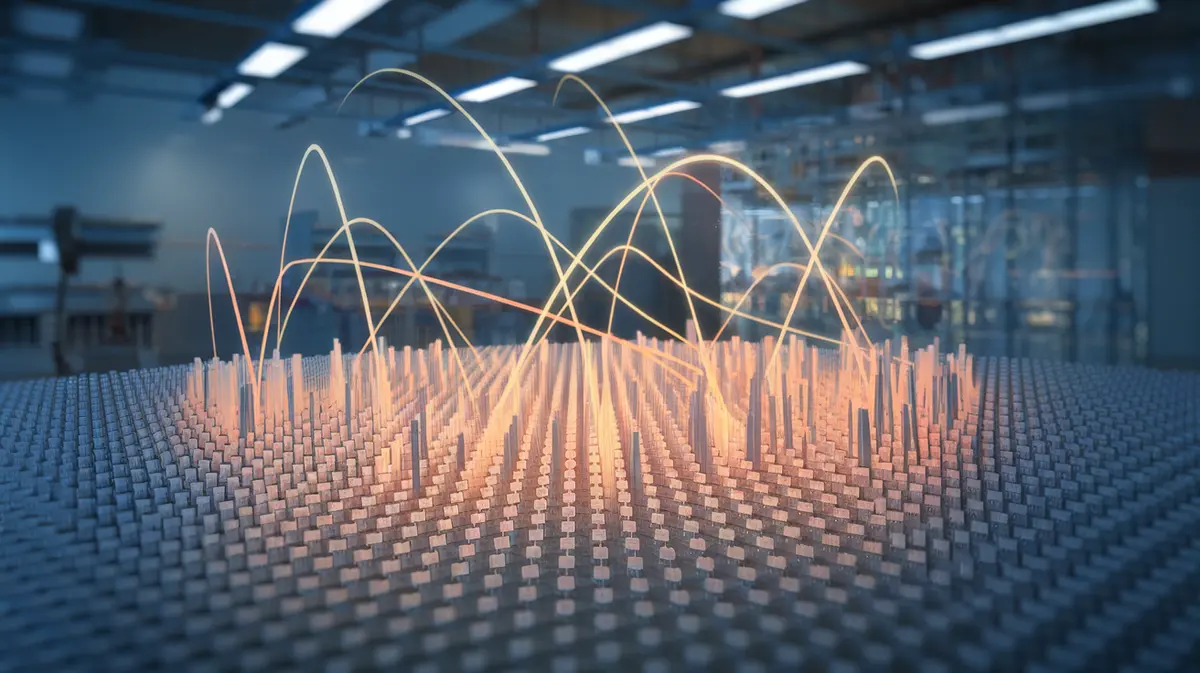
A material's optical behavior normally comes from its chemistry - the atoms it is made of. A metamaterial gets its properties from its structure instead. Engineers pattern a surface with millions of tiny features - pillars, slots, or antennas - each far smaller than the wavelength of the light or radio wave it will handle. To the incoming wave, this array does not look like a collection of separate objects; it behaves like a single new material with properties you chose by design. Because those meta-atoms can be shaped and arranged freely, a metamaterial can do things ordinary matter simply cannot - including bending a wave the "wrong" way, a trick called negative refraction that no natural substance exhibits.
The Metasurface: Physics on a Flat Chip
A metasurface is a metamaterial flattened into a single, ultra-thin layer - and it is the version reaching real products. Instead of relying on a wave slowly accumulating a bend as it passes through a thick curved lens, a metasurface tweaks the wave instantly at the surface: each nano-structure nudges the phase of the light passing through its little patch, and the millions of nudges together sculpt the outgoing wavefront into whatever shape the designer wants. That means a flat lens - a "metalens" - can focus light exactly like a bulky curved one, but is fabricated flat on a wafer using the same tools that make computer chips. Optics stops being something you grind and polish and becomes something you print in a semiconductor fab.
"For centuries optics was a craft of curves and thickness. Metasurfaces turn it into a design problem you solve on a computer and manufacture in a chip fab. When you can dictate what happens to a wave at every point on a flat surface, the old rules about how big a lens or an antenna has to be simply stop applying."
Steering Beams Without Moving a Thing
The same idea works on radio waves, and it unlocks something valuable: beam steering with no moving parts. A traditional radar or LiDAR aims by physically rotating, and a satellite dish points by mechanically tilting. A reconfigurable metasurface can be switched electronically, meta-atom by meta-atom, to redirect a beam in any direction in a fraction of a second - no motors, no gimbals, nothing to wear out. In wireless, these are called reconfigurable intelligent surfaces (RIS): flat panels that can be placed on a wall to reflect and refocus a 5G signal around an obstacle, extending coverage into dead zones. Solid-state, all-electronic control of where a beam goes is the feature carrying metasurfaces into cars, phones, and networks.
Where the Technology Is Being Deployed
- Smartphone cameras and sensors. Metalenses shrink the optical stack, enabling thinner cameras and compact face-unlock and depth sensors that once needed several bulky lenses.
- LiDAR and 3D sensing. Solid-state metasurface beam steering promises LiDAR with no spinning parts - cheaper, smaller, and more reliable for cars and robots.
- 5G and future networks. Reconfigurable intelligent surfaces bounce and refocus millimeter-wave signals around buildings and into coverage gaps without a full base station.
- Satellite connectivity. Flat, electronically-steered metasurface antennas track satellites from a moving vehicle or aircraft without a mechanical dish.
- Advanced imaging. Metasurfaces can capture information ordinary lenses discard - like the polarization of light - in a single compact sensor, useful in medical and industrial inspection.
Conventional Optics
Bends waves with curvature and thickness - ground glass lenses, spinning LiDAR, tilting dishes. Mature and cheap, but bulky, heavy, and full of parts that move and wear.
Meta-Optics
Bends waves with an engineered flat surface made in a chip fab. Thin, light, and steerable with no moving parts - at the cost of a harder design and narrower wavelength range.
Meta-Optics vs. Conventional Optics
| Property | Conventional Lens / Antenna | Metasurface |
|---|---|---|
| How it works | Curvature & material | Sub-wavelength structure |
| Thickness | Bulky, curved | Flat, near-atomic |
| Beam steering | Moving parts | All-electronic, no motion |
| Manufacturing | Grind & polish / assembly | Semiconductor fab |
| Wavelength range | Broad | Often narrow, by design |
The point is not that metasurfaces beat glass everywhere - a camera lens still wins for broad, full-color imaging. Meta-optics wins wherever you need thin, flat, light, or electronically steerable, and are willing to design for a specific job rather than buy something general-purpose.
Who Is Building the Industry
What was exotic physics a decade ago is now a supply chain of real companies:
- Metalenz - the Harvard spinout commercializing metalenses and single-sensor polarization imaging, putting flat optics into consumer devices.
- Lumotive - building programmable optical metasurfaces for solid-state LiDAR beam steering with no moving parts.
- Kymeta - flat, electronically-steered metamaterial antennas for satellite connectivity on moving vehicles.
- NIL Technology - a nanoimprint-lithography specialist mass-producing the sub-wavelength structures that meta-optics depend on.
- Pivotal Commware & Greenerwave - developing reconfigurable intelligent surfaces and holographic beamforming to reshape 5G and wireless coverage.
The Honest Trade-Offs
Metasurfaces are real and shipping, but the engineers scaling them are candid about the hard parts:
- Wavelength is fussy. A metasurface is tuned to the wavelengths it was designed for; making one work efficiently across a broad band - like full-color imaging - is genuinely difficult.
- Fabrication is exacting. The nanostructures must be patterned with near-perfect precision over an entire surface, and yield at high volume is a real manufacturing challenge.
- Efficiency losses. Some designs waste a portion of the incoming light or signal, a trade-off against their compactness that must be engineered around.
- Design is hard. Choosing millions of meta-atom shapes to produce a desired effect leans heavily on simulation and, increasingly, AI - it is not a catalog part you simply order.
"Metasurfaces will not replace every lens on Earth. They win where flat, thin, and steerable matter more than anything - a phone that must be slim, a LiDAR that cannot afford moving parts, a network that must bend a signal around a building. Get those right and you rebuild optics as something you fabricate on a chip."
What This Means for Business
You will not buy a metasurface by name, but you will feel its second-order effects across the devices your business depends on. Metamaterials are a foundational technology - the same kind of quiet enabler that a better battery or a faster chip is - sitting underneath thinner cameras, cheaper and more reliable sensors, and networks that reach into places they could not before. As phones, cars, robots, and wireless infrastructure all push for smaller, lighter, and no-moving-parts hardware, engineered optics is one of the answers. The practical move is not to chase the material by name but to track the trend: the components that sense, image, and connect the physical world are being re-engineered around nanostructured surfaces, and the operations positioned to adopt smaller, smarter, more reliable devices will have the edge.
At Internet Pros, we help businesses make sense of fast-moving technology and turn it into a practical roadmap - from strategy to the software and automation that tie new systems together. Get in touch to talk through what emerging technology could mean for your operation, or explore more technology insights on our blog.