Satellite Direct-to-Cell in 2026: How Starlink, AST SpaceMobile, and 3GPP Non-Terrestrial Networks Are Turning Ordinary Smartphones Into Satellite Phones
- Internet Pros Team
- June 18, 2026
- Networking & Security
For as long as mobile phones have existed, coverage has had an edge - a line on the map past which the bars vanish and the phone in your pocket becomes a flashlight with a camera. Mountains, oceans, deserts, farmland, disaster zones with toppled towers: roughly 90% of the planet's surface has never had a cell signal, because building a tower there made no economic sense. In 2026, that edge is dissolving. Satellite direct-to-cell - also called direct-to-device (D2D) - lets an ordinary, unmodified smartphone connect straight to a satellite passing overhead, with no dish, no bulky satellite phone, and often no special app. The tower simply moves to space, and the dead zone disappears.
A Cell Tower That Orbits the Earth
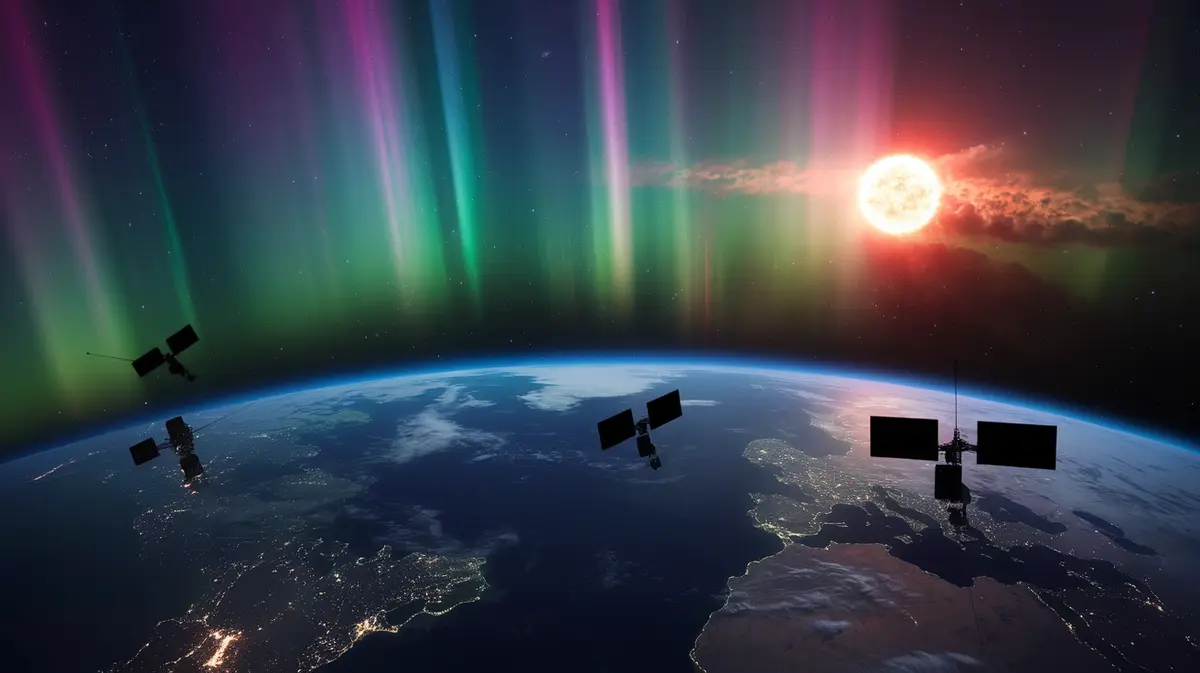
The core idea is deceptively simple: put the cell tower in orbit. A low-earth-orbit (LEO) satellite carries a payload that behaves like a cellular base station, broadcasting and receiving on the same licensed mobile frequencies your carrier already uses on the ground. To your phone, the satellite looks like just another tower - a very tall, very fast-moving one about 340 to 550 kilometers up.
What makes this different from every "satellite phone" before it is that nothing about the handset changes. Traditional satellite communication demanded specialized devices with chunky antennas pointed at the sky. Direct-to-cell flips the burden: the satellite does the hard work with enormous antennas and sensitive receivers, so the phone you already own - the one that struggles to reach a tower 5 kilometers away - can close a link to a spacecraft hundreds of kilometers overhead.
Why 2026 Is the Turning Point: 3GPP Non-Terrestrial Networks
Direct-to-cell did not happen because of one company; it happened because the standards caught up. The same body that defines 4G and 5G, 3GPP, formalized Non-Terrestrial Networks (NTN) - extensions that teach the cellular standard how to cope with a tower moving at 27,000 km/h. That means handling the brutal Doppler shift of a satellite racing across the sky, the long round-trip delay, and the rapid hand-offs as one satellite sets and the next rises. Because NTN is baked into the standard, new phone chipsets from Qualcomm, MediaTek, and others support it natively - no add-on hardware required.
Regulators moved too. Frameworks like the FCC's Supplemental Coverage from Space (SCS) created a legal path for satellite operators to use a mobile carrier's licensed spectrum, so a constellation can legitimately act as an extension of a terrestrial network rather than a separate service. Standards plus spectrum plus silicon - the three locks all turned at once.
"For a century we built connectivity outward from cities, one tower at a time, and simply gave up on the 90% of the map where the math did not work. Direct-to-cell inverts that. Coverage stops being something you extend to a place and becomes something that is simply everywhere the sky is."
The Two Models Racing to Orbit
Constellation-as-carrier
Starlink Direct to Cell pairs its huge LEO fleet with mobile operators like T-Mobile, using their spectrum to reach phones - texting first, then voice and data as the network fills out.
Giant-antenna satellites
AST SpaceMobile flies BlueBird satellites with tennis-court-sized phased-array antennas designed to deliver true broadband - not just messages - directly to standard phones.
Narrowband & IoT
Players such as Skylo, Globalstar, and Lynk focus on emergency SOS, messaging, and machine-to-machine links - low data rates, but global reach for sensors and safety.
What Direct-to-Cell Replaces - and Beats
| The Need | The Old Way | With Direct-to-Cell (2026) |
|---|---|---|
| Reach help from the backcountry | Carry a separate satellite messenger or emergency beacon | Text or trigger SOS on the phone already in your pocket, anywhere with open sky |
| Stay connected on a rural property or job site | No service, or a costly fixed satellite dish | The same phone keeps working past the edge of tower coverage |
| Keep communicating after a disaster | Wait for crews to restore felled cell towers | Phones fall back to space when the ground network is down |
| Track assets and sensors worldwide | Specialized satellite IoT hardware and contracts | Standard cellular IoT modules reach orbit over the open ocean or remote land |
Where Direct-to-Cell Wins Today
- Eliminating dead zones. Hikers, sailors, ranchers, and rural communities get a usable signal where no tower will ever stand.
- Life-safety messaging. Emergency SOS and two-way texting from anywhere under open sky turn a phone into a survival tool.
- Disaster resilience. When hurricanes or wildfires take down ground infrastructure, satellites keep critical messages flowing.
- Global IoT and logistics. Shipping containers, pipelines, farm equipment, and remote sensors stay reachable across oceans and wilderness.
The Honest Trade-Offs
- Capacity is shared and thin. One satellite covers a vast area, so the bandwidth is spread across everyone beneath it - great for texts and SOS, not a replacement for fiber or a strong 5G tower.
- You need a view of the sky. The signal does not punch through buildings, dense canopy, or deep canyons the way a nearby ground tower can; direct-to-cell shines outdoors.
- Service is rolling out in stages. Texting comes first, then voice and limited data, expanding as more satellites launch and constellations grow denser.
- The physics is unforgiving. Closing a link from a pocket-sized phone to a fast-moving satellite is a tight link budget - which is why coverage, data rates, and reliability still vary by constellation and location.
What This Means for Businesses
- Rethink "out of coverage" as a planning assumption. Field crews, fleets, and remote sites can be reached with the standard phones and SIMs they already use - no separate satellite gear to provision.
- Build it into safety and continuity plans. Direct-to-cell is a low-cost backstop for lone workers and a resilience layer when terrestrial networks fail.
- Watch the data roadmap, not just today's texting. As broadband-class constellations mature, satellite backup for point-of-sale, telemetry, and light connectivity becomes realistic.
- Check carrier and device support. The feature depends on your mobile operator's satellite partnership and an NTN-capable phone - confirm both before relying on it.
The Bottom Line
Satellite direct-to-cell is one of those quiet shifts that rewrites a decades-old assumption without asking you to buy anything new. The phone stays the same; the network simply grows a new layer that floats overhead and fills in everywhere the towers could not reach. It will not replace fiber or a strong 5G signal - the capacity and physics make that clear - but it does something arguably more profound: it removes the blank spots from the map entirely.
In 2026, the combination of LEO constellations, 3GPP non-terrestrial standards, and regulators willing to lend carrier spectrum to space has turned an ordinary smartphone into something it has never been: a device that works wherever you can see the sky. The first message sent from a hilltop with no bars used to be impossible. Now it is just connectivity catching up to the rest of the planet.