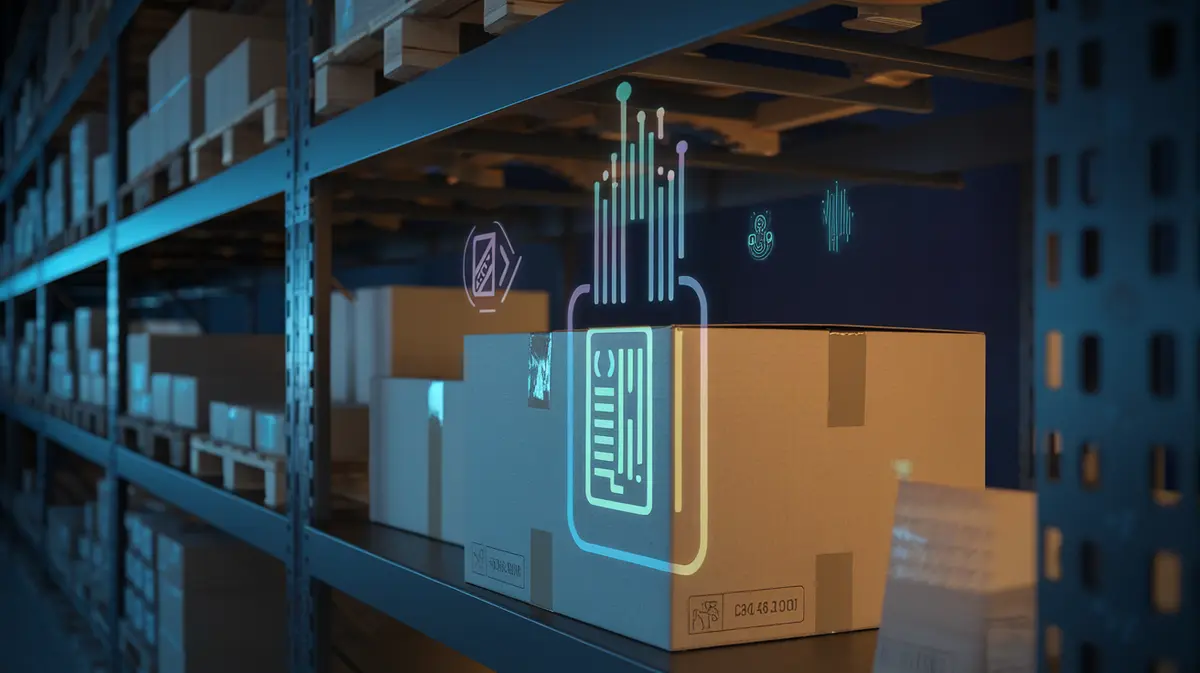
Ambient IoT in 2026: How Battery-Free Devices and Energy Harvesting Are Powering Trillions of Tiny Sensors With Backscatter and 3GPP Release 19
- Internet Pros Team
- July 27, 2026
- Networking & Security
Every connected device you own has the same weakness: a battery. It runs down, it needs charging or replacing, and it eventually becomes waste. Now imagine a wireless sensor so simple and so efficient that it never needs a battery at all - it simply harvests the trace energy already floating around it and reports for duty whenever asked. That is ambient IoT, and in 2026 it stopped being a laboratory curiosity and became a formal wireless standard poised to put sensing into places batteries never could.
What Ambient IoT Actually Is
Ambient IoT (sometimes called passive IoT or zero-energy devices) describes a class of extremely low-power wireless sensors that scavenge the energy they need from their surroundings instead of storing it in a battery. The power might come from radio waves already in the air, indoor light, the heat of a machine, or the vibration of a moving truck. Because the device carries no battery and often no traditional radio transmitter, it can be made paper-thin, printed onto a label, and produced for pennies. The vision is staggering in scale: not billions of devices, but trillions of tiny sensors woven invisibly into packaging, walls, soil, and clothing.
"The last great barrier to putting a sensor on everything was never the sensor - it was the battery. Remove the battery and you remove the cost, the maintenance, and the waste all at once."
The Secret Ingredient: Backscatter
A normal radio spends most of its energy generating a signal to transmit - which is exactly the part a battery-free device cannot afford. Ambient IoT sidesteps this with a trick borrowed from RFID called backscatter communication. Instead of creating its own signal, the device simply reflects an existing radio wave back to a reader, subtly changing the reflection to encode its data - much like signalling with a mirror and sunlight rather than lighting your own lamp. Because reflecting a wave costs a tiny fraction of the energy needed to broadcast one, a device can communicate on the microwatts it harvests from the environment. This single idea is what makes truly battery-free networking possible.
Where the Energy Comes From
Radio Waves (RF)
The device harvests power from ambient signals - a nearby reader, a cellular tower, even stray Wi-Fi and TV broadcasts - the same principle that powers a contactless payment card.
Light
Tiny indoor solar cells turn the ambient light of an office, warehouse, or greenhouse into enough power to run a sensor indefinitely.
Heat & Motion
Thermoelectric and vibration harvesters capture the wasted heat of machinery or the shake of a moving vehicle and convert it into a trickle of usable electricity.
Why 2026 Is the Turning Point
Ambient IoT has existed in pieces for years, but 2026 marks the moment it became a real, interoperable standard. The mobile industry body 3GPP - the same organization behind 4G and 5G - is finalizing ambient IoT as part of Release 19, the groundwork for 6G. That matters enormously: it means battery-free devices will eventually work directly with the existing cellular network, without a separate proprietary reader for every vendor. A phone or a cell tower could one day wake up and read a passive tag the way it connects to any other device today, turning the world’s mobile infrastructure into a giant, ambient sensing grid.
Battery-Powered IoT vs. Ambient IoT
| Factor | Traditional IoT Sensor | Ambient IoT Device |
|---|---|---|
| Power source | Battery that must be charged or replaced | Energy harvested from the environment |
| Cost per unit | Dollars - limits how many you can deploy | Cents - cheap enough to put on everything |
| Maintenance | Batteries die; someone has to service them | Effectively maintenance-free for its lifetime |
| Size & form | Bulky housing around the cell | Thin enough to print onto a sticker or label |
| Scale | Billions of devices | Potentially trillions |
Where It Is Already Being Deployed
- Supply chain and logistics: smart labels that track a pallet or parcel through every warehouse and truck without anyone scanning a barcode, giving real-time visibility from factory to doorstep.
- Retail: shelf tags that report stock levels automatically, so a store knows the instant a product runs low or is misplaced.
- Cold chain and food safety: battery-free temperature sensors printed onto packaging that flag whether medicine or produce ever got too warm in transit.
- Agriculture: soil-moisture and crop sensors scattered across a field, powered by sunlight, reporting conditions acre by acre.
- Smart buildings: occupancy, humidity, and leak sensors embedded in walls at construction time and never touched again for the life of the building.
The Honest Trade-Offs
Ambient IoT is transformative, but it is not magic. The devices are deliberately simple and low-bandwidth - they send tiny bursts of data occasionally, not video streams. Because they only work when there is energy to harvest, availability can be intermittent: a tag in a dark, quiet corner with no radio nearby may stay silent until conditions improve. There are real security and privacy questions, too - a world blanketed in invisible readable tags raises concerns about tracking, and the devices are too constrained to run heavy encryption, so protection has to be designed into the network layer. And while removing batteries slashes electronic waste, deploying trillions of printed devices creates its own end-of-life challenge that the industry is only beginning to address.
"We spent a decade connecting the expensive things. Ambient IoT is about connecting the cheap things - the box, the label, the bolt, the leaf - and there are almost infinitely more of those."
Why It Matters for Your Business
You may never buy an ambient IoT chip directly, but its ripple effects will reach almost every operation that moves, stores, or sells physical goods. When sensing costs pennies and requires no maintenance, it becomes economical to measure things that were never worth measuring before - the exact location of every item in a warehouse, the temperature history of every shipment, the condition of every piece of equipment. That flood of cheap, continuous data is the raw material that AI systems turn into forecasting, automation, and efficiency. Ambient IoT is quietly laying the physical foundation for the next decade of data-driven decision-making.
The battery has been the invisible ceiling on how many things we could sense. Remove it, and that ceiling disappears. In 2026 the standards, the energy-harvesting hardware, and the economics have finally converged - and the result may be the largest, quietest computing network humanity has ever built, hiding in plain sight on the surface of everyday objects.