Cellular Agriculture in 2026: How Cultivated Meat and Precision Fermentation From Upside Foods, GOOD Meat, Perfect Day, and Formo Are Growing Real Meat and Dairy Without the Animal
- Internet Pros Team
- July 1, 2026
- AI & Technology
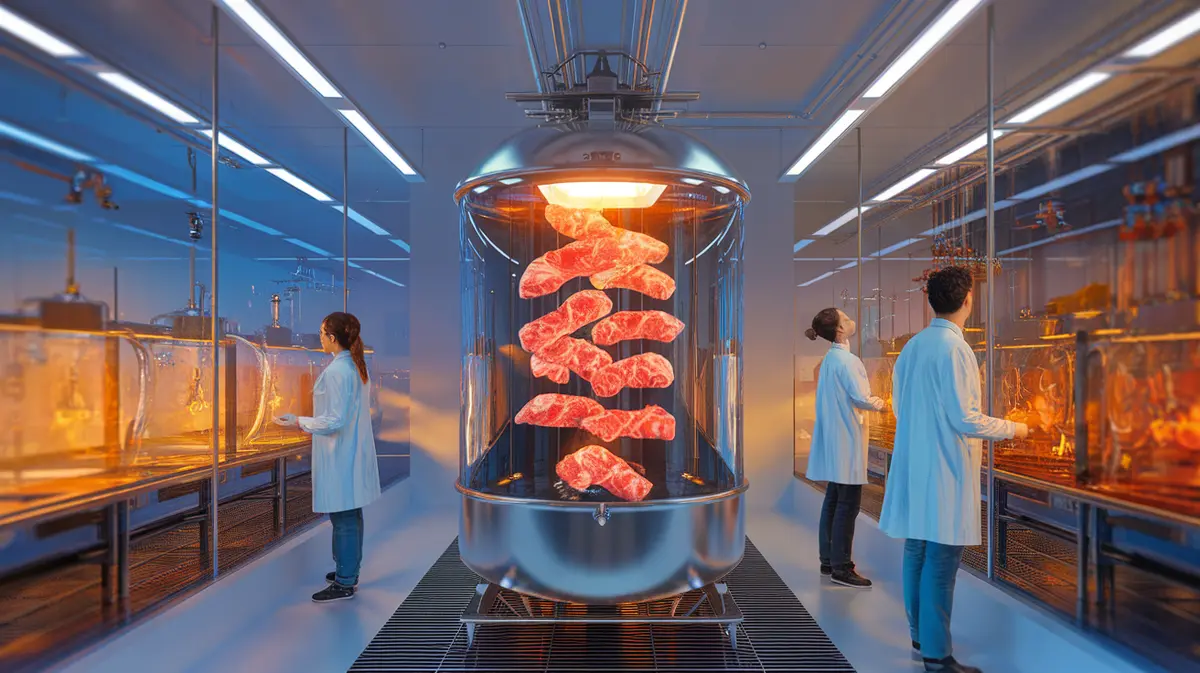
For ten thousand years, getting meat, milk, or eggs has meant one thing: raise an animal. It is a process that ties up more than a third of the planet's habitable land, drinks up fresh water, and drives a large slice of global greenhouse emissions - all to grow a whole animal when we really only want the muscle, the fat, and a handful of proteins. In 2026 a different approach is moving out of the lab and onto grocery shelves and restaurant menus. Called cellular agriculture, it makes real animal products - genuine muscle, real milk proteins, actual egg whites - by growing cells and microbes in polished steel tanks, no herd required. It is not a plant pretending to be beef. It is beef, dairy, and egg protein, produced without the animal.
What Cellular Agriculture Actually Is
Cellular agriculture is really two related technologies pointed at the same goal. The first, cultivated meat (also called cultured or cell-based meat), starts with a small sample of animal cells - taken once, painlessly - and grows them into edible muscle and fat. The second, precision fermentation, skips the animal entirely and instead programs microbes like yeast or fungi to brew specific animal proteins, the same way brewers have used yeast to make beer for centuries. Both replace the farm with a bioreactor: a clean, temperature-controlled steel tank where living cells are fed and multiply.
The distinction matters. Cultivated meat aims to recreate the structure of a cut of meat - the fibers you chew. Precision fermentation aims to recreate individual ingredients - the whey and casein in milk, the proteins in an egg white - which food makers then use to build a familiar product like cheese, ice cream, or an omelette.
How You Grow Meat Without an Animal
Cultivated Meat: Cells to Cut
Cells are placed in a growth medium - a broth of sugars, amino acids, vitamins, and minerals that replaces the animal's bloodstream - inside a bioreactor. They divide again and again, often onto an edible scaffold that gives them shape and texture, until there is enough tissue to harvest into a nugget, a fillet, or a ground blend.
Precision Fermentation: Microbe to Protein
Scientists give a microbe the genetic instructions for a target animal protein. Fed sugar in a fermenter, the microbe secretes that exact protein, which is then filtered and purified into a powder - molecularly identical to the version from a cow or a hen, but made without one.
A key hurdle for cultivated meat has been the growth medium, which once relied on expensive animal-derived serum. The move to animal-free, food-grade media - and the falling price of its ingredients - is one of the main reasons the field turned from science project into business in 2026.
"We spent a century optimizing how to raise a whole animal to get a few pounds of the parts we actually eat. Cellular agriculture flips that: grow only the part you want, in a clean tank, in weeks instead of years. Once the medium gets cheap enough, the economics stop being a question of if and become a question of when."
Why It Matters: Land, Water, and Climate
Conventional animal agriculture is staggeringly resource-hungry because so much of what you feed an animal goes to keeping it alive rather than into the meat. Growing only the edible cells - or brewing only the useful proteins - promises dramatically less land and water and far lower emissions per pound, provided the bioreactors run on clean energy. For a world trying to feed ten billion people without clearing more forest, that is a profound lever. There is also a food-security angle: production can happen in a city, close to consumers, insulated from drought, disease outbreaks, and fragile supply chains.
Who Is Building the Industry
What was a handful of research teams is now a global industry with regulatory approvals, real products, and serious capital:
- Upside Foods & GOOD Meat - the two companies cleared by U.S. regulators to sell cultivated chicken, and GOOD Meat (from Eat Just) the first to sell cultivated meat anywhere, in Singapore.
- Mosa Meat - the Dutch pioneer behind the world's first cultivated hamburger, focused on driving down the cost of cultivated beef.
- Aleph Farms & Believer Meats - Israeli companies pursuing whole cultivated steaks and large-scale production facilities.
- Wildtype & BlueNalu - cultivated seafood specialists growing sushi-grade salmon and other fish without the ocean.
- Perfect Day - the precision-fermentation leader making animal-free whey protein for dairy without a cow.
- Formo & The EVERY Company - brewing real cheese proteins and animal-free egg proteins that food makers drop into familiar products.
Cellular Agriculture vs. the Alternatives
| Property | Conventional Farming | Plant-Based | Cellular Agriculture |
|---|---|---|---|
| Is it real animal protein? | Yes | No - a plant imitation | Yes - molecularly identical |
| Needs livestock? | Yes | No | No |
| Land and water use | Very high | Low | Low (potentially) |
| Production time | Months to years | Fast | Days to weeks |
| Main challenge | Emissions, land | Taste and texture | Cost and scale |
The Honest Trade-Offs
Cellular agriculture is real and shipping, but the companies scaling it are candid about the hard parts:
- Cost is still the wall. Cultivated meat remains far more expensive per pound than farmed meat; reaching price parity depends on cheaper media and much bigger bioreactors.
- Scale is genuinely hard. Growing a few kilograms in a lab is one thing; running the enormous, sterile, food-grade bioreactors needed for millions of pounds is an unsolved engineering marathon.
- Regulation and labeling vary. A few countries have approved sales while others move cautiously or restrict what these products may be called, leaving a patchwork market.
- Public trust takes time. Precision-fermentation dairy already hides quietly inside products, but "meat grown in a tank" still has to win over shoppers - and the energy source behind the bioreactors decides whether the climate promise holds.
"The first win will not be a cultivated ribeye on every plate. It will be an ingredient - a fermentation-made milk protein, an animal-free egg white - slipped into food you already buy, tasting exactly the same. Most people will adopt this technology without ever noticing they did."
What This Means for Business
You do not need to be a food company to feel this shift. Cellular agriculture is turning food into a technology industry - one built on biology, process engineering, data, and software to control fermentation at scale - which means new supply chains, new brand opportunities, and new sustainability stories for anyone who buys, sells, or serves food. The near-term action is not to bet the business on a cultivated steak, but to watch where precision-fermentation ingredients are quietly entering the products you rely on, to understand how a lower-emission protein supply could reshape your footprint, and to recognize that the same automation, sensing, and AI-driven process control transforming factories are now being pointed at growing food. The animal has been the factory for ten thousand years; in 2026, for the first time, that factory is becoming optional.
At Internet Pros, we help businesses make sense of fast-moving technology and turn it into a practical roadmap - from strategy to the software and automation that tie new systems together. Get in touch to talk through what emerging technology could mean for your operation, or explore more technology insights on our blog.