Deepfake Fraud in 2026: How AI Voice Cloning and Synthetic Video Scams Are Targeting Businesses - and How to Fight Back
- Internet Pros Team
- June 17, 2026
- Networking & Security
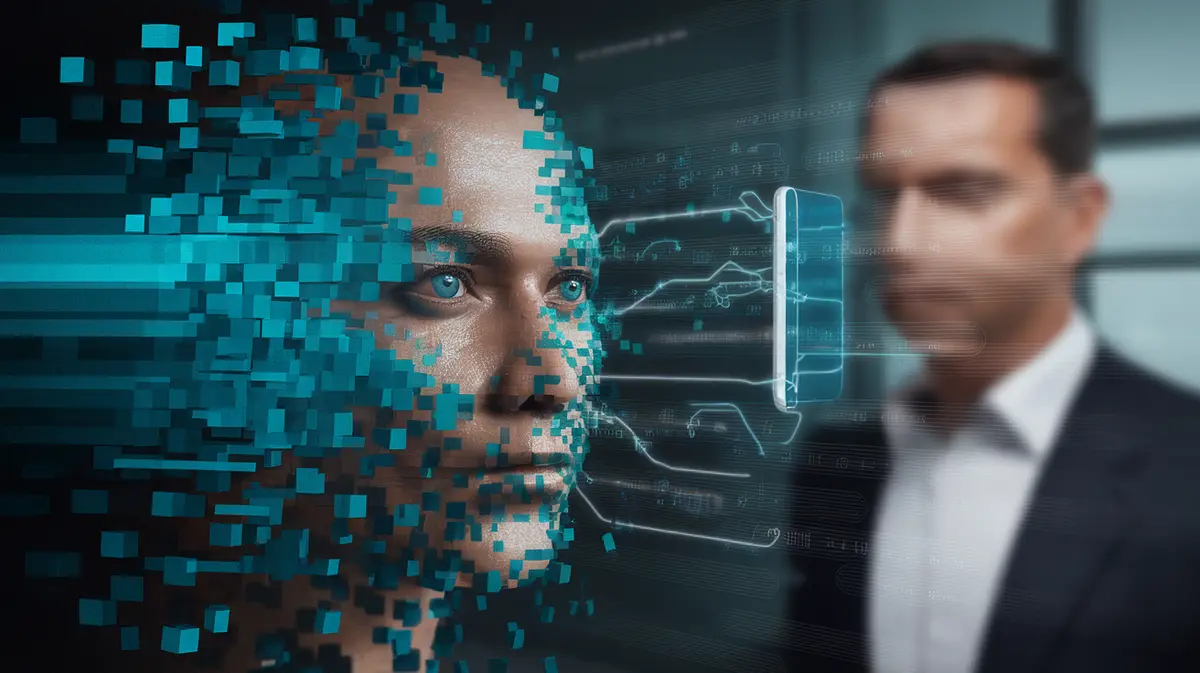
For as long as business has existed, a familiar voice on the phone or a recognizable face on a video call has counted as proof of identity. In 2026, that assumption is dangerously obsolete. Generative AI can now clone a person's voice from a few seconds of audio and render a convincing live video of their face in real time - and criminals have industrialized the trick. Deepfake fraud has moved from viral curiosity to one of the fastest-growing threats facing finance teams, executives, and IT departments. The technology that makes a customer-service chatbot sound human is the same technology emptying corporate bank accounts, and the only reliable defense is to stop trusting your eyes and ears alone.
From Novelty to Industrial-Scale Fraud
Three forces converged to turn deepfakes into a mainstream criminal tool. First, the AI models got good enough that a cloned voice or a swapped face is indistinguishable to a human in a stressful, time-pressured moment. Second, the cost collapsed: what once required a research lab now runs on a consumer GPU or a cheap cloud subscription, and underground markets sell fraud-as-a-service kits to criminals with no technical skill. Third, the raw material - our voices and faces - is everywhere, scraped from earnings calls, conference talks, podcasts, webinars, and social media.
The watershed case was the 2024 Hong Kong incident in which an employee at engineering firm Arup wired roughly $25 million after joining a video call where every other participant, including the company's CFO, was a deepfake. That was not a one-off. By 2026, real-time face-swap fraud on Zoom and Teams calls, AI-cloned voicemails from the "CEO," and synthetic candidates passing remote job interviews to infiltrate companies are all routine. Deepfake-enabled fraud attempts now number in the millions annually, and losses run into the billions.
Voice Cloning (Vishing)
A few seconds of audio is enough to clone a voice. The fake "executive" calls or leaves a voicemail demanding an urgent, confidential wire transfer.
Real-Time Video Swaps
Live face-swap software puts a trusted colleague's face on a fraudster during a video call, defeating "I saw them with my own eyes" verification.
Synthetic Identity
Deepfakes beat remote ID checks and video KYC, letting criminals open accounts, pass interviews, and plant insiders inside organizations.
"We spent twenty years teaching employees to trust a face and a voice. Attackers can now manufacture both on demand. The fix is not better eyes - it is better process. Identity has to be verified through a channel the attacker does not control, every single time money or access is on the line."
Anatomy of a Modern Deepfake Attack
Deepfake fraud is rarely just clever video - it is classic social engineering supercharged by synthetic media. A typical executive-impersonation attack unfolds in predictable stages:
- Reconnaissance. Attackers harvest public audio and video of a target executive and study the company's reporting lines, vendors, and payment habits from LinkedIn and leaked data.
- Pretext. A believable scenario is built - a confidential acquisition, an urgent supplier payment, a regulator deadline - that demands speed and secrecy.
- Contact. The victim receives a cloned-voice call, a deepfake video meeting, or a message that escalates to one, applying authority and time pressure.
- Exploitation. The employee, believing they are obeying a senior leader, wires funds, changes banking details, or hands over credentials before anyone can second-guess it.
The psychology is the weapon. Authority, urgency, and confidentiality short-circuit the instinct to double-check, and the synthetic voice or face removes the last doubt. This is why detection software alone will never be enough - the attack targets human judgment, not just pixels.
The Defense Playbook
| Defense | How It Stops Deepfake Fraud |
|---|---|
| Out-of-Band Callback | Verify any payment or sensitive request by calling back on a known, pre-stored number - never the one provided in the request. The single most effective control. |
| Code Words & Challenges | Agree on a private verbal passphrase or ask a question only the real person could answer. A deepfake cannot improvise a shared secret it was never trained on. |
| Payment Dual-Control | Require two authorized people to approve wires and any change to vendor banking details, so no single tricked employee can move money. |
| Liveness & Detection Tools | Use liveness checks and deepfake-detection in onboarding and high-risk flows as a layer - useful, but never the sole gate. |
| Content Provenance (C2PA) | Adopt Content Credentials so genuine media carries a signed, tamper-evident origin trail - shifting trust from "looks real" to "is cryptographically verified." |
Why "Detection" Is Not a Silver Bullet
It is tempting to believe an AI detector will simply flag the fakes. In practice, detection is an arms race that defenders are losing as often as winning - every improved detector trains the next, more convincing generator.
- Real-time is hard. Scanning a live video call for artifacts at low latency, reliably, across compression and bad webcams, remains brittle.
- False confidence is dangerous. A "passed" score can make an employee more likely to approve a fraudulent request than if no tool existed.
- Process beats pixels. A callback to a known number defeats a perfect deepfake; a detector that is 95% accurate still fails one in twenty times.
What Business and IT Leaders Should Do Now
- Rewrite verification policy around zero trust. Treat any voice or video request to move money, change banking details, or grant access as unverified until confirmed through a separate, pre-established channel.
- Train people on the new reality. Update security awareness so staff know that a familiar face and voice are no longer proof, and that pausing to verify will never get them in trouble.
- Harden the money flow. Mandatory callbacks, dual approval, and cooling-off windows on urgent wires close the exact gap these scams exploit.
- Shrink your exposure. Limit unnecessary public audio and video of key executives, and run tabletop exercises that simulate a deepfake CEO call.
- Build provenance into your stack. Favor platforms that support Content Credentials and signed media, the long-term answer to a world where anything can be faked.
The Bottom Line
Deepfake fraud is not a futuristic risk - it is a present, well-funded, repeatable attack that has already cost businesses hundreds of millions of dollars. The uncomfortable truth is that synthetic voices and faces will only get more convincing, and no detector will ever be perfect. The organizations that stay safe will be the ones that stop relying on human perception as a security control and instead bake verification into process: callbacks on known numbers, shared secrets, dual approval, and cryptographic provenance.
The good news is that these defenses are cheap, low-tech, and available today. A thirty-second callback to a number you already had on file will defeat a million-dollar deepfake every time. In the age of synthetic media, trust can no longer be something you see or hear - it has to be something you verify.