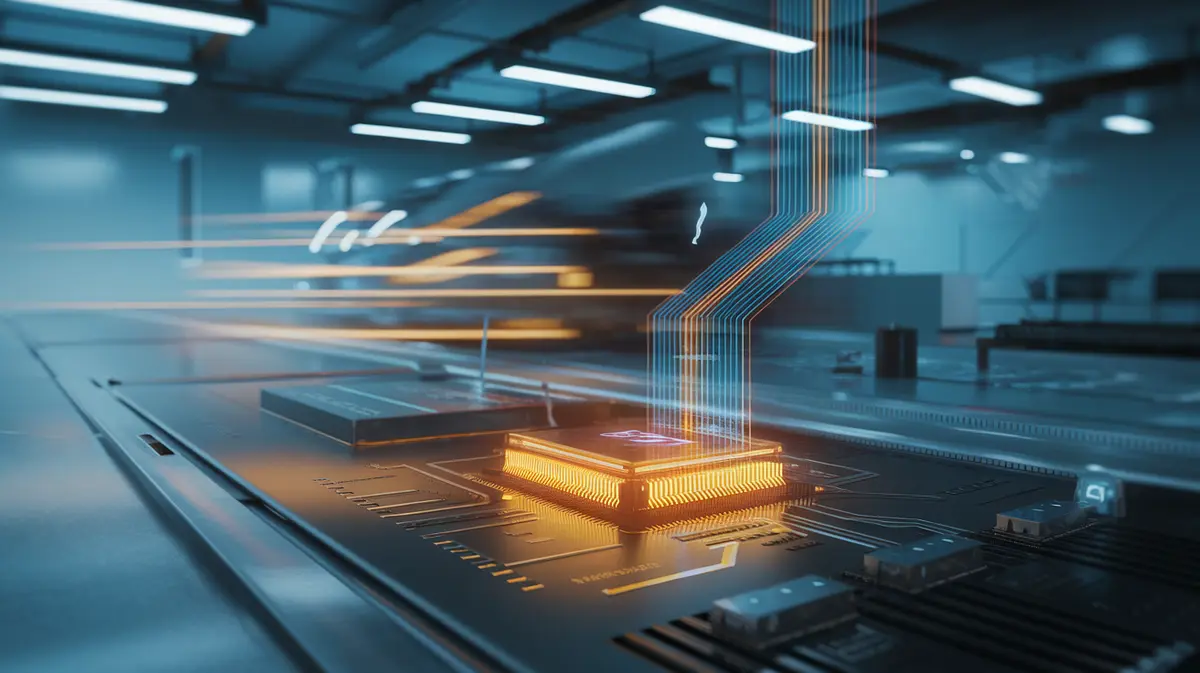
Event Cameras in 2026: How Prophesee, Sony, and iniVation Are Building Neuromorphic Vision Sensors That See Like the Human Eye - Faster, Dimmer, and With Almost No Data
- Internet Pros Team
- July 12, 2026
- AI & Technology
Every ordinary camera - the one in your phone, your laptop, your car - works by taking pictures. It captures a full grid of pixels, all at once, dozens of times a second, whether or not anything in the scene has changed. It is a method we have used for a century, and it wastes an astonishing amount of effort re-photographing walls that never move. In 2026 a fundamentally different kind of sensor is going mainstream in robotics, cars, and headsets: the event camera, a neuromorphic vision chip that throws away the frame entirely and, like your own retina, only reports what actually changes.
What an Event Camera Actually Is
A normal camera has a shutter and a clock. On every tick, it reads all of its pixels together and hands you a complete image - a frame. An event camera has no shutter and no shared clock. Instead, each of its pixels is an independent little circuit that watches the light landing on it and stays silent until that light gets brighter or darker by a set amount. The instant it does, that single pixel fires an event: a tiny message saying where it is (x, y), when it changed (down to the microsecond), and which way the brightness moved (up or down). Nothing else is sent. A blank wall produces no events at all; a spinning fan produces a sparkling stream of them.
"A frame camera asks every pixel the same question thirty times a second - what do you see now? - and most of them answer nothing changed. An event camera lets each pixel speak only when it has something to say. That one inversion buys you speed, dynamic range, and efficiency all at once."
Why the Frame Was Always the Problem
The frame is a convenient fiction. Between two frames, the world is invisible to the camera; a bullet, a bouncing ball, or a fast robot arm can move a long way in the blind gap, and whatever moves during a frame smears into motion blur. Frames also force a brutal trade: capture more of them per second and you drown in data and power; capture fewer and you miss fast events. And because every pixel shares one exposure setting, a bright window next to a dark doorway blows one out while the other goes black. Event pixels dodge all three problems - they run continuously with no shared exposure, each one adapting to its own patch of light.
The Advantages That Make People Switch
Microsecond Speed
Pixels react in microseconds, giving an effective temporal resolution equivalent to tens of thousands of frames per second - without ever recording a single conventional frame.
Huge Dynamic Range
Because each pixel responds to relative change, event sensors handle 120+ dB of dynamic range - reading detail in deep shadow and blinding sun in the same instant.
No Motion Blur
There is no exposure window to smear, so fast objects stay crisp. A propeller, a spark, or a thrown part is captured as clean motion rather than a blur.
Tiny Data and Power
Static scenes generate almost nothing to process, cutting data and power by orders of magnitude - ideal for always-on, battery-powered edge devices.
The Companies Building It
Event-based vision has crossed from research labs into shipping silicon, and a handful of players are driving it:
- Prophesee - the French pioneer of the field, whose Metavision sensors and software are the reference point for commercial event-based vision; it co-developed a stacked sensor with Sony.
- Sony - the imaging giant brought event pixels onto its advanced stacked-sensor manufacturing, shrinking pixels and pushing the technology toward mass-market cameras.
- iniVation - the Swiss company that grew out of the original academic Dynamic Vision Sensor work, supplying event cameras and tools to researchers and industry.
- Samsung - an early mover with its own DVS line, exploring event sensing for surveillance, gesture, and always-on applications.
- Universities and labs - the field was born in academia (the “silicon retina”), and research groups continue to push resolution, color event sensing, and new algorithms.
Where Event Cameras Are Landing First
| Field | Why Event Vision Wins | Example Use |
|---|---|---|
| Robotics | Low latency, no blur on fast motion | High-speed grasping, obstacle dodging, drones |
| Automotive | Dynamic range, reaction speed | Driver monitoring, pedestrian and hazard detection |
| AR / VR | Fast, low-power tracking | Eye tracking, hand tracking, headset positioning |
| Industrial | Effective ultra-high frame rate | Vibration monitoring, high-speed inspection, counting |
| Science | Microsecond timing | Particle tracking, microscopy, fluid dynamics |
The Honest Trade-Offs
Event cameras are not a drop-in upgrade, and the reasons are real. First, the output is not an image - it is an asynchronous stream of events, and almost the entire toolbox of computer vision, from deep-learning models to simple libraries, expects neat frames. New algorithms and spiking neural networks are still maturing, and the talent pool is small. Second, an event camera is essentially blind to things that do not move or change; a perfectly still scene tells it nothing, so many systems pair it with a conventional sensor. Third, most event sensors are monochrome and lower resolution than modern frame cameras, and a scene full of motion (rain, foliage, a shaking camera) can flood the output with events. The technology wins where speed, dynamic range, and efficiency matter more than pretty pictures - not everywhere, yet.
Why 2026 Is the Turning Point
Two things changed the trajectory. Sony putting event pixels onto its stacked manufacturing process meant the sensors finally got small, cheap, and reliable enough for consumer and automotive volumes, rather than being lab curiosities. At the same time, the explosion of edge AI - the push to run perception on-device, on tiny power budgets, without shipping video to the cloud - made a sensor that emits a trickle of sparse events instead of a torrent of frames suddenly very attractive. When the thing you care about is a fast reaction on a battery, re-photographing a static room thirty times a second looks like exactly the waste it always was.
What It Means for Business
Most organizations will not buy event cameras directly - but the products they depend on increasingly will. Faster, safer robots and drones on the factory floor; cars that notice a hazard a beat sooner; headsets with smoother tracking and longer battery life; inspection systems that catch a defect a frame camera would blur past. For anyone building automation, quality control, or physical AI, event-based vision is worth understanding now, because it changes what “seeing in real time” actually means. The frame camera will not disappear - but for a growing set of fast, tricky, always-on jobs, the sensor that ignores everything standing still is simply the better tool.
At Internet Pros, we help businesses make sense of fast-moving technology and turn it into a practical roadmap - from strategy to the software and automation that tie new systems together. Get in touch to talk through what emerging technology could mean for your operation, or explore more technology insights on our blog.