MicroLED Displays in 2026: How Samsung, Sony, Apple, Jade Bird Display, and Porotech Are Bringing Self-Emissive Micron-Scale LEDs to TVs, AR Glasses, and Wearables
- Internet Pros Team
- June 9, 2026
- AI & Technology
Every screen you own today is built on a compromise. OLED gives you perfect blacks but can burn in and struggles to get bright. LCD (including the mini-LED panels in premium TVs) gets blindingly bright but can never produce a truly black pixel. MicroLED refuses the compromise: it shrinks an ordinary inorganic LED - the same rugged technology in a traffic light - down to the width of a red blood cell, then uses millions of them as individual pixels. The result is a display that is self-emissive like OLED, brighter and longer-lived than anything else, and small enough to disappear into a pair of glasses. In 2026, after years of being "five years away," microLED is finally shipping in two very different places: the most expensive TVs on Earth, and the AR glasses that may replace your phone.
What Makes MicroLED Different
A microLED is exactly what it sounds like: a microscopic light-emitting diode, typically under 50 micrometers across and shrinking toward a few microns for microdisplays. Because each red, green, and blue sub-pixel is its own tiny inorganic LED that emits its own light, there is no backlight and no organic material that degrades. That single fact unlocks the whole value proposition.
Self-Emissive, Perfect Blacks
A black pixel is simply an LED that is switched off - zero light, infinite contrast - with none of the blooming or halos that plague backlit mini-LED LCDs.
Extreme Brightness & Longevity
Inorganic gallium-nitride LEDs hit thousands of nits and last for decades without burn-in - exactly where OLED is weakest.
Modular & Transparent
Bezel-free tiles snap together into seamless walls of any size, and the gaps between pixels let light through for see-through displays.
"MicroLED is the first display technology that wins on every axis at once - contrast, brightness, lifetime, and efficiency. The reason it is not in every living room yet has nothing to do with the physics of the pixel. It is entirely about manufacturing: how do you place tens of millions of flawless micron-scale chips, perfectly, cheaply, every single time?"
The Hard Problem: Mass Transfer
A 4K television has roughly 8.3 million pixels, and each pixel needs three sub-pixels - so a microLED 4K panel requires placing nearly 25 million individual LEDs, each smaller than a speck of dust, onto the backplane with near-perfect alignment. This is the infamous mass transfer problem, and it is the single reason microLED has stayed expensive.
The math is unforgiving. If your transfer process is 99.99% reliable - which sounds excellent - you still misplace thousands of LEDs on every panel, and a single dead red sub-pixel is a visible defect. So the entire industry has poured its effort into two things: placing chips faster and more accurately (via micro-transfer printing, elastomer stamps, laser-assisted transfer, and fluidic self-assembly), and finding and repairing the inevitable defects automatically. Add the stubborn physics of red microLEDs - which lose efficiency badly as they shrink - and you have the two engineering walls that 2026 is climbing.
Who Is Shipping MicroLED in 2026
| Company | Approach | 2026 Status |
|---|---|---|
| Samsung | The Wall modular microLED and finished microLED TVs assembled from seamless tiles, targeting ultra-premium large-format and commercial signage. | Selling large microLED TVs and modular video walls; pushing tile size down and cost toward more (still premium) living rooms. |
| Sony | Crystal LED direct-view microLED panels prized for cinema-grade color, plus next-gen microLED backlight/emissive work for professional mastering. | Shipping into high-end cinema, virtual-production LED volumes, and broadcast reference displays. |
| Jade Bird Display (JBD) | Monolithic microdisplays - millions of micro-LEDs built directly on a chip - delivering tiny, ultra-bright light engines for AR glasses. | Volume-shipping single-color and full-color AR microdisplays to smart-glasses makers; the de facto AR light-engine supplier. |
| Porotech | PoroGaN porous-gallium-nitride material and DynamicPixelTuning, enabling native red and even single-chip full-color microdisplays. | Sampling breakthrough microdisplays that attack the red-efficiency wall head-on; a key AR enabler. |
| AUO & PlayNitride | Taiwanese display and microLED specialists (PlayNitride's PixeLED transfer tech) covering automotive, wearables, and transparent panels. | Demonstrating flexible, transparent, and automotive-grade microLED; ramping pilot production lines. |
Two Markets, Opposite Ends of the Size Scale
MicroLED is arriving from both extremes of the display world at once, and the engineering is almost unrelated between them.
At the large end, microLED competes with high-end OLED and mini-LED TVs. Here the pixels are relatively large and easy to make, but you need millions of them placed across a huge area, so mass transfer and tiling cost dominate - which is why microLED TVs still carry five- and six-figure price tags. At the small end sit AR microdisplays: a postage-stamp chip with millions of pixels packed at thousands of pixels per inch. These are built monolithically (the whole array grown on one wafer), so there is no pick-and-place at all - the challenge instead is full-color and red efficiency at micron scale. This is the application most people will touch first.
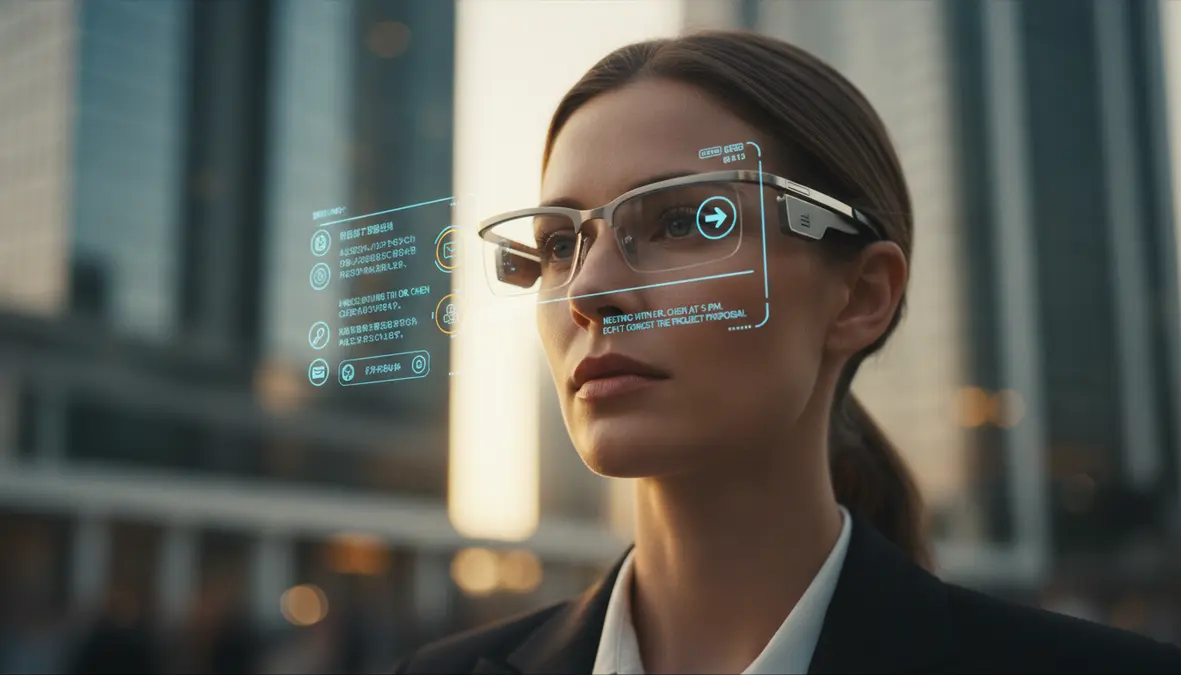
Why AR Glasses Need MicroLED Specifically
- Sunlight-readable brightness. A see-through AR image competes with daylight, demanding millions of nits from the microdisplay - a level only inorganic microLED reaches.
- Tiny and power-sipping. A microdisplay the size of a fingernail keeps glasses lightweight and lets the battery last all day.
- No backlight, instant pixels. Self-emission means thinner optics and the fast response needed to avoid motion sickness.
- It is the gating part. The light engine has been the bottleneck for consumer AR; better microLED microdisplays are what move the category forward.
MicroLED vs. OLED vs. Mini-LED
It is easy to confuse the names. Mini-LED is still an LCD - it just uses many small LEDs as a finely-zoned backlight, so it can bloom and never reaches true black. OLED is self-emissive with perfect blacks, but its organic pixels can burn in and top out in brightness. MicroLED keeps OLED's self-emissive perfect blacks while adding the brightness, lifetime, and efficiency of inorganic LEDs - the best of both, with manufacturing cost as the only real catch. Mini-LED is the value champion today; OLED is the mainstream premium choice; microLED is the no-compromise future being rationed out by yield.
The Honest Trade-Offs
- Cost, cost, cost. Mass transfer and defect repair keep large-format microLED firmly in luxury territory; the cost curve is bending down but slowly.
- The red problem. Red microLEDs lose efficiency as they shrink, which is why color conversion (quantum dots) and native-red breakthroughs like Porotech's matter so much.
- Yield and repair. With tens of millions of chips per panel, automated inspection and rework are as important as the LEDs themselves.
What This Means for Business and Product Leaders
- Don't wait for a cheap microLED TV - watch the glasses. The first microLED most consumers use will be a microdisplay in AR eyewear, not a television. Plan AR roadmaps around microdisplay availability.
- Know the difference between mini-LED and microLED. They are marketed similarly but are entirely different technologies; procurement and signage decisions should not confuse the two.
- High-value, high-durability screens come first. Virtual production stages, cinema, control rooms, transparent retail displays, and automotive are where microLED's brightness and lifetime justify the price today.
- Yield is the whole story. When evaluating a microLED vendor, the real question is their transfer yield and repair process - that, not pixel physics, determines price and availability.
The Bottom Line
MicroLED is the rare display technology with no inherent weakness - perfect blacks, searing brightness, decades of lifetime, and the efficiency to run on a wearable battery. The only thing standing between it and your living room is the brutal manufacturing challenge of placing tens of millions of microscopic LEDs flawlessly and affordably. In 2026, Samsung and Sony are selling that perfection at a premium for the biggest screens, while Jade Bird Display and Porotech are solving it at the opposite extreme to power the AR glasses that could become the next personal computer.
Two roads are converging on the same pixel. One day they meet in the middle - an affordable, transparent, burn-in-free panel that is equally at home as a 100-inch wall or a lens in front of your eye. The companies that crack mass transfer and the red-efficiency wall first will own the screens of the next decade. The question for anyone building hardware is no longer whether microLED will win on quality - it already has - but whether your product is ready for the moment the price finally falls.