Direct Lithium Extraction in 2026: How Lilac Solutions, EnergyX, Standard Lithium, and ExxonMobil Are Pulling Battery Metal From Brine Without Evaporation Ponds
- Internet Pros Team
- July 22, 2026
- AI & Technology
Almost every rechargeable thing in your life - the phone in your pocket, the laptop on your desk, the electric car in the driveway, the giant batteries now propping up power grids - depends on one soft, silvery metal: lithium. Demand for it is exploding, and yet the way we have mined it for decades is almost comically slow. To get lithium out of underground saltwater, producers pump the brine into ponds the size of small towns and simply wait for the sun to evaporate it - a process that can take a year or two and throws away more than half the lithium along the way. In 2026 a faster, cleaner alternative is finally scaling up: direct lithium extraction, or DLE, which pulls lithium straight out of brine in a matter of hours.
Why the Old Way Cannot Keep Up
Most of the world’s lithium comes from two places: hard rock mined and crushed in Australia, and salty underground brine in the high deserts of South America’s “lithium triangle.” The brine method sounds elegant - drill a well, pump up mineral-rich water, and let sunshine do the work - but it is brutally inefficient. The brine sits in a chain of evaporation ponds for 12 to 24 months while the water slowly boils off in the sun, leaving behind a concentrated soup you can finally process. It consumes enormous amounts of land, evaporates vast quantities of water in already-dry regions, and typically recovers only 40 to 60 percent of the lithium in the ground. In a decade where the world needs many times more lithium than it produces today, a two-year, half-wasted process is a bottleneck the battery boom cannot afford.
"We are trying to electrify the entire planet on a mining method that runs on sunshine and patience. Direct extraction turns a two-year wait into an afternoon - and that is the difference between a lithium shortage and a lithium supply."
What Direct Lithium Extraction Actually Does
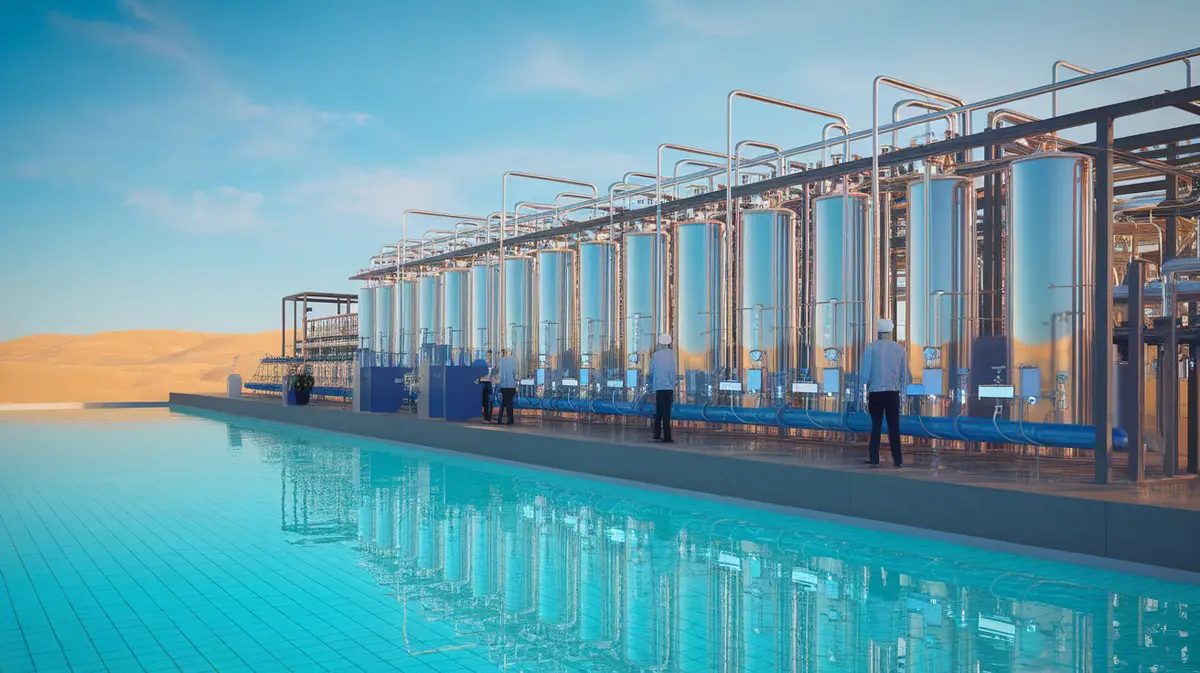
DLE flips the logic of the evaporation pond. Instead of removing everything except the lithium by boiling the water away, it reaches into the brine and grabs only the lithium, leaving the rest of the water behind. Think of it less like a salt flat and more like a water filter or a coffee machine: the brine flows through a specially engineered material that selectively snags lithium ions, the lithium is then rinsed off in a concentrated stream, and the leftover brine is pumped back underground. Because it is a targeted chemical grab rather than a wait for evaporation, it can run in hours instead of months, recover 80 to 90 percent or more of the lithium, and use a small fraction of the land and freshwater.
The Three Main Ways to Do It
DLE is not one technology but a family of them, each using a different trick to separate lithium from everything else dissolved in the brine.
Adsorption
The brine flows over a sponge-like solid whose surface is tuned to latch onto lithium ions and ignore everything else. The lithium is later washed off with water. Simple and water-based, it is the most commercially proven route.
Ion Exchange
A special material swaps its own ions for lithium ions in the brine, then releases the captured lithium when flushed with acid. Highly selective and delivers a very pure lithium stream, but consumes chemicals.
Solvent Extraction
A liquid solvent that pulls lithium out of the brine like oil separating from water, then hands it off to a clean stream. Powerful for tricky brines, but the solvents must be carefully contained.
The Shared Payoff
All three finish in hours to days, not years, recover far more lithium, and shrink the land and water footprint - while returning the spent brine to the ground instead of evaporating it away.
Who Is Building It
DLE has moved from lab benches to commercial demonstration plants, drawing in scrappy startups and the biggest names in energy alike.
- Lilac Solutions - a California startup whose ion-exchange bead technology targets brines the old evaporation method could never handle, backed by major automakers and mining investors.
- EnergyX - developing a combined membrane-and-extraction platform and racing to deploy it in South America’s lithium triangle at commercial scale.
- Standard Lithium - proving DLE on the lithium-rich brines of the Smackover formation in Arkansas, turning a legacy oil-and-gas region into a domestic battery-metal source.
- Vulcan Energy - pairing DLE with geothermal power in Germany’s Rhine Valley to produce lithium and clean heat from the same well, aiming for a near-zero-carbon footprint.
- ExxonMobil - the oil giant repurposing its drilling and subsurface expertise to extract lithium from Arkansas brine, signaling that Big Oil sees battery metals as its next act.
Evaporation Ponds vs Direct Lithium Extraction
| Dimension | Traditional Evaporation Ponds | Direct Lithium Extraction |
|---|---|---|
| Time to produce | 12 to 24 months | Hours to days |
| Lithium recovered | Roughly 40 to 60% | Often 80 to 90%+ |
| Land footprint | Ponds the size of a town | A compact industrial plant |
| Water use | Huge - evaporated away | Much lower - brine reinjected |
| Where it works | Only hot, dry, high-grade brines | A far wider range of brines |
The Honest Trade-Offs
DLE is not magic, and the hurdles are real. It is energy- and chemical-intensive: many methods need lots of fresh water to rinse the lithium off, plus acids or bases to run the cycle, and that has to be sourced and managed responsibly. Every brine on Earth is chemically different - what works on one deposit can fail on another - so a process proven at pilot scale does not automatically translate to a new site. The engineering of getting a plant to run reliably, day after day, at industrial volume is genuinely hard, and several projects have slipped their timelines. And while DLE uses far less water than evaporation, it is not zero; in water-stressed regions, sourcing the fresh water it needs is its own challenge. This is a technology scaling in real time, with the usual gap between a promising demonstration and a plant that runs for twenty years.
Why This Matters for Business
You do not have to be a miner for the lithium story to reach your bottom line. Lithium sits at the base of the fastest-growing supply chains on Earth - electric vehicles, consumer electronics, and the grid-scale batteries that make renewable power dependable. When lithium is slow, scarce, and geographically concentrated, everything built on top of it is fragile and expensive. DLE promises to make the metal faster to produce, cheaper over time, and available in more places - including inside the United States and Europe, reducing the dependence on a handful of countries that has kept executives and governments awake at night.
The strategic signal for technology and operations leaders is that critical-mineral supply is becoming an engineering problem with real answers, not just a geopolitical worry. Companies with battery-heavy products, fleets going electric, or energy-storage plans should be watching where their lithium comes from - because the firms locking in cleaner, closer, more reliable supply today are the ones who will not be blindsided when demand outruns the old ponds.
"Whoever cracks direct extraction at scale does not just win a mining contract - they set the price and pace of the entire electric economy. Lithium is the new oil, and this is the refinery."
For a century, getting a critical raw material out of the ground meant either digging enormous holes or waiting on the weather. Direct lithium extraction rewrites that assumption for the metal the 21st century runs on - swapping mile-wide ponds and two-year waits for a filter, a rinse, and an afternoon. Whether the winner is a startup’s clever bead or an oil major’s repurposed drill, the message of 2026 is the same: the raw material of the electric age is learning to flow as fast as the demand for it - and the businesses paying attention now will be the ones with power when everyone else is waiting on the sun.