Green Steel in 2026: How Stegra, Boston Metal, Electra, and SSAB Are Making Fossil-Free Steel With Hydrogen and Clean Electricity
- Internet Pros Team
- July 21, 2026
- AI & Technology
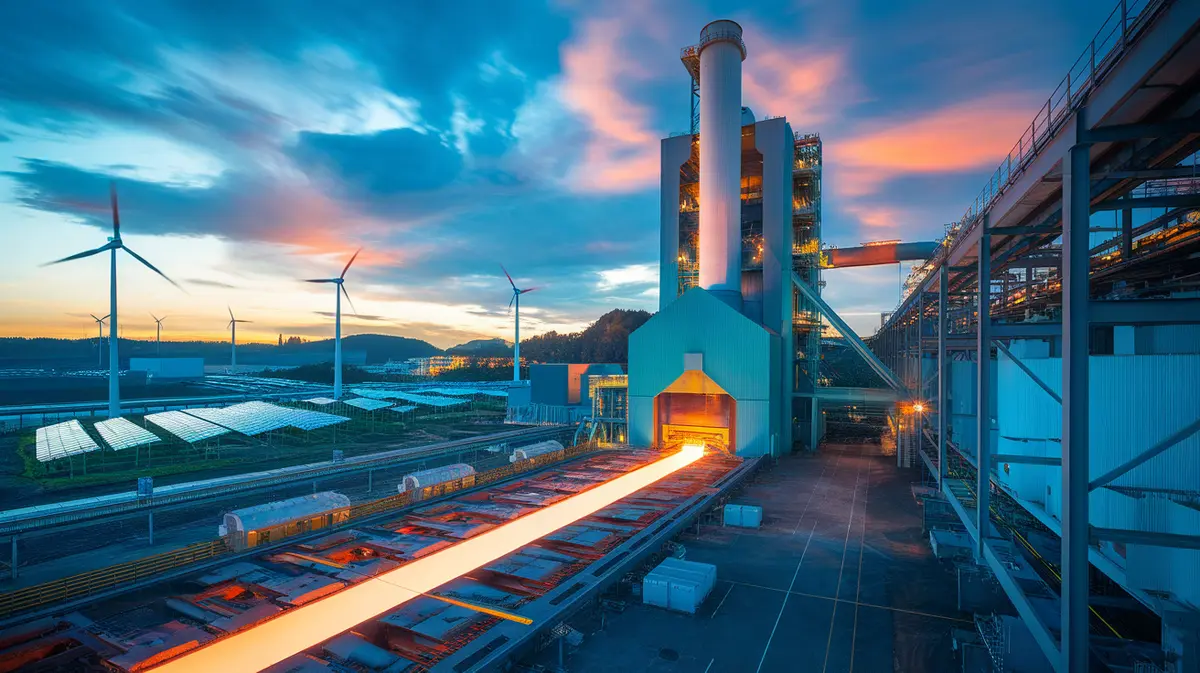
Look around wherever you are sitting and you are almost certainly within arm’s reach of steel - in the building’s frame, the car outside, the screws in your desk, the appliances in your kitchen. Humanity makes roughly two billion tonnes of it a year, and it is the invisible skeleton of the modern world. It is also one of the dirtiest things we make. Steelmaking alone is responsible for something like 7 to 8 percent of all human carbon emissions - more than every airplane and ship on Earth combined. In 2026 that stubborn number is finally starting to move, because the first real factories for green steel are lighting up, swapping the coal that has defined the industry for two centuries with hydrogen and clean electricity.
Why Steel Is So Hard to Clean Up
The problem is not the furnace being powered by fossil fuels - it is the chemistry itself. Iron ore is basically rust: iron atoms bonded to oxygen. To turn it into metal you have to rip that oxygen away, and for 200 years we have done that with coal. In a blast furnace, coke (baked coal) does two jobs at once: it burns to create ferocious heat, and its carbon grabs the oxygen off the iron and floats away as carbon dioxide. That CO2 is not a side effect of a dirty power source you can swap out - it is baked into the recipe. You cannot simply plug a blast furnace into a wind farm, because the coal is the chemical reducer, not just the fuel. Cleaning up steel means changing the reaction itself.
"You cannot decarbonize steel by cleaning the electricity. The carbon is in the recipe. You have to change what pulls the oxygen off the iron - and that is a two-century-old habit worth billions to break."
Route One: Swap Coal for Hydrogen
The leading approach keeps the idea of ripping oxygen off iron but changes what does the ripping. Instead of carbon, use hydrogen. When hydrogen grabs the oxygen from iron ore, the only thing that comes off is water vapor - no carbon dioxide at all. The process is called hydrogen direct reduction (H2-DRI), and it produces a porous, solid nugget of iron known as sponge iron. That sponge iron is then melted in an electric arc furnace - powered by clean electricity - and cast into steel. If the hydrogen is made by splitting water with renewable power (green hydrogen) and the furnace runs on green electrons, the entire chain can be nearly carbon-free. It is a genuinely elegant swap: the same job, done with a fuel whose exhaust is a puff of steam.
Route Two: Skip the Furnace, Use Pure Electricity
A bolder approach throws out the furnace entirely. Molten oxide electrolysis (MOE) dissolves iron ore in a searing-hot liquid oxide and runs an electric current straight through it, prying the iron and oxygen apart with electrons alone. Molten iron pools at the bottom and pure oxygen bubbles off the top - no coal, no hydrogen, no CO2. Other startups are chasing a cooler cousin: low-temperature electrolysis, which produces iron in a water-based bath much closer to room temperature, sidestepping the punishing heat altogether. Both routes turn steelmaking into something more like refining aluminum - a process driven purely by electricity, whose cleanliness rises automatically as the grid gets greener.
Hydrogen Direct Reduction
Hydrogen strips oxygen from iron ore, leaving solid sponge iron and water vapor. Melted in an electric arc furnace to make steel. The closest to scale today.
Molten Oxide Electrolysis
Electricity runs through molten ore, splitting out liquid iron and pure oxygen with no coal or hydrogen. Skips the furnace entirely - still early but wildly promising.
Low-Temperature Electrolysis
Iron plated out of a water-based bath near room temperature, avoiding extreme heat. The least mature route, but potentially the cheapest on energy.
Scrap Recycling (EAF)
Melting existing scrap steel in an electric arc furnace is already low-carbon, but the world does not have nearly enough scrap to meet demand - so we still need clean ways to make new iron.
Who Is Building It
Green steel has crossed the line from pilot projects to billion-dollar factories, with startups and century-old giants racing on parallel tracks.
- Stegra (formerly H2 Green Steel) - the Swedish startup building one of the world’s first large-scale green steel plants in Boden, integrating its own green-hydrogen production with hydrogen direct reduction to ship fossil-free steel to automakers.
- SSAB and HYBRIT - the Nordic pioneer whose HYBRIT venture (with mining group LKAB and utility Vattenfall) proved hydrogen-reduced steel at scale first, and is converting its mills to fossil-free production.
- Boston Metal - the MIT spin-out commercializing molten oxide electrolysis, aiming to make steel with electricity alone and to recover valuable metals from mining waste along the way.
- Electra - a US startup pursuing low-temperature electrolysis to make clean iron from lower-grade ores at temperatures a fraction of a blast furnace’s.
- ArcelorMittal and thyssenkrupp - two of the largest steelmakers on Earth, building hydrogen-ready direct-reduction plants in Europe and retrofitting legacy sites, backed by heavy government support.
Blast Furnace vs Green Steel
| Dimension | Traditional Blast Furnace | Green Steel |
|---|---|---|
| Oxygen remover | Coal / coke (carbon) | Hydrogen or electricity |
| Main emission | Carbon dioxide | Water vapor or pure oxygen |
| Energy source | Burning coal | Renewable electricity |
| Maturity | Two centuries, fully optimized | First commercial plants, 2025-2026 |
| Cost today | Cheapest by far | A green premium - but falling fast |
The Honest Trade-Offs
Green steel is not a solved problem, and the obstacles are real. It costs more today - the green premium can run 20 to 50 percent above conventional steel, though it shrinks every year. It is desperately hungry for two things the world is still scaling up: cheap green hydrogen and abundant clean electricity, and a green steel mill can draw as much power as a small city. Hydrogen direct reduction also works best with high-grade iron ore, and much of the world’s ore is not clean enough without extra processing. And you cannot flip a switch on a blast furnace that a company spent billions to build and expects to run for decades. This is a generational retooling of one of civilization’s oldest industries - measured in decades, not quarters.
Why This Matters for Business
You do not have to run a steel mill for green steel to land on your desk. Automakers are already signing offtake deals to stamp car bodies from fossil-free steel, because a growing slice of a vehicle’s carbon footprint hides in its materials, not its tailpipe. Construction firms, appliance makers, and anyone chasing embodied-carbon targets are discovering that the metal in their products is one of the biggest levers they have. As carbon border taxes and disclosure rules spread, the CO2 baked into a supply chain becomes a line item with a price - and the companies that locked in clean steel early will look prescient.
The strategic takeaway for technology and operations leaders is that heavy industry, long assumed impossible to decarbonize, is turning out to be an engineering problem with real answers. Steel was supposed to be one of the last dominoes to fall. In 2026 it is starting to wobble - and that reframes what “too hard to change” actually means for cement, chemicals, and every other stubborn corner of the physical economy.
"For 200 years, making steel meant burning coal - it was simply what the word meant. The companies that break that assumption first will own the material every other industry is built on."
Steel built the modern world on a foundation of coal, and for two centuries no one had a serious alternative. That era is ending. Whether the winner is a tower of hydrogen stripping rust into water, or a vat of molten ore split by nothing but electrons, the message of 2026 is the same: the skeleton of civilization is finally learning to grow without smoke - and the businesses paying attention now will be the ones building on it for the next hundred years.