Neurosymbolic AI in 2026: How Fusing Neural Networks With Symbolic Reasoning Is Building Machines That Both Perceive and Actually Think
- Internet Pros Team
- July 28, 2026
- AI & Technology
For most of the last decade, artificial intelligence has been synonymous with one idea: throw enough data and enough neural network parameters at a problem and intelligence will emerge. It worked spectacularly - until it did not. Large models still confidently invent facts, fumble multi-step logic, and cannot explain how they reached an answer. In 2026, a fast-growing camp of researchers is betting that the fix is not simply more neural network, but a marriage between two rival traditions: the intuitive pattern-matching of deep learning and the exacting logic of symbolic reasoning. That marriage is called neurosymbolic AI, and it is quietly powering some of the most impressive results in the field.
What Neurosymbolic AI Actually Is
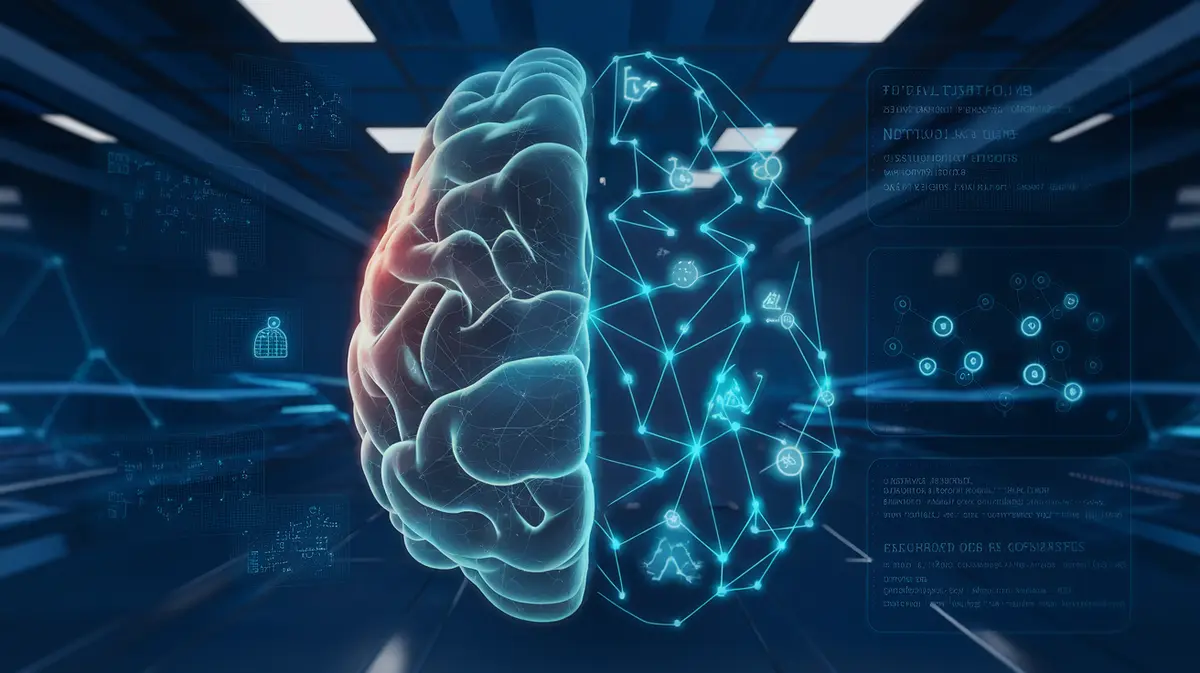
Neurosymbolic AI (also written neuro-symbolic) combines two historically opposed approaches to machine intelligence. On one side are neural networks - the deep learning systems behind modern chatbots and image recognition - which excel at perception, language, and spotting fuzzy patterns in messy data, but reason unreliably and cannot show their work. On the other side is symbolic AI, the older tradition of explicit rules, logic, and knowledge graphs, which reasons with perfect precision and full transparency, but is brittle and cannot learn from raw data on its own. Neurosymbolic systems stitch the two together so each covers the other's weakness.
"Neural networks are the intuition; symbols are the reasoning. You do not want a brilliant hunch that cannot check its own math, and you do not want a flawless logician who cannot recognize a cat. You want both in one system."
Why Pure Deep Learning Hit a Wall
Scaling neural networks produced astonishing gains, but also exposed stubborn limits that more parameters do not seem to cure:
- Hallucination: A purely statistical model generates the most plausible-looking answer, not necessarily a true one - so it invents citations, facts, and figures with total confidence.
- Fragile reasoning: Chains of logic that require many exact steps - proofs, planning, arithmetic - tend to drift, because the model is predicting text rather than following rules.
- Data hunger: Learning a concept can take millions of examples, whereas a symbolic rule captures it in one line.
- The black box: When a neural network is wrong, there is no audit trail explaining why - a dealbreaker in medicine, law, and finance.
How the Two Paradigms Combine
There is no single recipe - neurosymbolic systems come in several architectural flavors, but most fall into a few patterns:
Neural, Then Symbolic
A neural network perceives the messy input - an image, a sentence, a scan - and converts it into clean symbols that a logic engine then reasons over with guaranteed rigor.
Symbolic Guides Neural
Known rules, physics, or constraints are injected into training or inference, keeping the network's outputs inside the boundaries of what is logically possible.
Tight Loop
The neural network proposes candidate steps and a symbolic verifier checks each one, feeding results back - a fast intuition paired with a strict fact-checker.
Psychologists have a useful shorthand for this: neural networks behave like fast, intuitive System 1 thinking, while symbolic reasoning behaves like slow, deliberate System 2 thinking. Neurosymbolic AI is an attempt to give a machine both.
The Results Turning Heads
The clearest proof that the approach works came from mathematics. Systems like AlphaGeometry and AlphaProof pair a neural network - which intuits promising moves - with a symbolic engine that constructs and verifies rigorous proofs, together reaching medal-level performance on International Mathematical Olympiad problems that had defeated pure language models. Because a formal proof checker validates every step, the answers are not just plausible - they are provably correct. That combination of creative search and guaranteed verification is the neurosymbolic thesis in miniature.
"When a symbolic verifier signs off on every step, the system cannot hallucinate its way to the answer. It either has a valid proof or it does not - and that is a very different kind of trust than a confident guess."
Where It Is Being Deployed
| Domain | Why Neurosymbolic Helps |
|---|---|
| Enterprise AI agents | Business rules, policies, and compliance logic are enforced symbolically so an agent cannot break a hard constraint the way a free-running model might. |
| Healthcare & drug discovery | Neural perception reads scans and literature while symbolic knowledge graphs enforce known biology, producing explanations clinicians can audit. |
| Finance & law | Regulations are literal rules; combining them with document-reading neural nets yields decisions with a traceable justification. |
| Robotics & autonomy | Perception is neural, but planning and safety constraints are symbolic, so the robot obeys logic it will not violate under pressure. |
The Honest Trade-Offs
Neurosymbolic AI is not a free lunch, and its advocates are candid about the friction:
- Engineering complexity: Bolting a logic engine onto a neural network means building and maintaining two very different kinds of system, and the seam between them is where bugs live.
- Knowledge bottleneck: Symbolic reasoning needs formalized rules and knowledge, and hand-crafting that structure for a new domain is slow, expensive work.
- Scaling questions: Some researchers argue that ever-larger neural models will eventually learn to reason on their own, making the symbolic scaffolding unnecessary - a genuine open debate.
- Translation gaps: Converting fuzzy real-world input into clean symbols is itself an unsolved problem, and errors there poison everything downstream.
Why It Matters for the Next Wave of AI
The industry spent years assuming scale alone would deliver reliable reasoning. In 2026 that assumption is under real scrutiny, and neurosymbolic AI has become the leading answer for anyone who needs machine intelligence to be not just fluent but trustworthy, explainable, and correct. It will not replace deep learning - it depends on it - but it reframes the goal. The point is no longer to build a bigger pattern-matcher; it is to build a system that can pattern-match and prove itself right.
For businesses evaluating AI, the practical lesson is simple: when an answer has to be auditable and cannot afford to be quietly wrong - in a contract, a diagnosis, a financial control - a hybrid that can show its reasoning is worth far more than one that merely sounds convincing. That is the promise neurosymbolic AI is chasing, and in 2026 it is closer than ever.
The Bottom Line
Neurosymbolic AI fuses the intuition of neural networks with the rigor of symbolic logic to build systems that both perceive and reason. Proven by math-olympiad-winning provers and increasingly deployed in enterprise, healthcare, finance, and robotics, it trades extra engineering complexity for something pure deep learning struggles to deliver: answers that are explainable, verifiable, and reliably correct. As the limits of scale become clearer, hybrid reasoning is emerging as one of the most credible paths to AI we can actually trust.