Orbital Data Centers in 2026: Why Tech Giants Want to Put AI Compute in Space, What the Physics Allows, and Where the Business Case Breaks
- Internet Pros Team
- August 16, 2026
- AI & Technology
A year ago the idea of running AI training clusters in Earth orbit sounded like a pitch deck looking for a punchline. In 2026 it is a funded, launched, and increasingly serious line of work: prototype compute satellites carrying data-center-class GPUs are in orbit, at least one hyperscaler has published a research plan for solar-powered compute constellations, and launch providers are quoting prices that make the arithmetic worth doing rather than laughing at. The question has shifted from whether anyone would try this to which parts of it survive contact with physics and finance. This post walks through what an orbital data center actually is, why the people building them think the numbers can work, and where the honest engineering says they cannot - at least not yet.
Why Anyone Would Do This
The pitch rests on a single, uncomfortable fact about terrestrial AI: the constraint is no longer chips, it is power and cooling. Utilities in major data center regions are quoting multi-year waits for grid connections, water-intensive cooling is running into local opposition, and the largest training campuses are now measured in gigawatts. Every one of those constraints is a ground problem.
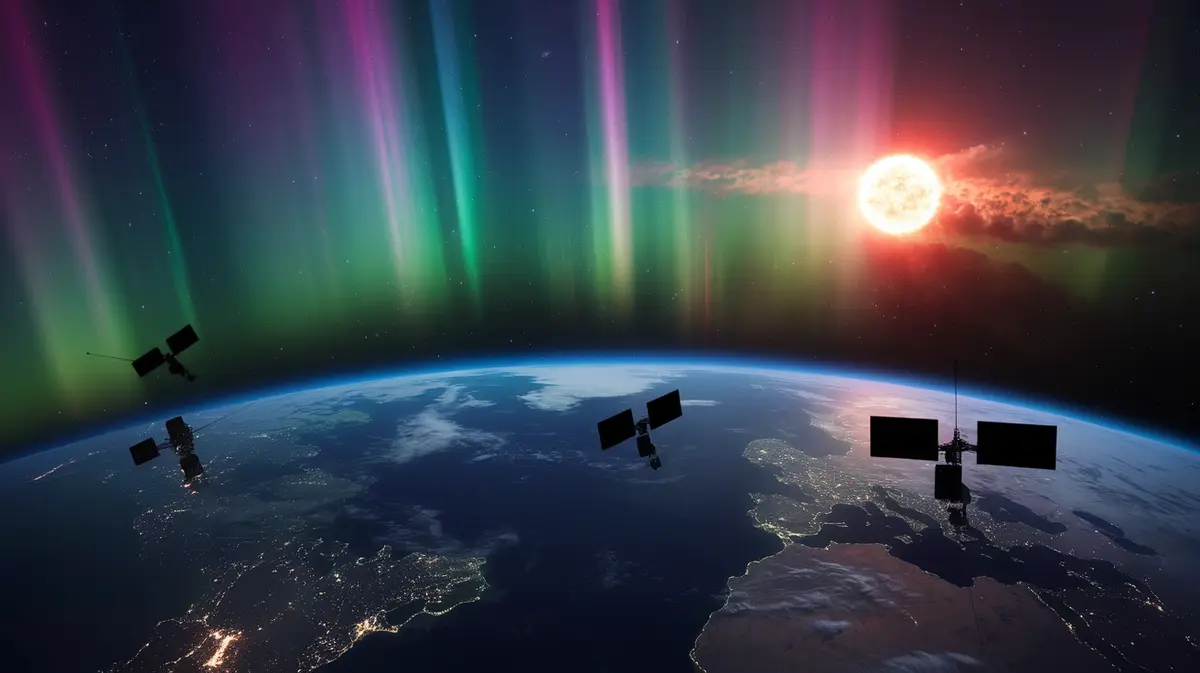
In the right orbit, a satellite sees the Sun almost continuously, so a solar array produces several times the annual energy it would on the ground, with no night, no weather, and no grid interconnection queue. Waste heat, meanwhile, can be radiated straight into the cold of space. And nobody in orbit files a zoning complaint. If launch is cheap enough and the hardware lasts long enough, the argument goes, orbit is simply the cheapest place on - or off - Earth to buy a kilowatt of clean, always-on power for a computer.
The bet is not that space is a good place for computers. It is that space may be a good place for power, and the computers are just along for the ride.
What an Orbital Data Center Actually Looks Like
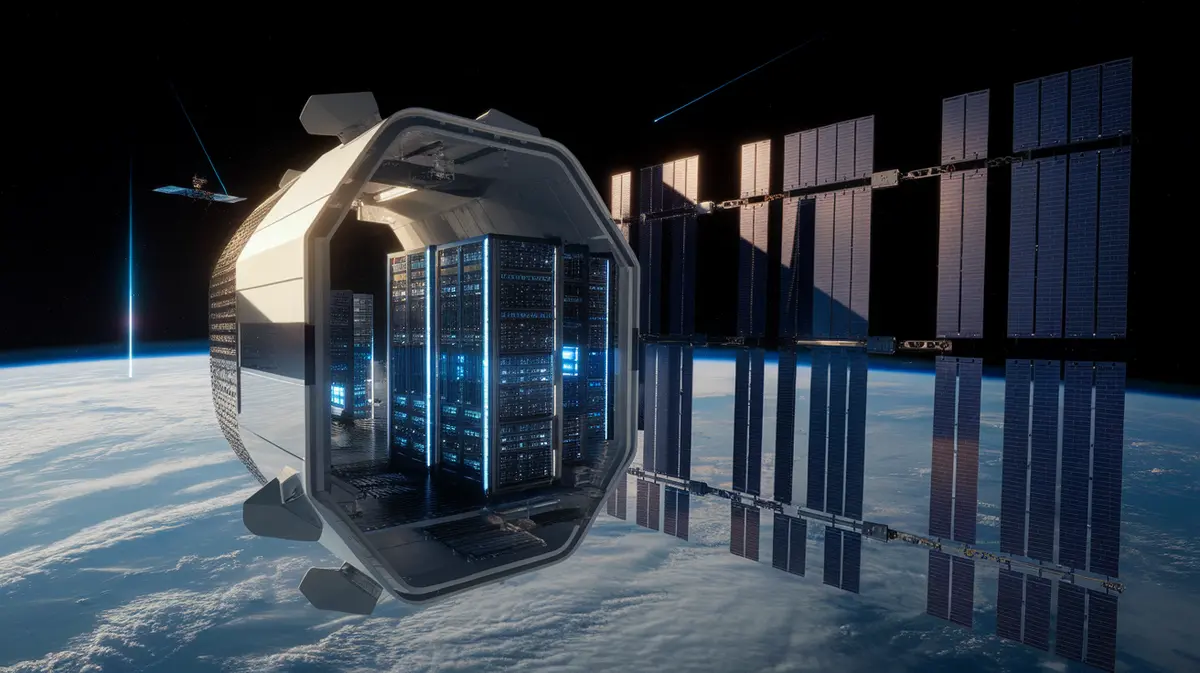
Forget the image of a warehouse floating past the Space Station. The designs on the table are constellations of modular satellites, each carrying a rack or two of accelerators, a large deployable solar wing, an even larger radiator, and laser terminals to talk to its neighbors and to the ground. Compute is spread across dozens or hundreds of nodes, linked by optical inter-satellite links running at hundreds of gigabits per second, so that a training job or an inference cluster is a distributed system in the same way it is on Earth - just with the nodes moving at 7.5 kilometers per second.
The favored orbit is sun-synchronous, dawn-dusk: a near-polar path that rides the day-night terminator so the arrays stay lit around the clock. Data flows down through optical ground stations or via existing broadband constellations, and the first commercial products are the ones that tolerate that path - batch training, offline inference, and processing of data that was already collected in orbit by Earth-observation satellites.
The Three Numbers That Decide Everything
- Launch cost per kilogram. Fully reusable heavy launchers are the whole reason this conversation exists. At the prices of a decade ago, lifting a megawatt of solar, radiators, and servers was hopeless. At the prices launch providers are now targeting, the lift cost of a compute satellite starts to look comparable to the land, building, and grid work of a ground facility - and it may keep falling.
- Radiator mass per kilowatt. Space is cold, but vacuum is a superb insulator. Heat leaves only by radiation, which needs large, heavy, precisely pointed panels. Radiator mass is the single largest engineering tax on the concept and the number every serious design is fighting to bring down.
- Hardware lifetime under radiation. Modern GPUs are built on process nodes that were never meant to see space. Cosmic rays and trapped particles cause bit flips and, over time, permanent damage. If a node has to be replaced every three years instead of seven, the economics roughly halve.
| Factor | Ground Data Center | Orbital Data Center |
|---|---|---|
| Power | Grid, gas, or on-site generation; interconnect queues of 2-5 years | Continuous solar in dawn-dusk orbit; no grid, no queue |
| Cooling | Air, water, or liquid immersion; water and permitting constraints | Radiative only; large, heavy radiators; no water |
| Maintenance | Hot-swap a board in minutes | None; failed nodes are abandoned or replaced by launch |
| Latency to users | Milliseconds within region | Tens of milliseconds plus ground-station scheduling |
| Regulation | Zoning, environmental, and utility approvals | Spectrum licensing, debris rules, export controls on hardware |
Where the Engineering Is Genuinely Hard
The cooling problem deserves more respect than it gets in the promotional material. On the ground, a rack dissipating 100 kilowatts is handled by moving a lot of air or liquid past it. In orbit the same rack needs on the order of a tennis court of radiator surface, kept in shadow and pointed away from both the Sun and the Earth, with heat pipes or pumped loops carrying the load out to it. That is doable - the Space Station does it - but it is heavy, and mass is money.
Radiation is the second problem. Commercial accelerators can be flown, and the early demonstrator satellites are proving that they boot and run, but the long-term error rates and lifetime data do not exist yet. Designs cope with shielding, error-correcting memory, redundancy across nodes, and software that assumes any given node may silently corrupt a result. None of that is exotic, but all of it costs capacity.
Then there is the simple fact that nothing can be fixed. A ground operator swaps a failed drive without thinking about it. In orbit, a failed component is dead weight until it deorbits. That forces a design philosophy closer to a disposable consumer device than to enterprise hardware: build it cheap, build it redundant, and plan to replace whole nodes on a schedule.
What the Early Missions Are Actually Testing
- Does commercial AI hardware run reliably in orbit? Boot rates, thermal behavior, and error counts on off-the-shelf accelerators over months, not hours.
- Can a large deployable radiator hold temperature under real load? The thermal models are good; the flight data is what investors want.
- Can optical links carry data-center traffic? Sustained multi-hundred-gigabit laser links between moving nodes, with pointing that survives vibration and thermal cycling.
- Does anyone pay for it? The first revenue is expected from processing satellite imagery in orbit - shipping insights down instead of raw pixels - long before anyone trains a frontier model overhead.
The Business Case, Honestly Stated
Run the numbers today with current launch prices, current radiator technology, and current hardware lifetimes, and an orbital data center costs more per unit of useful compute than a ground facility in a region with available power. Every proponent knows this. Their argument is about the slope of the curves: launch cost is falling fast, ground power is getting scarcer and slower to obtain, and solar in orbit is a fixed, predictable input while grid electricity is not.
The realistic near-term niche is not general-purpose cloud. It is workloads that are already in space or that value power independence over latency: in-orbit processing of Earth-observation and signals data, batch inference on models that do not need a human waiting on the answer, and - for governments - sovereign compute that no adversary can cut the power to. Frontier-scale training in orbit is a 2030s question that depends on the answers to the 2026 experiments.
Why This Matters Even If It Fails
The most valuable output of the orbital data center push may be terrestrial. The engineering effort on ultra-light radiators, radiation-tolerant commercial silicon, and high-bandwidth optical links has direct uses on the ground and in the broader satellite industry. And the very fact that credible companies are pricing space against terrestrial power is a signal about how tight the ground constraint has become. When a rocket starts to look like a reasonable alternative to a grid interconnection queue, the problem is not the rocket.
For businesses that depend on AI capacity, the practical takeaway is short: expect the cost and availability of compute to be shaped by energy for the rest of the decade, wherever the servers end up sitting. The teams that plan around that - efficient models, right-sized inference, and honest capacity forecasting - will do well whether the racks are in Virginia, Iceland, or 600 kilometers overhead.