Parts Pairing in 2026: Why a Genuine Replacement Screen Can Still Trigger a Warning, What the New Right-to-Repair Laws Actually Ban, and How to Buy Devices You Can Fix
- Internet Pros Team
- October 3, 2026
- Business
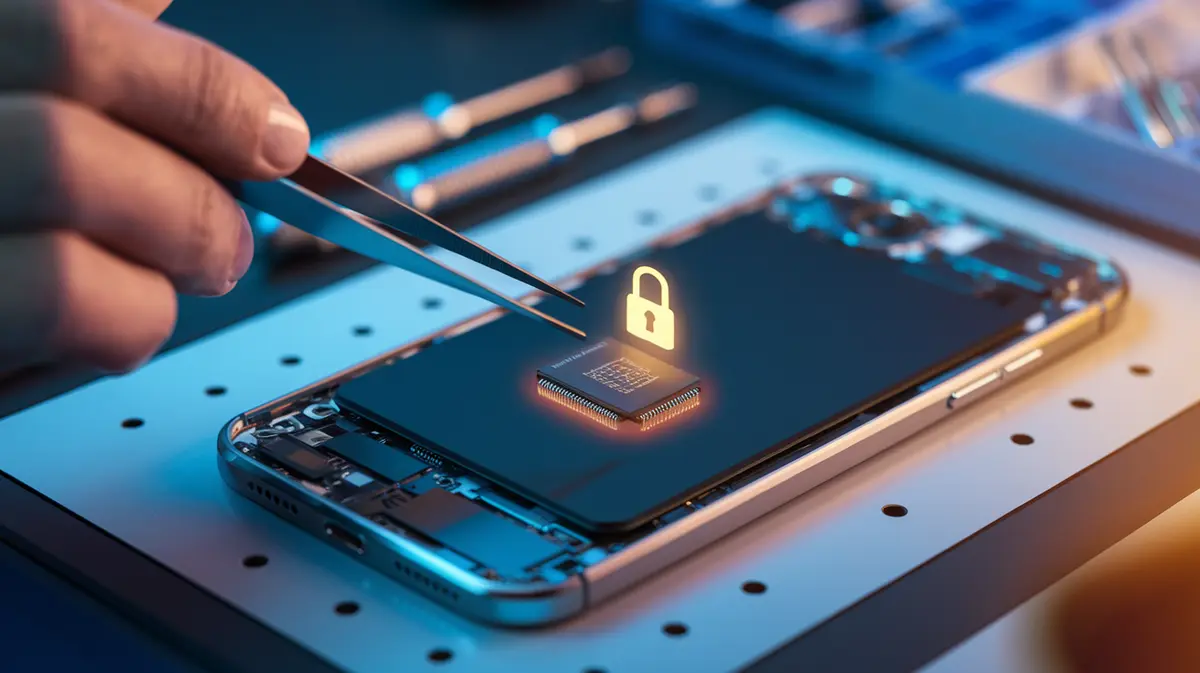
A cracked phone screen used to be a twenty-minute repair. In 2026 it can still be a twenty-minute repair and leave the phone nagging you for months afterwards. The new screen is real, it came out of an identical phone, and it fits perfectly. Even so, the settings app may call it an “unknown part”, auto-brightness may stop working, and the battery health readout may disappear. The cause is parts pairing: the practice of tying each component’s serial number to one specific device in software. This year is the first time the law has really pushed back on it, on both sides of the Atlantic.
What Parts Pairing Actually Is
Modern components are no longer passive. A battery, display, camera or fingerprint sensor usually carries its own small controller with a unique serial number. At the factory, the manufacturer records which serials belong to which logic board. When a part is swapped, the device notices the mismatch. What happens next is a policy decision written in software, not a law of physics:
- Warn: a persistent notification that the part is not recognised, while it keeps working normally.
- Degrade: the part works, but features are switched off, such as battery health reporting, colour calibration or the ambient light sensor.
- Block: the part refuses to work until an authorised technician “pairs” it with a tool that talks to the manufacturer’s servers.
Pairing is not limited to phones. Laptops, game consoles, printers with chipped cartridges, e-bikes, medical devices and tractors all use versions of it. The FTC sued John Deere in January 2025, partly over software tools that only its dealers could use to finish repairs.
The screw is no longer the hardest part of a repair. The handshake is.
The Case For It, and Where That Case Ends
Manufacturers make some fair points. A biometric sensor that could be swapped silently would be a security hole, because a tampered fingerprint or face module could feed a fake match to the secure chip. Counterfeit batteries are a genuine fire risk. Pairing also makes stolen phones less valuable for parts, since parts harvested from them do not activate cleanly.
Those arguments get much weaker once they reach the display, the speaker or the battery gauge. A screen from a donor phone of the same model does not threaten anyone’s security. A warning that never goes away mostly teaches customers that independent repair is “risky”, which pushes the work back to authorised channels at authorised prices. Repair advocates also point out that a pairing tool controlled by the manufacturer means the manufacturer decides when a model can no longer be repaired, simply by retiring the server that approves parts.
What Each Component Typically Locks
Behaviour differs by brand and model, but the pattern across recent flagship phones and laptops looks roughly like this:
| Component | Common effect of an unpaired part | Security justification |
|---|---|---|
| Biometric sensor | Face or fingerprint unlock disabled until paired | Strong: it feeds the secure enclave |
| Battery | “Unknown part” message, health percentage hidden | Weak to moderate: counterfeit cells exist, but the gauge is not a security boundary |
| Display | Colour calibration, auto-brightness or touch tuning lost | Weak |
| Camera module | Warning, sometimes reduced features | Weak |
| Logic board | Requires activation, often only by the manufacturer | Moderate: it holds the device identity and encryption keys |
What the Law Now Says
After years of hearings, 2026 is when the rules start to bite:
- Oregon became the first US state to ban parts pairing outright. For consumer electronics made from 2025 onwards, manufacturers may not use pairing to block a repair, cut a part’s performance or show misleading warnings. California, Minnesota, New York and Colorado also have electronics repair laws that require parts, tools and manuals to be available.
- EU ecodesign rules for phones and tablets, in force since June 2025, require spare parts to be available for seven years after a model leaves the market, operating system updates for at least five years, and a repairability class from A to E on the label. They also restrict the use of software to stop a qualified repairer from fitting a part.
- The EU Right to Repair Directive had to be written into national law by 31 July 2026. It bans hardware and software techniques that obstruct repair, including the use of second-hand or third-party parts, unless the manufacturer can justify them on objective grounds such as safety. It also extends the legal guarantee by twelve months when a customer chooses repair over replacement.
- The EU Batteries Regulation requires portable batteries in most new devices to be removable and replaceable by the user from February 2027, which is already changing designs that ship this year.
Manufacturers have moved too. Several now sell parts and rent tools directly to the public, and some phones now accept genuine parts taken from another unit of the same model through an on-device calibration step instead of a trip to a service centre. The direction is clear, even if every brand handles it differently.
Why Businesses Should Care
For a company running a fleet of laptops and phones, pairing is a cost issue, not a philosophical one. A device that only an authorised centre can repair takes longer to fix, and it may be cheaper to replace it than to wait. A device whose parts can be swapped by your own IT staff or a local shop keeps people working. Repairable hardware also lasts longer, which helps with sustainability reporting, since most of a laptop’s lifetime carbon footprint comes from making it, not from running it.
One more point: in the United States, “warranty void if removed” stickers are generally unenforceable. Under the Magnuson-Moss Warranty Act a manufacturer usually cannot void a warranty just because someone else did a repair or used a third-party part, unless that part caused the damage.
Checklist: Buying Devices You Can Actually Fix
- Check the EU repairability class or an independent repair score before choosing a fleet model.
- Ask the vendor in writing how long spare parts and security updates will be available.
- Find out which components need online pairing, and whether your technicians can do it without a manufacturer account.
- Prefer models with standard screws, batteries you can replace, and a published service manual.
- Keep a few retired units of each model as donors for parts.
- Note the device serial and part serials at purchase, so you can tell a genuine part from a counterfeit later.
The Bottom Line
Parts pairing began as a security feature and grew into a business model. Regulators now accept pairing where it protects something, such as a fingerprint sensor, and reject it where it just protects a repair monopoly, such as a screen. For anyone buying devices in 2026, repairability belongs on the spec sheet next to battery life and price. Need help choosing hardware your team can keep running for years? Talk to Internet Pros about a device lifecycle plan.