SASE in 2026: How Secure Access Service Edge Is Converging SD-WAN and Zero-Trust Security Into a Single Cloud Platform
- Internet Pros Team
- June 19, 2026
- Networking & Security
For two decades, corporate security worked like a medieval castle: a hardened perimeter of firewalls around the office, a trusted network inside, and a VPN drawbridge for anyone working remotely. In 2026, that model is effectively dead. Employees work from home, coffee shops, and three continents; applications live in the cloud rather than the data center; and traffic no longer flows neatly through headquarters. Secure Access Service Edge (SASE) is the architecture that has emerged to replace the castle-and-moat - collapsing networking and security into a single, cloud-delivered service that follows the user wherever they go.
Why the Old Perimeter Broke
The traditional network was built on a simple assumption: everything important sat inside the building. Backhauling a remote worker's traffic all the way to the corporate data center - just to inspect it and send it back out to a cloud app - made sense when the apps were in that data center. Today it is slow, expensive, and pointless. When your email, files, CRM, and code all live in SaaS and public cloud, routing a user in another city through headquarters adds latency and cost while protecting nothing.
The pandemic-era shift to hybrid work shattered what was left of the perimeter. VPNs, designed for occasional remote access, buckled under full-time remote workforces and quietly became a liability: a VPN typically drops a user onto the flat corporate network with broad access, so one stolen credential or compromised laptop can expose everything. The security model had to move from "trust the network" to "trust nothing, verify everything" - and it had to live in the cloud, close to both the user and the app.
The Network Half (SD-WAN)
Software-defined WAN intelligently routes traffic over any link - broadband, fiber, 5G - sending each app down the best path instead of backhauling everything to HQ.
The Security Half (SSE)
Security Service Edge bundles ZTNA, SWG, CASB, and FWaaS as cloud services that inspect traffic and enforce policy at the edge, next to the user.
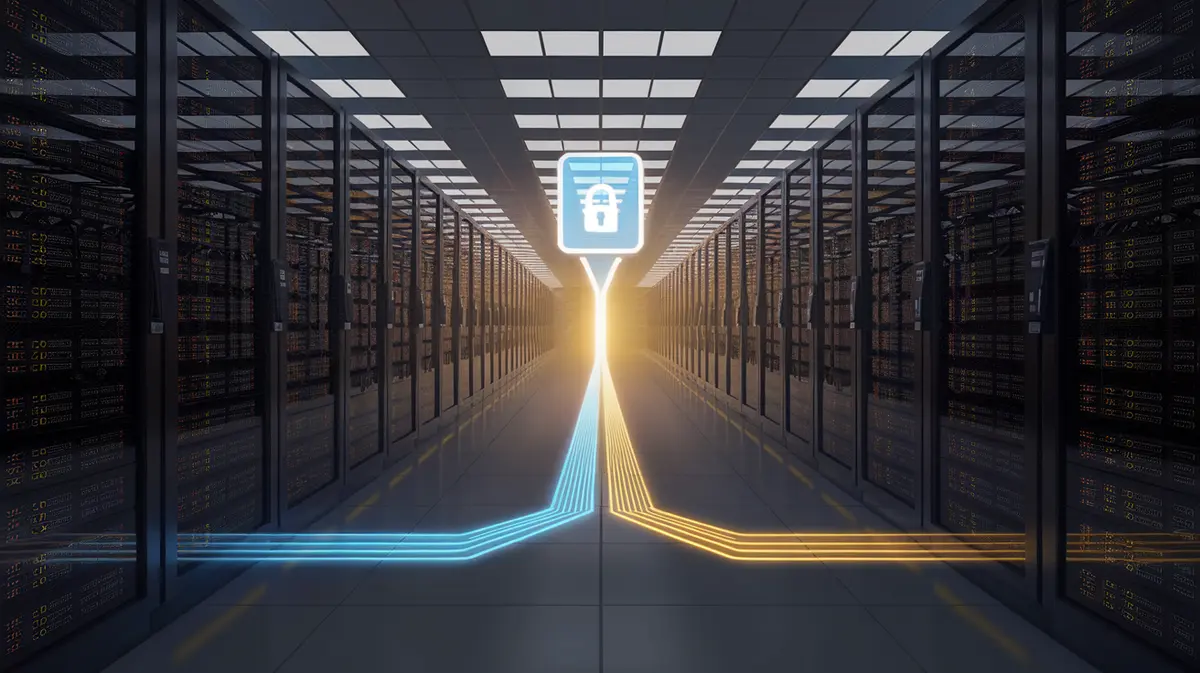
Delivered as One Cloud
Both halves run across a global mesh of points of presence (PoPs), so policy is identical and enforced consistently whether a user is in the office or abroad.
"SASE is not a product you buy - it is a shift in where security lives. You stop dragging users to the security stack and start delivering the security stack to the user, in the cloud, at the edge. Done right, it makes remote access faster and far safer than the VPN it replaces."
The Building Blocks of a SASE Platform
The term SASE - coined by Gartner in 2019 - describes the convergence of five capabilities that businesses once bought as separate appliances and subscriptions. Understanding them makes the architecture far less intimidating:
| Component | What It Does |
|---|---|
| SD-WAN | Connects branches, data centers, and cloud over any transport, steering each application down the optimal, resilient path. |
| ZTNA | Zero-Trust Network Access grants users access to specific applications - never the whole network - after verifying identity and device posture on every request. |
| SWG | A Secure Web Gateway filters web traffic, blocks malware and malicious sites, and enforces acceptable-use policy in the cloud. |
| CASB | A Cloud Access Security Broker governs how SaaS apps are used, spots shadow IT, and applies data-loss-prevention (DLP) controls. |
| FWaaS | Firewall-as-a-Service delivers enterprise firewalling from the cloud - no appliance to ship, patch, or scale at every site. |
The first item is the networking layer; the last four make up Security Service Edge (SSE), the security half that many organizations adopt first. SASE is simply SSE and SD-WAN unified under one policy engine and one management plane.
Single-Vendor vs. Dual-Vendor SASE
A central decision is whether to source the whole platform from one provider or to pair a best-of-breed networking vendor with a separate security vendor. Each path has real trade-offs.
- Single-vendor SASE delivers networking and security from one integrated stack and one console. It is simpler to operate, offers tighter policy correlation, and is where the market is consolidating - but it can mean compromising on the maturity of one half.
- Dual-vendor (or "managed") SASE combines a leading SD-WAN with a leading SSE through tested integrations. It lets you keep an incumbent investment and pick best-of-breed parts, at the cost of more coordination between two platforms.
The 2026 Provider Landscape
The market has matured into a handful of serious platforms, each with a different heritage:
- Security-first: Zscaler and Netskope built massive cloud security clouds and added networking.
- Cloud-native single-stack: Cato Networks and Cloudflare One were architected from day one as a single converged platform on a global private backbone.
- Platform incumbents: Palo Alto Networks (Prisma SASE), Fortinet (FortiSASE), and Cisco bring deep firewall and networking pedigree to integrated suites.
A Practical Roadmap for Businesses
SASE is a journey, not a rip-and-replace. The organizations that succeed treat it as a phased migration tied to contract renewals and refresh cycles:
- Start with the pain point. For most companies that is remote access - replacing the overloaded VPN with ZTNA is the highest-impact first step and an immediate security upgrade.
- Adopt SSE before full SASE. Roll out the security services (ZTNA, SWG, CASB) first to protect users and data, then converge SD-WAN as branch hardware comes up for renewal.
- Inventory and map. Know your users, devices, applications, and data flows before writing policy - SASE is only as good as the identity and posture signals feeding it.
- Write policy around identity, not IP addresses. The whole point is access decisions based on who and what, verified continuously, not on which network someone happens to be on.
- Consolidate deliberately. Retire redundant point products as the platform proves itself, capturing the cost and complexity savings that justify the move.
The Bottom Line
SASE is the natural endpoint of two trends that defined the last decade: applications moving to the cloud and workforces moving everywhere. By converging SD-WAN with cloud-delivered security and enforcing zero trust at a global edge, it gives businesses faster connectivity and stronger protection at the same time - while shrinking the tangle of appliances and VPN concentrators that used to define the network.
For small and mid-sized organizations especially, the appeal is simplicity: one cloud platform, one policy, consistent protection for every user and site without a rack of hardware to maintain. The perimeter has not disappeared - it has moved to the cloud and wrapped itself around each individual user. In 2026, that is exactly where modern security needs to be.