Small Modular Reactors (SMRs): How Micro Nuclear Power Is Fueling the AI Data Center Boom and Clean Energy Future in 2026
- Internet Pros Team
- April 23, 2026
- AI & Technology
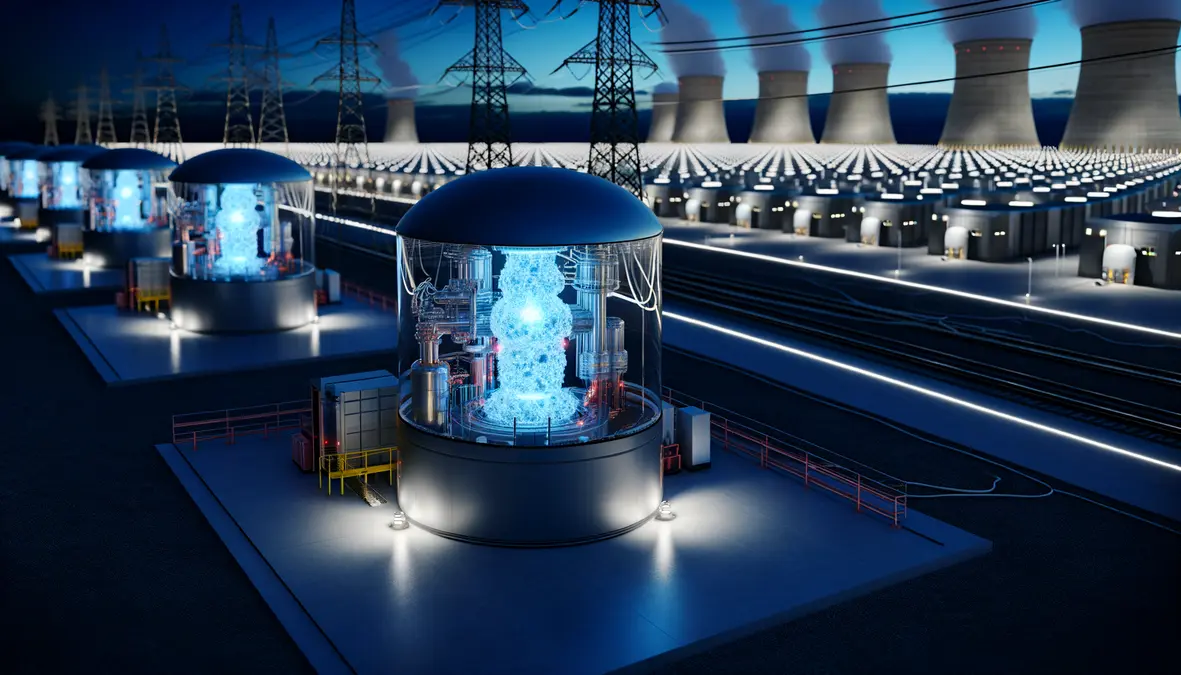
For the first time since the 1970s, nuclear power is cool again — and this time the reactors are the size of shipping containers, built in factories, and hooked directly to the fence line of AI data centers. In 2026, a wave of small modular reactors (SMRs) and advanced micro-reactors from NuScale, TerraPower, X-energy, Rolls-Royce SMR, Holtec, Oklo, and Kairos Power is moving from licensing paperwork and PowerPoint renderings into concrete, steel, and grid interconnects. The driving force is no longer environmental policy alone — it is hyperscale AI. Microsoft, Amazon, Google, and Meta have collectively signed more nuclear offtake in the last eighteen months than the United States signed in the previous twenty years, and almost all of it is tied to the gigawatt-scale AI campuses now under construction from Texas to Virginia to central Ohio.
Why Nuclear, Why Now
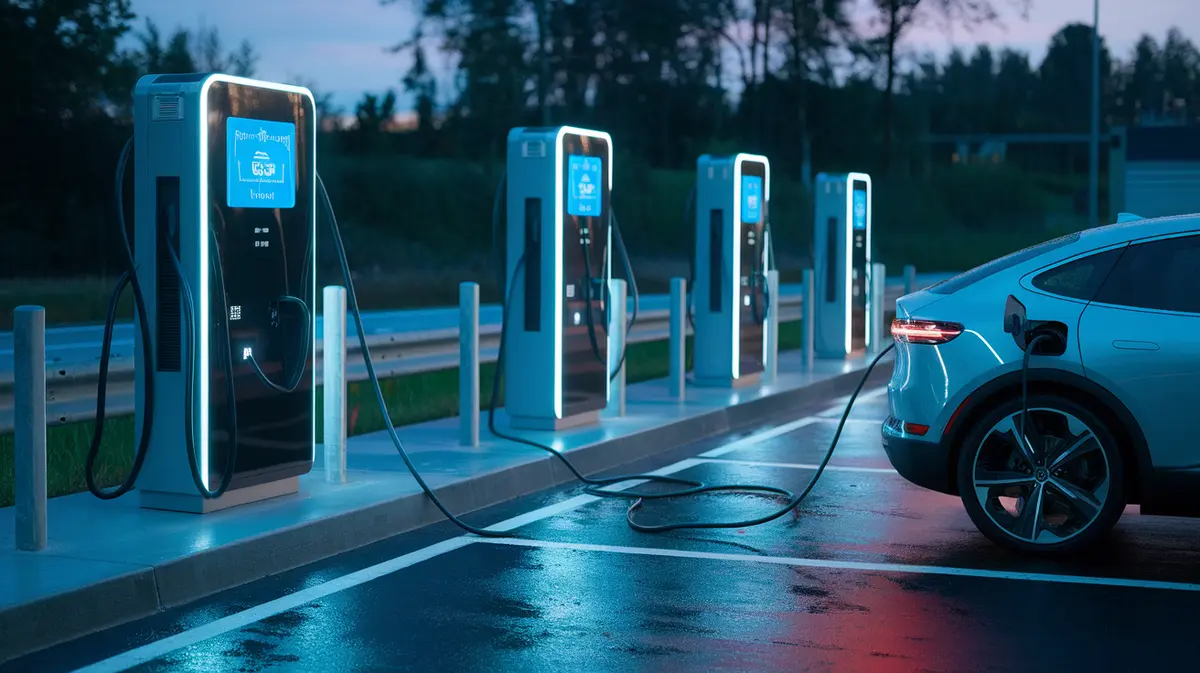
AI data centers have a problem that solar and wind cannot solve on their own: they need clean, firm, always-on electricity at a scale that utility planners did not forecast. A single hyperscale AI campus under construction in 2026 can draw 1–2 gigawatts continuously — enough to power a mid-sized American city. Grid operators in Virginia, Georgia, Texas, and Arizona have warned that the combined load of new AI buildouts will outstrip planned generation additions before the end of the decade. Hyperscalers, under shareholder pressure to hit net-zero targets, cannot fill that gap with natural-gas peakers without burning their carbon commitments.
That leaves nuclear. But conventional gigawatt-scale light-water reactors take 10–15 years and $10–20 billion to build in the West, a timeline that does not match product roadmaps written in GPU generations. SMRs promise something fundamentally different: reactors small enough to be fabricated on an assembly line, shipped by rail or barge, and installed in parallel at a site next to the load they serve — with the first unit online in 4–6 years and subsequent units added modularly as demand grows.
Factory-Built
SMR modules are fabricated on assembly lines and shipped to site, escaping the stick-built megaproject economics that crushed legacy nuclear budgets.
Passive Safety
New designs cool themselves via natural circulation — no active pumps, no external power required to prevent a meltdown in a station blackout.
Right-Sized for AI
At 50–300 MWe per module, SMRs match the load profile of a hyperscale data center campus almost exactly — with capacity added one module at a time.
The 2026 SMR Landscape
SMR is an umbrella term — underneath it, vendors are pursuing very different coolants, fuels, and use cases. Here is the shortlist of designs that actually matter in 2026, the ones with real orders, real construction, or real customers behind them.
| Design | Technology | Output | Flagship Deployment |
|---|---|---|---|
| NuScale VOYGR | Light-water SMR, passive cooling | 77 MWe / module, up to 12 modules | RoPower (Romania), US utility pilots |
| GE Hitachi BWRX-300 | Boiling-water SMR | 300 MWe | Ontario Power Generation Darlington |
| TerraPower Natrium | Sodium-cooled fast reactor + molten salt storage | 345 MWe (boost to 500 MWe) | Kemmerer, Wyoming (Bill Gates–backed) |
| X-energy Xe-100 | High-temperature gas-cooled, TRISO fuel | 80 MWe / module (4-pack = 320 MWe) | Amazon / Energy Northwest (Washington) |
| Kairos Power KP-FHR | Fluoride salt–cooled high-temp reactor | ~140 MWe per twin-unit plant | Google multi-site PPA, Oak Ridge demo |
| Rolls-Royce SMR | Pressurized-water SMR | 470 MWe | UK Great British Nuclear, Czech ČEZ |
| Holtec SMR-300 | Light-water SMR | 300 MWe | Palisades restart + new builds (Michigan) |
| Oklo Aurora | Sodium-cooled micro-reactor | 15–75 MWe | Equinix, Prometheus, DoD Eielson AFB |
The Hyperscaler Nuclear Land Grab
What changed the commercial picture was not a technology breakthrough — it was the willingness of cloud hyperscalers to sign very long power purchase agreements (PPAs) for nuclear electrons at premium prices. In 2024, Microsoft agreed to buy the entire output of the restarted Three Mile Island Unit 1 (now rebranded as Crane Clean Energy Center) for 20 years. Amazon paid roughly $650 million for a data-center campus adjacent to the Susquehanna nuclear plant in Pennsylvania, locking in direct grid-bypass access to nuclear power. Google signed a multi-reactor PPA with Kairos Power, targeting first deployment by 2030. Meta published a global RFP for up to 4 GW of new nuclear generation. Oracle announced plans for an AI campus powered by three SMRs.
These are not press releases designed to decorate sustainability reports. They are structured as corporate PPAs that underwrite the financing of the plants themselves — the same mechanism that turned wind and solar from novelties into grid-dominant generation over the last fifteen years, now pointed at advanced nuclear.
"We need clean, firm, 24/7 power at scale, and we need it on a timeline that matches the AI buildout. Small modular reactors are the most credible answer on the menu."
Regulation Catches Up: Part 53 and the New NRC
For decades, the binding constraint on US nuclear was not technology — it was the Nuclear Regulatory Commission's licensing process, which was written for 1970s light-water reactors and poorly adapted to novel coolants and smaller designs. Two things changed that. First, the ADVANCE Act (2024) directed the NRC to modernize, set faster license review targets, and cut fees for advanced reactors. Second, the NRC finalized 10 CFR Part 53, a risk-informed, technology-neutral licensing framework specifically designed for SMRs and advanced reactors. In 2026, the first Part 53 applications from Kairos, X-energy, and TerraPower are moving through review with target timelines measured in years instead of decades.
The Hard Parts Nobody Should Skip
The enthusiasm is real, but so are the obstacles. NuScale lost its first flagship customer, the Utah UAMPS project, in 2023 when costs escalated beyond the floor price UAMPS members would accept. The US does not yet produce high-assay low-enriched uranium (HALEU) at commercial scale, and most advanced reactor designs depend on it; Centrus Energy's Piketon, Ohio plant is the sole domestic producer, and demand far exceeds capacity. Supply chains for forged pressure vessels, control-rod drives, and zirconium cladding remain concentrated in a handful of global vendors. And public acceptance, while dramatically improved, is still geography-dependent — siting a reactor near a data center in rural Wyoming is a very different political conversation than doing the same in a dense metro region.
- Cost discipline: SMR economics depend on factory-series production. The first-of-a-kind units will be expensive; the Nth-of-a-kind units are where the math actually works.
- Fuel security: HALEU fuel capacity must scale alongside reactor orders, or deployment timelines slip.
- Grid interconnection: Even behind-the-fence SMRs need interconnection studies, transmission, and regulatory approvals that can take years.
- Waste & decommissioning: Smaller reactors still produce spent fuel; the long-term storage question has not gone away just because the reactor is modular.
What This Means for Business and Policy
For enterprise buyers of cloud and AI services, the rise of SMR-backed hyperscale campuses is quietly changing procurement. Scope-2 emissions from cloud workloads are going to diverge sharply over the next five years depending on whether a provider has invested in clean firm generation or is still riding the coattails of grid-average mix. Expect sustainability teams to start asking their cloud vendors pointed questions about the generation backing their new capacity. For policymakers and utilities, SMRs offer a rare bipartisan industrial-policy win — clean-energy goals, domestic manufacturing, grid reliability, and AI competitiveness all align behind the same technology.
Key Takeaways for 2026
- AI is the demand driver. Hyperscaler PPAs — not government mandates — are what moved SMRs from slideware to construction sites.
- Multiple designs will ship. Light-water SMRs lead on licensing; gas-cooled, sodium, and molten-salt designs follow with higher-temperature heat ideal for industrial users.
- NRC Part 53 is live. The regulatory bottleneck that killed a generation of projects has been meaningfully loosened for risk-informed advanced reactors.
- HALEU is the choke point. Fuel supply, not technology, is the most likely cause of 2028–2030 deployment slips.
- Nuclear has become a cloud product input. Clean, firm, 24/7 power is now part of the hyperscaler procurement stack alongside GPUs, fiber, and liquid cooling.
Nuclear power has been promised before and disappointed before. What is different in 2026 is that the buyers are real, the contracts are signed, the regulators are moving, and the reactors are being built — not because a government decided they should be, but because the biggest compute customers on Earth need round-the-clock carbon-free electricity and nothing else on the menu can deliver it at the needed scale and speed. The AI revolution has a power problem. Small modular reactors are the quiet, unglamorous, fundamentally serious answer to it.