Software-Defined Vehicles in 2026: How Zonal Architecture, Central Compute, and Over-the-Air Updates Are Turning Cars Into Computers on Wheels
- Internet Pros Team
- August 3, 2026
- Software Development
For a century, a car was a mechanical product with some electronics bolted on. Features were decided years before production, frozen at the factory, and unchanged until the vehicle was scrapped. That model is ending. The software-defined vehicle - SDV for short - flips the relationship: the hardware becomes a stable, generic platform, and the behavior of the car is defined by software that can be rewritten long after it leaves the dealership. In 2026, this is no longer a Silicon Valley talking point. It is the architecture every major automaker is rebuilding around, and it is the single most disruptive change to how cars are engineered since the introduction of the assembly line.
The Problem SDV Solves: A Hundred Computers That Cannot Talk
A conventional modern car contains somewhere between 70 and 150 electronic control units - ECUs. There is one for the engine, one for the transmission, one for each door, one for the seats, one for the wipers. Almost every one was designed, coded, and supplied by a different vendor, running different software, communicating over a slow bus originally designed in the 1980s.
This worked when each feature was independent. It fails badly the moment features need to cooperate. A driver-assistance function that must read the cameras, the radar, the steering, the brakes, and the navigation system has to negotiate with a half-dozen suppliers across a network never designed to move that much data. Adding a capability meant adding another box, another wiring harness, another supplier contract. Wiring became one of the heaviest and most expensive components in the entire vehicle - and fixing a software bug meant a trip to the dealer.
"We were not building a car with software in it. We were integrating a hundred suppliers and hoping their code agreed."
Zonal Architecture: Consolidating the Sprawl
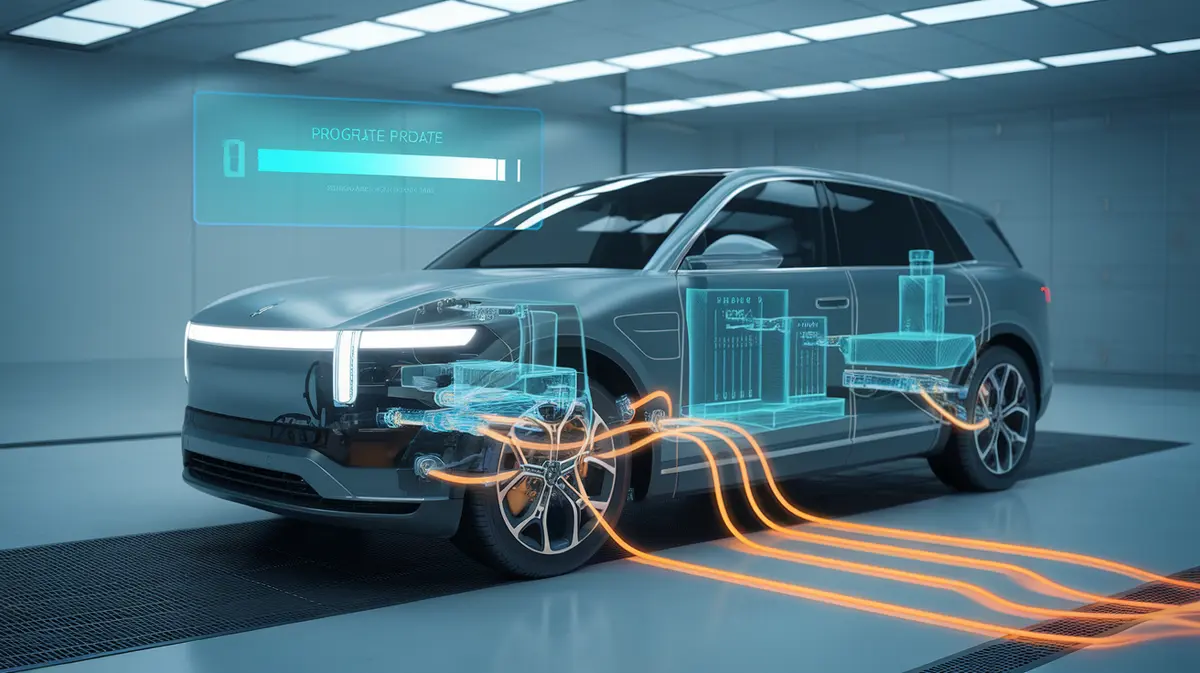
The structural fix is zonal architecture. Instead of organizing electronics by function - a box per feature - the vehicle is organized by physical location. A handful of zone controllers, typically one per region of the car (front left, rear right, and so on), handle the power distribution and the sensors and actuators physically near them. They connect over a high-speed backbone to one or a few central high-performance computers that run the actual application logic.
The consequences are larger than they sound:
- Wiring collapses. A door sensor no longer runs a dedicated wire to a computer at the other end of the car. It runs a short cable to the nearest zone controller. Manufacturers report harness weight and length reductions measured in tens of kilograms and kilometers of wire - which directly buys back range in an electric vehicle.
- Compute becomes shared. Features stop owning silicon. Driver assistance, infotainment, and body control can run as isolated software partitions on the same central processor, sized once for the whole car rather than over-provisioned dozens of times.
- Software decouples from hardware. This is the real prize. When application code no longer lives on the specific box that drives a specific motor, it can be updated, replaced, or improved without touching the physical vehicle at all.
- The supply chain inverts. The automaker owns the platform and the software integration; suppliers provide components that plug into it. That is a profound reversal of how the industry operated for forty years.
The Network: Automotive Ethernet Replaces CAN
None of this works over a CAN bus that tops out around one megabit per second. Zonal designs move the backbone to automotive Ethernet, with multi-gigabit links between the zone controllers and central compute, and 10BASE-T1S single-pair Ethernet reaching down to cheap edge devices where CAN used to live. Layered on top is Time-Sensitive Networking, which provides something standard office Ethernet does not: bounded, guaranteed latency, so a brake command cannot be delayed behind a map download.
The software stack shifts in parallel, from fixed signal-based messaging to a service-oriented model where components publish and subscribe to capabilities - the same architectural pattern that reshaped enterprise back ends a decade earlier, arriving in the car. AUTOSAR Adaptive, SOME/IP, and increasingly Linux-based runtimes under efforts like SOAFEE provide the middleware, while Android Automotive OS has become a common choice for the cockpit layer specifically.
| Dimension | Traditional Distributed Vehicle | Software-Defined Vehicle |
|---|---|---|
| Electronics layout | 70-150 function-specific ECUs. | A few zone controllers plus central compute. |
| Network | CAN, LIN, FlexRay - low bandwidth, signal-based. | Automotive Ethernet with TSN - service-oriented. |
| Software ownership | Fragmented across dozens of suppliers. | Platform owned and integrated by the automaker. |
| Updates | Dealer visit, if available at all. | Over-the-air, including safety-relevant systems. |
| Feature timeline | Frozen years before production. | Continues to evolve across the ownership period. |
| Development cycle | Tied to the model year. | Continuous integration and release trains. |
Over-the-Air Updates: The Feature Owners Actually Notice
To a driver, the visible payoff is that the car improves after purchase. Charging behavior gets smarter, driver assistance gets more confident, the interface gets reorganized, and a defect that once required a recall notice and a service appointment gets fixed overnight in a driveway.
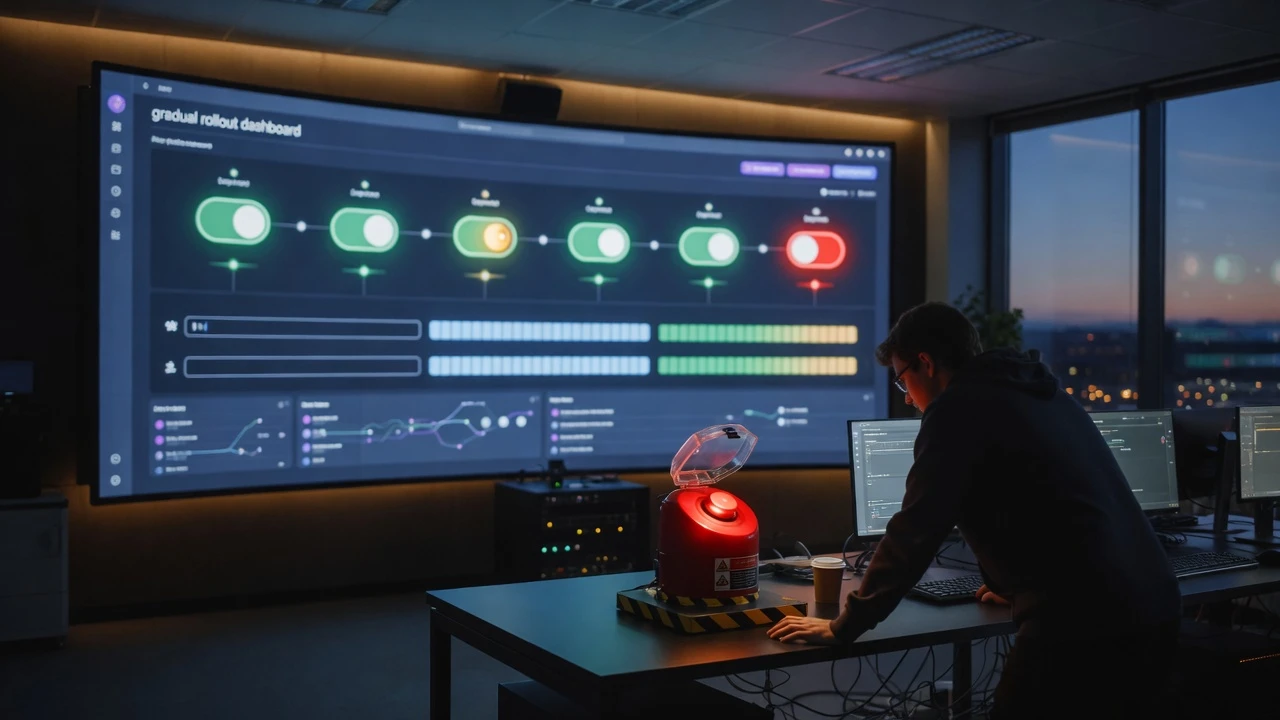
Under the surface, a credible OTA system is serious infrastructure: signed and verified update packages, A/B partitions so a failed install rolls back instead of bricking a vehicle, staged rollouts to small fleets before wide release, and the ability to update safety-relevant controllers without ever leaving a car in an unsafe intermediate state. Doing this for a phone is routine engineering. Doing it for two tonnes of machinery parked on a hill with a low battery and an intermittent cellular connection is not.
Security Is Now a Regulatory Requirement
A car that accepts remote code is a car that can accept the wrong remote code. Regulators moved first here, and the rules have teeth. UN Regulation No. 155 requires a certified cybersecurity management system covering the entire vehicle lifecycle, and UN Regulation No. 156 requires a software update management system, with type approval contingent on both in the markets that adopted them. ISO/SAE 21434 provides the engineering process underneath. In practice this means threat modeling during design, secure boot and hardware roots of trust, signed updates, intrusion detection on the vehicle network, and a documented ability to respond to a vulnerability discovered years after production.
The practical effect is that automotive software has acquired something most consumer software still lacks - a legal obligation to remain maintainable and patchable for the service life of the product.
Why the Transition Has Been So Painful
Newer manufacturers built this way from the beginning and had no legacy to unwind. Established automakers have spent the last several years discovering that becoming a software organization is not a procurement exercise. Programs slipped, launches were delayed, in-house software divisions were restructured, and several groups ultimately partnered with outside platform providers rather than finish alone.
The reasons are structural rather than technical. A century of institutional skill sits in mechanical engineering and supplier management, not in continuous delivery. Validating software that can steer and brake demands a testing culture that consumer software never needed. And an industry organized to freeze a specification and hold suppliers to it does not naturally produce teams that ship every two weeks.
The Honest Trade-Offs
- Software-gated hardware. If capability is defined in code, features already physically installed can be sold as subscriptions or unlocks. Early attempts drew genuine public backlash, and the boundary between a fair paid service and a paywall on hardware you already bought remains unsettled.
- Support lifetime. Cars last 15 to 20 years. Phones get five years of updates at best. Nobody has yet proven they can maintain a vehicle software platform for two decades, and a car whose connected features quietly stop working in year twelve is a new category of depreciation.
- Repairability. Centralized, cryptographically signed systems make independent repair harder. Replacing a part can require authenticated software provisioning, which pulls the right-to-repair debate directly into the vehicle architecture.
- Concentrated failure. Distributed ECUs failed in small, contained ways. When a handful of computers run everything, a bad update or a single hardware fault has a much broader blast radius - which is exactly why staged rollouts and rollback are non-negotiable.
- Data and privacy. A connected, continuously updated vehicle is also a continuously reporting one. Who receives telemetry, for how long, and under what consent is a question the technology raced past.
What This Means Beyond the Automotive Industry
The SDV pattern is not really about cars. It is what happens to any complex physical product once compute gets cheap enough to centralize: consolidate scattered embedded controllers onto a general platform, move the network to Ethernet, express features as software services, and keep shipping after the product is sold. The same restructuring is already underway in industrial machinery, agricultural equipment, medical devices, and building systems.
For businesses that operate fleets or build connected products, the lesson is concrete. The competitive advantage moves from the specification you launched with to the update pipeline you can sustain - and that pipeline is a software engineering discipline, not a feature. Secure delivery, staged rollout, rollback, telemetry, and long-term maintenance are the actual product. Any organization putting a processor into something it sells should be asking today how it plans to patch that device in year ten, because increasingly the regulator will ask first.
Key Takeaways
- Zonal architecture replaces 70-150 function-specific ECUs with a few location-based zone controllers and central high-performance computers, cutting wiring weight dramatically.
- Automotive Ethernet with Time-Sensitive Networking replaces CAN as the backbone, enabling service-oriented software instead of fixed signal messaging.
- Decoupling software from hardware is what makes real over-the-air updates possible - including safety-relevant systems, with signed packages, A/B rollback, and staged rollouts.
- UN R155, UN R156, and ISO/SAE 21434 turned automotive cybersecurity and update management into type-approval requirements, not optional best practice.
- The open questions are commercial and ethical - subscription-gated hardware, two-decade support lifetimes, repairability, and vehicle data privacy - not technical.
The car is becoming a platform that happens to have wheels. That is genuinely good news for owners in the near term, because the vehicle in the driveway can get better rather than only older. Whether it stays good news depends less on the engineering, which is already working, and more on whether the industry treats a fifteen-year support obligation as seriously as it treats a fifteen-year rust warranty.