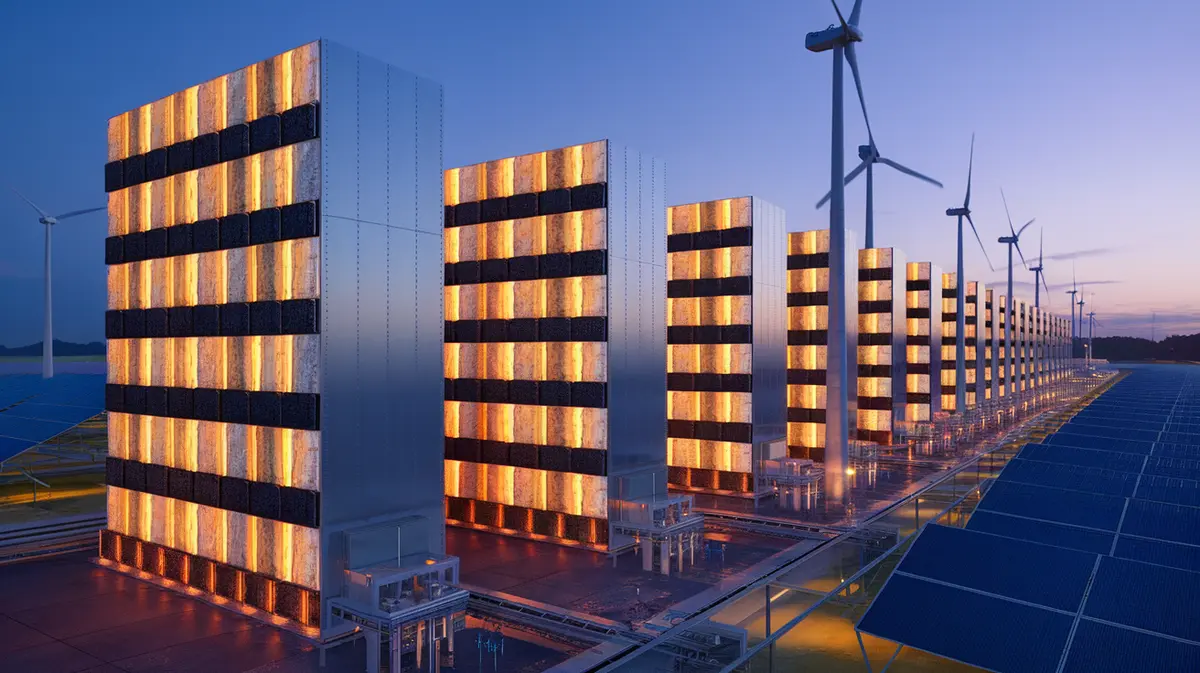
Thermal Batteries in 2026: How Antora, Rondo, and Fourth Power Are Storing Cheap Renewable Electricity as White-Hot Heat to Decarbonize Heavy Industry and the Grid
- Internet Pros Team
- July 13, 2026
- AI & Technology
When people picture a battery, they picture lithium - a chemical cell that shuttles electrons and stores electricity as electricity. But the fastest-growing form of energy storage in 2026 does something stranger and far cheaper: it takes surplus solar and wind power when it is nearly free, dumps it into a stack of ordinary carbon or brick, and heats that material until it glows white-hot. Hours or days later, the stored energy comes back out as intense heat - or, remarkably, as electricity again. These are thermal batteries, and they are quietly aiming at one of the biggest and most stubborn slices of global emissions: industrial heat.
The Hidden Climate Problem: Industrial Heat
Roughly a fifth of all the energy used on Earth goes not into electricity or transport, but into making things hot - the furnaces that forge steel, bake cement, crack chemicals, dry paper, and brew everything from beer to fertilizer. Almost all of that heat comes from burning fossil fuels directly, because gas and coal have always been the cheapest way to reach high temperatures. Electrifying it looked hopeless: renewables are cheap but intermittent, and a factory furnace cannot flicker on and off with the wind. Thermal batteries break that deadlock by decoupling when clean power is generated from when the heat is needed.
"The cheapest energy in history is now solar at noon and wind at midnight. The problem was never making clean electricity - it was storing it long enough to run a factory. Store it as heat in a block of carbon and the economics flip completely."
How a Thermal Battery Actually Works
The core idea is almost absurdly simple - it is the same physics as a toaster. Cheap electricity runs through a resistive element (or heats the storage medium directly), converting nearly 100% of that power into heat. That heat is soaked into a dense, heat-loving material and trapped behind thick insulation. The clever engineering is in three places: choosing a medium that can survive extreme temperatures cheaply, insulating it well enough that it holds heat for hours or days, and getting the energy back out in a useful form.
Charge
Surplus solar or wind electricity - bought when prices are lowest - is turned into heat by resistive (Joule) heating, pushing the storage material to anywhere from 600C to over 2000C.
Store
The heat sits inside blocks of carbon, graphite, or firebrick wrapped in heavy insulation, losing only a few percent per day - cheap, abundant materials with no rare metals.
Discharge as Heat
Air or another fluid is blown through the hot core to deliver clean process heat or steam on demand to a factory - the most efficient use, since no conversion is needed.
Discharge as Power
When electricity is needed, the white-hot glow drives thermophotovoltaic cells - solar-panel-like chips that turn radiant heat straight back into electricity, with no moving parts.
Thermophotovoltaics: The Quiet Breakthrough
The most futuristic piece is the thermophotovoltaic (TPV) cell. A glowing-hot surface radiates light, and just as a solar panel turns sunlight into electricity, a TPV cell turns that thermal glow into power. For decades TPV efficiencies were too low to matter. Recent lab and pilot devices have pushed past 40% conversion efficiency - rivaling or beating the steam turbines that have dominated power generation for a century, but with no spinning parts, no water, and instant response. That single advance is what lets a block of hot carbon act as a true battery: electricity in, electricity out.
Who Is Building It
A cluster of well-funded startups is racing to commercialize different flavors of the idea:
- Antora Energy stores energy in solid carbon blocks heated to around 2000C and uses its own thermophotovoltaic modules to deliver both heat and electricity to industrial customers.
- Rondo Energy builds the Rondo Heat Battery from conventional firebrick - the same refractory material used in steel mills - charging it with renewable power to deliver steady high-temperature heat and steam.
- Fourth Power takes the most extreme approach, heating liquid tin and graphite to roughly 2400C - so hot the storage medium glows like a small sun - to maximize energy density and TPV output.
- Electrified Thermal Solutions uses electrically conductive firebrick that doubles as its own heating element, targeting the very high temperatures needed for cement and chemicals.
Thermal vs. Lithium: Different Jobs
| Factor | Thermal Battery | Lithium-Ion Battery |
|---|---|---|
| Best output | Heat (and now electricity via TPV) | Electricity |
| Materials | Carbon, graphite, firebrick - cheap, abundant | Lithium, nickel, cobalt - mined, constrained |
| Duration | Many hours to days | Typically 2 to 8 hours |
| Cost per stored unit | Very low (for heat) | Higher, though falling |
| Fire / degradation risk | Minimal; no chemical aging | Real; capacity fades over cycles |
The point is not that thermal batteries replace lithium - they do different jobs. Lithium is unbeatable for phones, cars, and short bursts of grid power. Thermal storage wins where you need heat, or cheap storage measured in days rather than hours. For a steel plant or a chemical works, that distinction is worth billions.
The Real Trade-offs
Thermal batteries are not magic. Converting heat back to electricity always loses energy, so a thermal battery used purely for power round-trips less efficiently than lithium - which is why the biggest early wins are in delivering heat directly. Holding thousands of degrees for days demands serious insulation and materials science, and the plants are physically large. But the ingredients are cheap and everywhere, there is no supply chain bottleneck on exotic metals, and the components do not degrade the way chemical cells do. For long-duration storage and industrial heat, those advantages are decisive.
What It Means for Business
Thermal batteries turn intermittent renewables into something a factory can actually run on - and they turn cheap midday solar into a competitive advantage. Manufacturers with heat-hungry processes can lock in low, stable energy costs while cutting emissions, utilities can add days of low-cost storage without straining battery-metal supply chains, and any company with a decarbonization target suddenly has a credible answer for the hardest line item on its books. As carbon costs rise and clean electricity keeps getting cheaper, storing energy as heat is shaping up to be one of the defining industrial technologies of the decade.
At Internet Pros, we help businesses make sense of fast-moving technology and turn it into a practical roadmap - from strategy to the software and automation that tie new systems together. Get in touch to talk through what emerging technology could mean for your operation, or explore more technology insights on our blog.