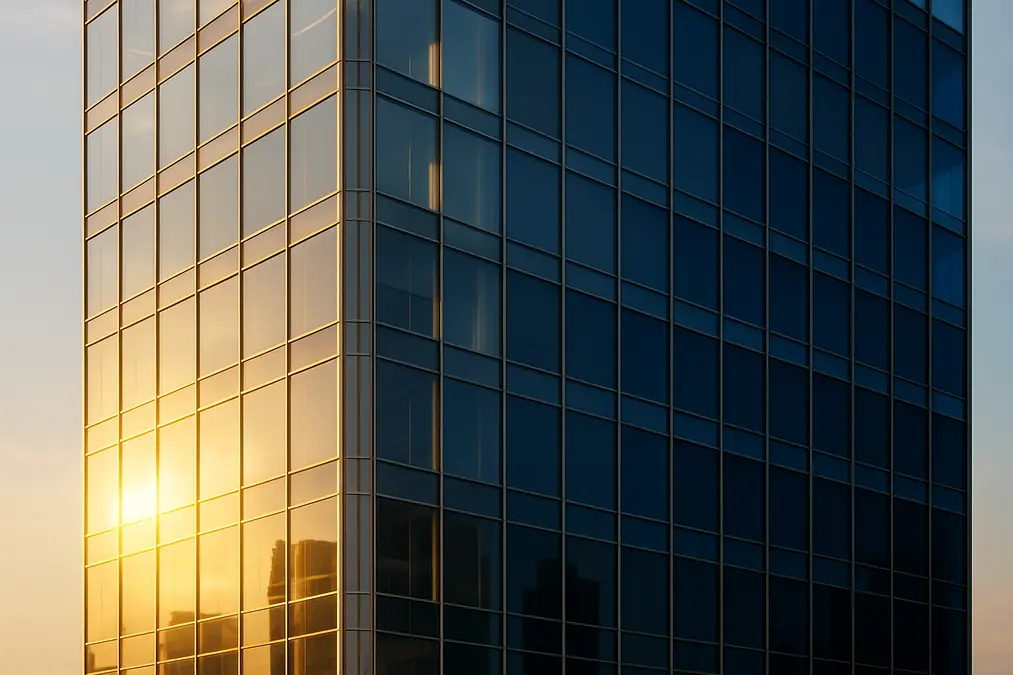
Electrochromic Smart Windows in 2026: How View Smart Glass, Halio, Saint-Gobain SageGlass, AGC Sage, and Gauzy Are Cutting Building Energy Use With Dynamic Tinting
- Internet Pros Team
- June 4, 2026
- AI & Technology
For two decades, the most expensive surface on a modern commercial building has been doing the dumbest possible job. A typical office tower hands floor-to-ceiling glass to half its tenants, then lets that glass dump 30-40% of the building's cooling load straight into the HVAC system every sunny afternoon — while occupants close the blinds, switch on the lights, and quietly waste both daylight and electricity at the same time. In 2026, that compromise is finally breaking. View Smart Glass, Halio, Saint-Gobain SageGlass, AGC Sage, and Israel-based Gauzy are shipping electrochromic insulating glass units that tint on demand, cut HVAC and lighting energy by 20-30%, and pay back inside the same building lifecycle as the windows themselves.
What an Electrochromic Window Actually Is
Sandwich a five-layer stack between two panes of glass: a transparent conductive oxide (typically ITO), a tungsten-oxide (WO3) electrochromic layer, a thin lithium-ion electrolyte, a nickel-oxide counter electrode, and a second ITO contact. Apply 3-5 volts DC and lithium ions migrate into the tungsten oxide, shifting it from transparent to a deep blue tint that absorbs visible and near-infrared light. Reverse the polarity and the ions march back; the glass returns to clear. The tint is stable without power — you only spend electricity to change states.
The result is a window that delivers four distinct optical states, modulating visible light transmittance from ~60% down to ~1% and solar heat gain coefficient from ~0.41 down to ~0.09. That single dynamic range, applied to a perimeter zone of a commercial building, displaces the entire load case that mechanical blinds, low-e films, and oversized chillers were quietly carrying.
"The economics flipped the moment dynamic glass started competing not against ordinary glass, but against the combined cost of glass plus interior blinds plus oversized HVAC plus daytime electric lighting. Once you draw the boundary correctly, electrochromic is the cheapest envelope you can install in a 2026 spec office."
Who Is Actually Shipping in 2026
| Company | Approach | 2026 Footprint |
|---|---|---|
| View Smart Glass (USA) | The largest dedicated electrochromic glass manufacturer, with its Olive Branch, Mississippi fab producing tungsten-oxide-on-glass at architectural scale. Closed-loop AI control of tint state via the View Net cloud platform and on-glass occupancy and sky-luminance sensors. | Over 120 million square feet of installed and contracted glass spanning JFK Terminal 6, the Apollo Theater, Hartsfield-Jackson concourses, Microsoft, Adobe, and Kaiser Permanente campuses. Restructured under new ownership in 2024-2025; ramping commercial deliveries in 2026. |
| Halio (Kinestral / AGC) | Joint venture between Kinestral Technologies and Japan's AGC Glass, with a differentiated faster switching speed (under three minutes for a full tint) and uniform color across the tint range. Strong fit for hospitality, healthcare, and high-end residential where visual character matters. | Production lines in California and integration into AGC's global architectural distribution. Deployments in Hyatt hotels, Mayo Clinic facilities, and the headquarters projects of multiple Fortune 100 firms. |
| Saint-Gobain SageGlass (USA / France) | The longest-running electrochromic brand, owned by Saint-Gobain and manufactured in Faribault, Minnesota. SageGlass Harmony introduces continuous gradient tint across a single pane, eliminating the visible boundary between tint zones — a critical aesthetic upgrade for premium offices and museums. | Installed in 1,000+ projects across 35 countries: GSA federal buildings, Chase Center, Stanford Hospital, the Aga Khan Centre London, and global corporate HQs for Apple, Microsoft, and Cisco. |
| Gauzy (Israel) | Pursues a broader portfolio across LCG (liquid crystal), SPD (suspended particle device), and electrochromic, dual-targeting architectural and automotive markets. Its Vision Systems subsidiary supplies smart roofs to Mercedes-Benz, Ferrari, and McLaren. | Public on NASDAQ since 2024; over 250 vehicle programs and an expanding architectural footprint in airports, hospitals, and luxury residential. Adds the most flexible technology mix in the industry. |
| ChromoGenics, EControl-Glas, Eyrise (EU) | ChromoGenics (Sweden) ships flexible electrochromic films for retrofits. EControl-Glas (Germany) manufactures all-solid-state electrochromic IGUs in Plauen. Merck-spinout Eyrise brings a liquid-crystal switchable glass tuned for the EU EPBD-recast zero-emission building standard. | Strong European public-sector and EPBD-driven retrofit pipeline, plus growing residential premium-window adoption in Germany, the Netherlands, and the Nordics. |
The Four Reasons This Finally Pays Back
Smart glass has been "five years away" since 2010. What changed in 2026 is not the chemistry — it is the surrounding economic stack:
HVAC + Lighting Are One Bill Now
Electrified buildings on heat pumps share one electrical load curve with lighting and plug load. Reducing peak afternoon solar heat gain through dynamic tinting shaves the peak kilowatt the entire building is sized around — not just the cooling kWh.
IRA 179D + Local Carbon Caps
The expanded Section 179D commercial-buildings deduction (up to $5.65/sq ft) and city carbon-cap laws like NYC Local Law 97 price building-envelope energy waste explicitly. Dynamic glass earns the deduction and avoids the LL97 penalty.
AI Tint Scheduling Stops Wasting It
Modern smart-glass controllers ingest weather forecasts, solar-position math, sky-imager data, and BAS occupancy feeds, then optimize tint per pane every few minutes. Brainbox AI, Cortex Building, and the manufacturers' own cloud platforms now deliver 20-30% measured savings in occupied office space.
No More Blinds, No More Glare
Eliminating motorized shades removes the most-failed mechanical system in a typical office — and finally gives occupants an outside view at every hour of the day, the variable that biophilic-design research consistently links to higher productivity and lower absenteeism.
Honest Limits
Switching speed. Even the fastest 2026 electrochromic units take ~3 minutes to traverse the full tint range. For most building physics that is irrelevant; for a conference-room privacy use case it loses to SPD or PDLC liquid-crystal systems that switch in milliseconds.
Installed cost premium. Dynamic IGUs still cost roughly $50-$100 per square foot installed versus $25-$40 for a high-performance static IGU. The payback math only closes after you credit displaced blinds, downsized HVAC, daylighting-driven lighting savings, and 179D — which means it closes for spec offices, healthcare, and government projects long before it closes for a single-family home.
Indium supply. Today's ITO transparent conductors depend on indium, a constrained mineral whose supply also goes into solar modules and OLED displays. Long-term scale relies on alternative TCOs (IZO, FTO) or silver nanowire grids — all viable, none yet dominant.
Edge-seal durability. Twenty-year guarantees on dynamic IGUs are now standard, but real-world failure modes (haze, busbar corrosion, perimeter delamination) still drive the reliability conversation. Specify glass-to-glass busbars, polyisobutylene primary seals, and a manufacturer with a credible warranty book.
What This Means for Owners, Architects, and IT Leaders
- Treat envelope and HVAC as a single procurement. The dynamic-glass premium only makes sense when the chiller can be downsized, the perimeter VAV boxes shrunk, and the lighting controls retuned. If your design team is RFPing them separately, you are leaving the savings on the floor.
- Wire it into the building automation system on day one. Dynamic glass that defaults to "tinted" because nobody integrated it with BACnet, KNX, or your smart-building OS is just an expensive blind. Confirm BAS integration, override authority, and an API for your facilities team.
- Score it against LEED v5, WELL v2, and IRA 179D simultaneously. Dynamic glass routinely earns daylighting, glare-control, and quality-of-views credits in LEED v5 and WELL v2, while qualifying for the deeper 179D deductions and unlocking utility rebates from ConEd, PG&E, NYSERDA, Xcel, and MassCEC. Stack the value, not just the kWh.
- Take the 20-year warranty seriously. Pick a manufacturer whose balance sheet, parent company, or supply chain you trust to honor it. After the View restructuring, this is the question buyers now ask first — and rightly so.
The Bottom Line
Electrochromic glass in 2026 has stopped being a green flourish bolted onto trophy buildings and become a credible $5-10 billion building-envelope category with multiple shipping vendors, real warranty books, and measured 20-30% energy savings that the 179D tax code, LEED v5, and city carbon-cap laws now reward in cash. View, Halio, SageGlass, AGC Sage, and Gauzy are all viable choices; the differences are switching speed, tint uniformity, supply chain, and how aggressively each will price into a 2026 commercial bid.
For any owner, architect, or IT leader scoping a new office tower, data-center support building, hospital wing, airport concourse, or higher-ed academic block, the action item is simple: stop comparing dynamic glass to ordinary glass. Compare it to ordinary glass plus the blinds you would have installed, plus the chiller you would have oversized, plus the daytime lighting you would have run. On that ledger, the 2026 buying decision usually flips — and the building you operate for the next forty years finally stops paying its own sunlight a tax.