Green Software Engineering: How Carbon-Aware Computing and Sustainable Code Are Reducing Tech's Environmental Footprint in 2026
- Internet Pros Team
- March 24, 2026
- Software Development
In January 2026, Microsoft announced that its Azure cloud platform had reduced software-driven carbon emissions by 34% year-over-year — not by buying more renewable energy, but by rewriting how its own services run. The company's internal "GreenShift" initiative refactored over 18 million lines of code across Azure DevOps, Teams, and Outlook to use carbon-aware scheduling, energy-efficient algorithms, and demand-shifting workloads to times and regions where the electrical grid is cleanest. Google followed with a landmark report revealing that optimizing TensorFlow model training pipelines for energy efficiency — without any hardware changes — cut compute costs by 28% and CO₂ emissions by 41% per training run. The message is clear: the next frontier of sustainability is not just cleaner data centers or greener hardware — it is writing better, more efficient software. Welcome to the era of green software engineering.
What Is Green Software Engineering?
Green software engineering is an emerging discipline focused on building applications that minimize carbon emissions, reduce energy consumption, and use hardware resources efficiently throughout the software lifecycle. Unlike traditional sustainability efforts that focus on powering data centers with renewable energy (carbon offsetting), green software engineering targets the root cause: the code itself. It operates on a simple principle — software that uses fewer CPU cycles, less memory, less network bandwidth, and less storage produces less carbon, regardless of what powers the server it runs on.
The Green Software Foundation (GSF), founded by Accenture, GitHub, Microsoft, and ThoughtWorks in 2021, has become the central governing body for this movement. By 2026, the GSF has established industry-standard metrics, certification programs, and open-source tools that make it possible to measure, benchmark, and reduce the carbon intensity of software applications. Their flagship metric — the Software Carbon Intensity (SCI) score — is now tracked by over 4,200 organizations worldwide, providing a standardized way to quantify grams of CO₂ equivalent per unit of work performed by a software system.
| Aspect | Traditional Development | Green Software Engineering |
|---|---|---|
| Optimization Goal | Speed and features first | Efficiency, speed, and carbon reduction |
| Energy Awareness | Not measured or considered | Tracked per function, service, and deployment |
| Workload Scheduling | Run immediately, wherever capacity exists | Shift to low-carbon times and regions |
| Resource Usage | Over-provision for peak demand | Right-size dynamically, scale to zero |
| Success Metric | Latency, throughput, uptime | SCI score, energy per transaction, carbon per user |
The Three Pillars of Green Software
The Green Software Foundation defines three core actions that reduce software carbon emissions: energy efficiency, carbon awareness, and hardware efficiency. Each represents a different lever that developers can pull — and the most effective green software strategies combine all three.
Energy Efficiency
Write code that accomplishes the same work using fewer computational resources. This includes optimizing algorithms (replacing O(n²) with O(n log n) where possible), reducing unnecessary API calls, implementing efficient caching strategies, minimizing data serialization overhead, and choosing energy-proportional architectures that consume power proportional to actual load rather than provisioned capacity. Spotify reduced its backend energy consumption by 23% simply by refactoring idle polling loops into event-driven architectures.
Carbon Awareness
Shift computational workloads to times and locations where the electricity grid has lower carbon intensity. Carbon-aware applications use real-time grid data from APIs like WattTime and Electricity Maps to schedule batch jobs, CI/CD pipelines, ML training runs, and backup operations during periods of high renewable energy availability. Microsoft's carbon-aware Windows Update now delays non-critical updates until the local grid is running on at least 60% renewable energy.
Hardware Efficiency
Maximize utilization of existing hardware rather than provisioning new resources. This means right-sizing cloud instances, implementing serverless architectures that scale to zero, extending device lifespans through efficient software updates, and reducing embodied carbon — the emissions from manufacturing hardware. The most sustainable server is the one you don't need to spin up. AWS reports that customers using Graviton ARM processors consume 60% less energy for equivalent workloads compared to x86 instances.
Carbon-Aware Computing in Practice
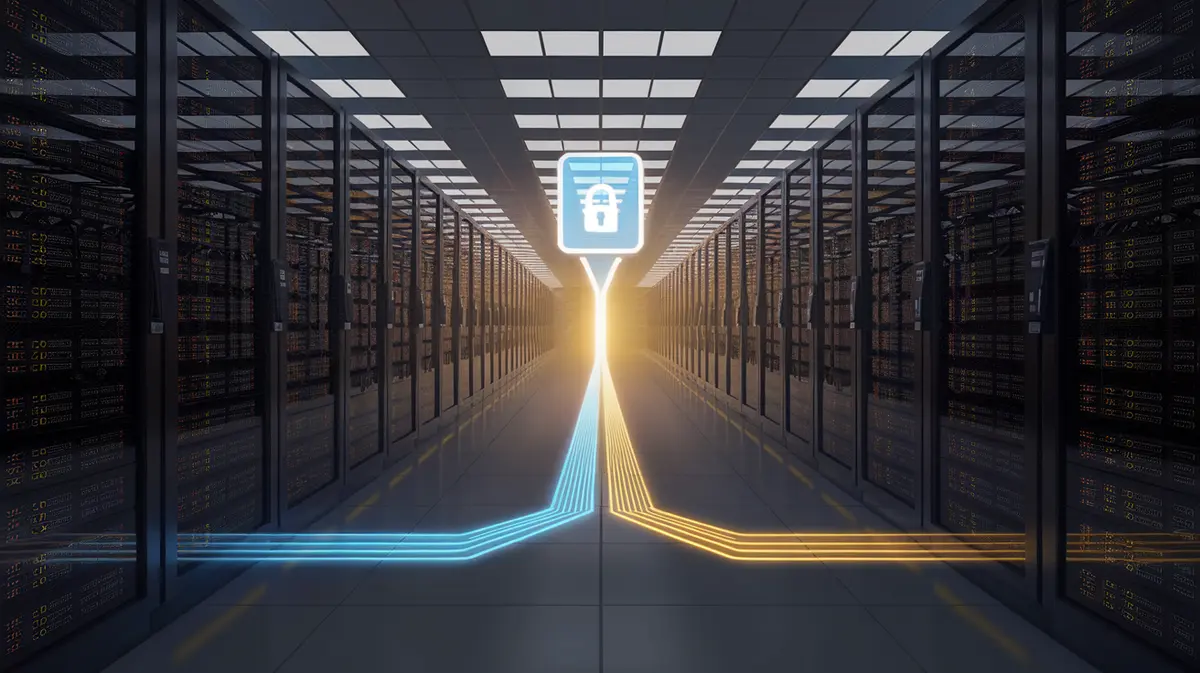
Carbon-aware computing is the most transformative concept in green software engineering. The core insight is simple: the carbon intensity of electricity varies dramatically throughout the day and across geographic regions. Running a workload in Sweden (95% renewable grid) at noon on a sunny day produces a fraction of the emissions compared to running it in Poland (coal-heavy grid) during an evening peak. Carbon-aware software exploits this variability by making intelligent decisions about when and where to execute work.
The Green Software Foundation's Carbon Aware SDK — now integrated into Azure, AWS, and Google Cloud — provides developers with real-time carbon intensity data and scheduling APIs. In 2026, major CI/CD platforms including GitHub Actions, GitLab CI, and CircleCI offer built-in carbon-aware pipeline scheduling. When a developer pushes code, the pipeline evaluates whether the current grid carbon intensity is below a configurable threshold. If it is, the build runs immediately. If not, it queues the job and executes during the next low-carbon window — typically within 2-4 hours. For non-urgent builds, this approach reduces CI/CD carbon emissions by up to 70% with minimal impact on developer velocity.
"We used to think about sustainable infrastructure — renewable energy, efficient cooling. But the software layer is where the real leverage is. One algorithm change can save more carbon than a year of hardware optimization. Green software engineering is the most cost-effective decarbonization strategy the tech industry has."
The Green Software Engineering Toolkit
A maturing ecosystem of tools, frameworks, and platforms now enables developers to measure and optimize their software's environmental impact without sacrificing performance or developer experience.
| Tool | Purpose | Key Feature |
|---|---|---|
| Carbon Aware SDK | Workload scheduling | Real-time grid carbon data from WattTime and Electricity Maps |
| Cloud Carbon Footprint | Cloud emissions measurement | Estimates CO₂ from AWS, Azure, and GCP usage |
| Scaphandre | Power consumption monitoring | Real-time watt-level metrics per process and container |
| CodeCarbon | ML training emissions tracking | Tracks CO₂ per training run with hardware-specific models |
| EcoGrader | Website sustainability scoring | Measures page weight, requests, and green hosting |
| Green Metrics Tool | CI/CD pipeline analysis | Measures energy per build step and test suite |
Industry Adoption and Real-World Impact
The business case for green software engineering has moved beyond environmental responsibility into hard financial returns. Because energy-efficient software uses fewer compute resources, it directly reduces cloud infrastructure costs. Organizations that adopt green software practices consistently report 20-40% reductions in cloud spending as a secondary benefit of carbon optimization. Etsy redesigned its search infrastructure using energy-proportional principles in late 2025, cutting AWS costs by $4.2 million annually while reducing carbon emissions by 38%. Shopify implemented carbon-aware batch processing for its merchant analytics pipeline, shifting 67% of non-real-time workloads to low-carbon windows and saving $1.8 million per year in compute costs.
Regulatory pressure is accelerating adoption. The EU's Corporate Sustainability Reporting Directive (CSRD), fully enforced in 2026, requires large companies to report Scope 3 emissions — which include the carbon footprint of software services they purchase and operate. This means enterprise procurement departments are now evaluating software vendors on their SCI scores alongside traditional criteria like performance, security, and cost. The EU Green Deal's Digital Product Passport initiative, launching in phases through 2027, will require software products sold in the EU to disclose energy consumption metrics and lifecycle environmental impact data.
Building a Green Software Practice
For development teams looking to adopt green software engineering, the path forward is practical and incremental. Start by measuring: integrate Cloud Carbon Footprint or Scaphandre into your monitoring stack to establish a baseline. Next, identify your highest-impact workloads — ML training, CI/CD pipelines, batch processing, and data analytics typically account for 60-80% of compute carbon. Apply carbon-aware scheduling to these workloads first. Then address energy efficiency in your application code: profile hot paths, optimize database queries, implement aggressive caching, and evaluate whether serverless or scale-to-zero architectures can replace always-on instances.
- Measure First: Deploy carbon monitoring tools to establish your SCI baseline before optimizing
- Target Big Wins: Focus on batch processing, ML training, and CI/CD — the highest-emission workloads
- Schedule Smart: Implement carbon-aware scheduling for non-latency-sensitive operations
- Right-Size Infrastructure: Audit cloud instances and eliminate over-provisioning with auto-scaling and serverless
- Optimize Code Paths: Profile energy-intensive functions and refactor for algorithmic efficiency
- Choose Green Regions: Deploy workloads to cloud regions with the highest renewable energy percentage
- Certify and Report: Pursue GSF certification and include SCI metrics in sustainability reports
The Road Ahead
Green software engineering is poised to become as fundamental to professional development practice as security and accessibility. The Green Software Foundation's certification program — the Green Software Practitioner credential — has been completed by over 85,000 developers as of early 2026, making it one of the fastest-growing professional certifications in tech. Universities including MIT, ETH Zurich, and the University of Oxford now offer dedicated courses in sustainable computing. Major tech employers including Google, Microsoft, Salesforce, and SAP have added green software competencies to their engineering ladder requirements.
The convergence of regulatory requirements, cost savings, consumer expectations, and developer tooling means that carbon-efficient software is no longer optional — it is a competitive advantage. Organizations that invest in green software engineering today are simultaneously reducing their environmental impact, cutting infrastructure costs, improving application performance, and future-proofing against increasingly stringent sustainability regulations. The most efficient code is the greenest code — and in 2026, writing it is both a moral imperative and a business strategy.