Public EV Charging in 2026: Why So Many Fast Chargers Still Fail on Arrival, What the Switch to the NACS (SAE J3400) Plug Actually Changes, and How to Read a Charging Curve Before a Road Trip
- Internet Pros Team
- October 18, 2026
- AI & Technology
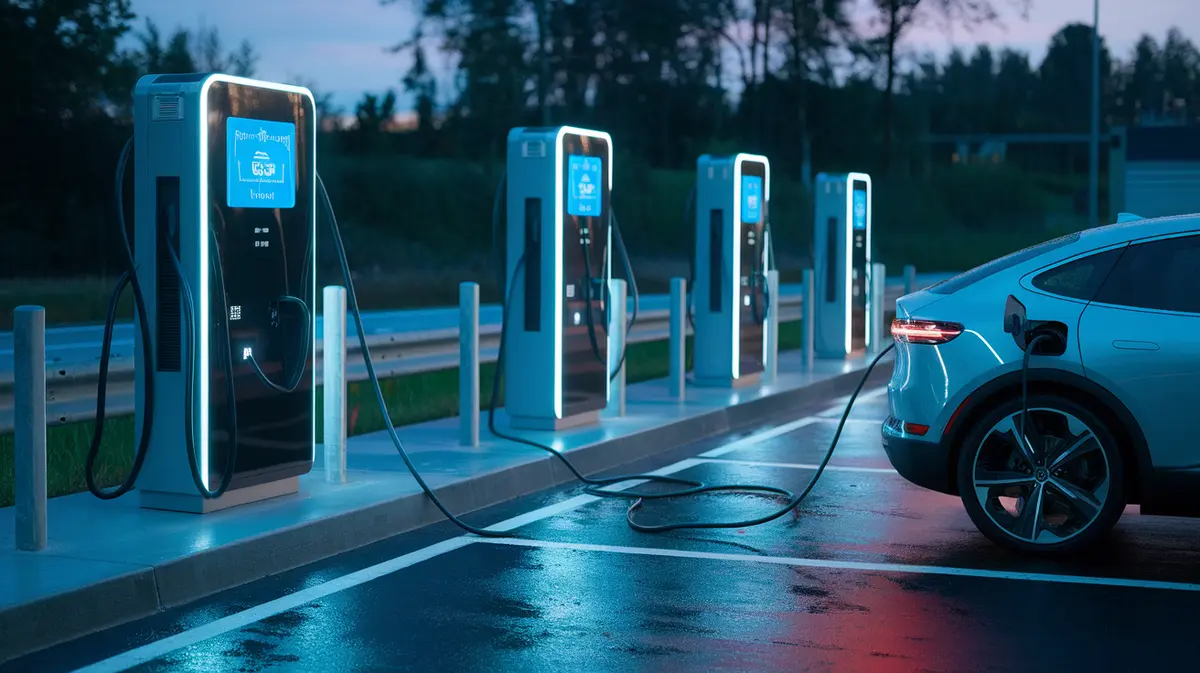
Electric cars have improved fast. Public charging has improved more slowly. Drivers still pull into a fast-charging station to find a dark screen, a payment terminal that will not read a card, or a stall that starts at 150 kW and drops to 40. At the same time, North America is changing plugs, moving from CCS to the Tesla-designed connector now standardised as SAE J3400, often called NACS. Here is why chargers fail, what the plug change really fixes, and how to plan a stop that takes the time you expect.
Why a Fast Charger Is Harder Than a Fuel Pump
A fuel pump moves liquid. A DC fast charger is a high-power computer that has to agree with another computer, the car, before any energy flows. When you plug in, the charger and the car talk over a data link carried on the plug’s signal pins. They swap details on the battery’s voltage, the current limits, and the temperature. Then the charger confirms payment through a backend server, usually over a cellular modem. Only after all of that does the power cabinet start. Any step can fail.
- The handshake. Car and charger software come from different companies and are updated on different schedules. A firmware update on either side can break sessions that worked last month.
- Payment and connectivity. Card readers, apps and the cellular link to the backend are common failure points. The charger can be fine while the payment path is down.
- Cables and connectors. Heavy liquid-cooled cables get dropped, driven over and left on the ground. Damaged pins and broken latches are a leading cause of dead stalls, and cable theft for copper became a serious problem in 2024 and 2025.
- Heat and shared power. Many sites split one power cabinet between two stalls. If someone is already charging next to you, you may get half the power, and hot cabinets slow down on purpose to protect themselves.
Surveys of drivers by J.D. Power have found that somewhere around one in seven to one in six public charging visits ends without a charge, an improvement on earlier years but still far from the reliability people expect from a fuel station.
“97% uptime” describes the charger. It does not describe your visit. A stall can be online and still fail to charge your car.
Uptime Is Not the Same as a Successful Charge
US federal minimum standards for chargers built with National Electric Vehicle Infrastructure (NEVI) funding require each port to be available about 97% of the time. That is a useful floor, but uptime only measures whether the charger reports itself as working. It can leave out outages blamed on the utility, on vandalism or on scheduled maintenance, and it says nothing about sessions that start and then stop, or chargers that deliver far less power than the sign promises. A better measure, now tracked by some networks and researchers, is the successful session rate: the share of real attempts that end with energy in the battery.
What the NACS (J3400) Switch Actually Changes
In 2023 nearly every carmaker selling in North America announced it would adopt Tesla’s connector, and SAE published it as J3400. Tesla then opened much of its Supercharger network to other brands. Many 2025 and 2026 models now ship with a J3400 port built in, while older cars use an adapter.
| Connector | Used for | Where it stands in 2026 |
|---|---|---|
| J1772 | AC Level 2 only | Still on most workplace and hotel chargers; J3400 cars need a small adapter |
| CCS1 | AC and DC (J1772 plus two DC pins) | Most non-Tesla fast chargers; new sites increasingly add J3400 cables beside it |
| NACS / SAE J3400 | AC and DC through the same pins | Becoming the default port on new cars; smaller, lighter cable |
| CHAdeMO | DC only | Legacy; mostly older Nissan Leafs, and many sites are removing it |
What the switch fixes: access to a large network that has a strong reliability record, a lighter plug, and in time one connector for everyone. What it does not fix: a broken stall is broken whatever the plug. Adapters add another part that can overheat or fail, so use one approved by your carmaker and look for a UL 2252 listing. Some older Supercharger stalls also have short cables designed for the charge port on a Tesla, so other cars may have to park across two bays.
How to Read a Charging Curve
The big number on the sign, 150 kW or 350 kW, is the most the charger can deliver. Your car decides how much it will actually take, and that changes every minute. A charging curve plots power against the battery’s state of charge. Most cars reach their peak only at a low charge, hold it for a while, and then taper steeply above about 60 to 80%.
- Arrive low, leave at about 80%. Going from 10% to 80% is usually much faster than from 80% to 100%. On a road trip, two short stops often beat one long one.
- Precondition the battery. A cold battery charges slowly. Setting the charger as the destination in the car’s own navigation usually warms the pack on the way.
- Know your voltage. Many newer cars use 800-volt batteries. On older chargers built around 400 to 500 volts, they can charge much more slowly than on high-voltage stations.
- Avoid shared cabinets. If two stalls share power, pick one where the neighbour is empty.
Before a trip, check recent driver check-ins on an app like PlugShare rather than the network’s own map, and prefer sites with several working stalls so one fault does not end your plans.
If Your Business Is Installing Chargers
The same lessons apply when a company adds chargers for staff, customers or a fleet.
A short checklist for workplace and fleet charging
- Match speed to dwell time. Cars parked for a work day rarely need DC fast charging. Level 2 is cheaper to install, run and maintain.
- Plan for both plugs. Choose hardware with J3400 cables or swappable connectors, or provide adapters, so the chargers work with the cars that arrive next year.
- Insist on OCPP. Chargers that support the Open Charge Point Protocol can be moved to a different management network if the first provider fails or raises prices.
- Write uptime into the contract. Ask for response times and repair commitments, and measure successful sessions, not just whether the unit is online.
- Treat chargers as network devices. They run software and talk to the internet. Keep them on a separate network segment, change default passwords and keep the firmware current.
The Bottom Line
Public charging is getting better, and the move to one plug will make it simpler. But reliability depends on software, payment systems, cables and maintenance far more than on the connector. Drivers can save a lot of time by understanding the charging curve and checking recent reports. Businesses that install chargers should buy open, maintainable hardware, demand real uptime commitments, and manage chargers like any other connected device.
Planning EV chargers for your office or fleet?
Internet Pros helps businesses set up the network side of EV charging: secure segments for chargers, reliable connectivity, and management software that does not lock you in. Contact our team to talk it through.