Self-Driving Laboratories: How AI-Powered Autonomous Research Platforms Are Compressing the Scientific Method in 2026
- Internet Pros Team
- May 2, 2026
- AI & Technology
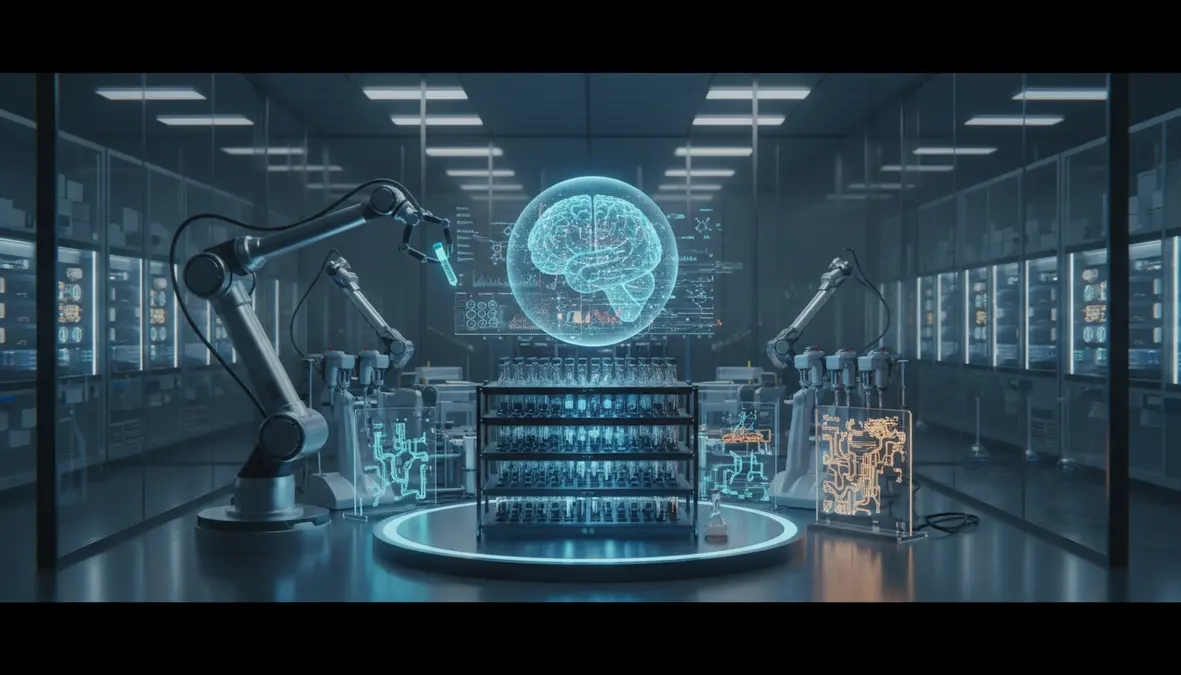
In a sealed glovebox at Lawrence Berkeley National Laboratory, a six-axis robotic arm picks a ceramic crucible off a heated stage, weighs three precursor powders to four-decimal precision, mixes, fires, cools, and hands the resulting pellet to an X-ray diffractometer — all without a graduate student in sight. An hour later, an AI planner reads the diffraction pattern, decides the synthesis missed its target stoichiometry, updates its Bayesian model, and queues a new experiment. By 2026, this loop is running twenty-four hours a day across hundreds of self-driving laboratories (SDLs) worldwide, fusing robotic experimentation with active learning and large-language-model planners to discover new materials, catalysts, and drug candidates ten to one hundred times faster than human scientists. The scientific method itself is being compressed from a multi-year cycle into one that runs overnight.
The Closed Loop That Changes Everything
A self-driving laboratory is not just an automated lab. It is a closed-loop discovery system that hypothesizes, experiments, observes, and decides — autonomously. Robotic liquid handlers, synthesis stations, characterization instruments, and analytical pipelines are stitched together by an orchestration layer that takes a research goal as input and runs experiments toward that goal without human intervention between iterations. The AI planner — increasingly an LLM-augmented Bayesian optimizer — chooses the next experiment based on what the previous experiments revealed, much like a chess engine choosing its next move based on the current board state.
The shift from automation to autonomy matters because the bottleneck in materials, chemistry, and biology is rarely the experiment itself — it is the decision about which experiment to run next. A traditional discovery cycle has a human spending days reading literature, designing the next batch, waiting on instruments, and analyzing results. SDLs collapse that loop to minutes. The Acceleration Consortium at the University of Toronto, the world's largest SDL research hub, has published cycle times of fewer than ten minutes for some optimization tasks against industry baselines of two to four weeks per iteration.
Robotic Hands
Liquid handlers, gantry systems, and articulated arms execute synthesis, formulation, and sample handling without human touch — Opentrons, Chemspeed, Hamilton, and Universal Robots dominate.
AI Planners
Bayesian optimization, active learning, and LLM agents like Coscientist and ChemCrow propose the next experiment from prior data, literature, and chemical reasoning.
Closed-Loop Feedback
Characterization data flows back into the planner within minutes, not weeks — turning the scientific method into a continuously learning control system.
The 2026 SDL Landscape
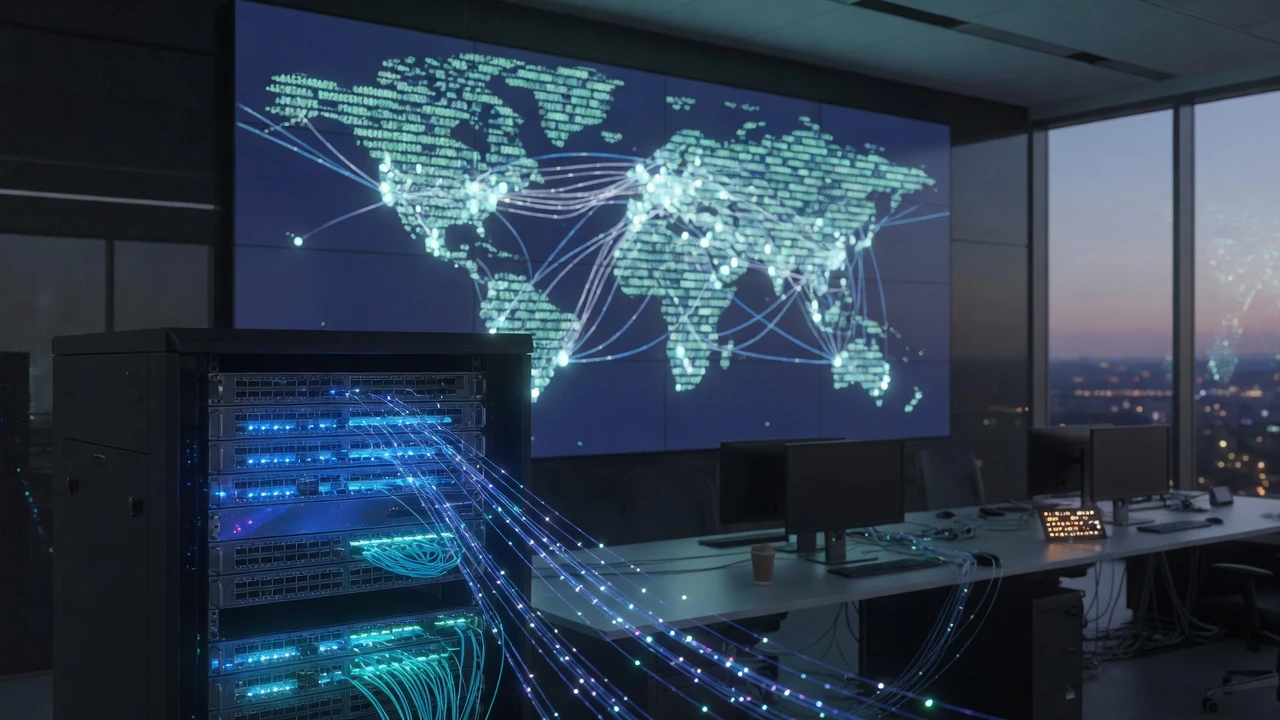
Self-driving laboratories are no longer a single-PI demo project. A multi-billion-dollar ecosystem of academic consortia, national labs, cloud-lab providers, and pharmaceutical SDL groups now defines the field.
| Organization | Platform | Focus |
|---|---|---|
| Acceleration Consortium | Toronto SDL Network | $200M+ academic-industry consortium standardizing SDL hardware, software, and data formats across 100+ labs |
| Lawrence Berkeley (A-Lab) | Autonomous Inorganic Synthesis | Robotic furnace + XRD pipeline that synthesized 41 novel inorganic materials in 17 days, validating ML-predicted candidates |
| Argonne National Lab | Polybot | Autonomous polymer and nanomaterial discovery platform, integrated with Argonne's APS X-ray beamline for in-situ characterization |
| IBM Research | RoboRXN + RXN for Chemistry | Cloud-based retrosynthesis planning paired with autonomous benchtop synthesis hardware in remote labs |
| Emerald Cloud Lab | ECL Cloud Lab | Remote-access biology and chemistry lab where scientists submit experiments via code (Symbolic Lab Language) instead of pipettes |
| Strateos | Robotic Cloud Lab | API-driven cloud lab serving pharma and biotech for high-throughput biology and screening workflows |
| Toronto Matter Lab | Ada / ChemOS | Open-source orchestration software and reference SDLs for thin-film, organic photovoltaic, and catalyst discovery |
Why LLMs Changed the Game in 2025-2026
For a decade, SDLs ran on classical Bayesian optimization — efficient when the search space was a clean numerical grid (temperature, concentration, time) but blind to the rich chemical and biological priors locked inside scientific literature. The arrival of LLM agents changed that. Coscientist, developed at Carnegie Mellon, paired GPT-4 with a robotic chemistry station and successfully planned and executed Suzuki–Miyaura and Sonogashira cross-coupling reactions from a natural-language goal. ChemCrow from EPFL gave an LLM access to retrosynthesis, reaction prediction, and lab-execution tools, performing end-to-end synthesis design rivalling expert chemists.
By 2026, the dominant pattern is hybrid: an LLM-driven planner reads protocols and literature, proposes a high-level experimental program, and hands quantitative parameter selection to a Bayesian optimizer that runs inside the loop. Frontier models — Claude Opus 4.7, GPT-5, Gemini Ultra 2.5, and open-weight scientific models like Galactica-2 — are increasingly fine-tuned on lab-protocol corpora, ELN entries, and reaction databases like Reaxys and CAS, making them genuinely competent collaborators rather than fancy autocomplete.
"The biggest gain from a self-driving laboratory is not speed alone. It is that every experiment teaches the system, every failure is a labeled data point, and the marginal cost of one more experiment falls toward the cost of the reagents. That changes what you can afford to ask."
What Self-Driving Labs Are Discovering
The 2026 application portfolio spans materials, chemistry, and biology. Five domains lead in commercial and scientific impact:
- Battery and energy materials: Solid-state electrolytes, sodium-ion cathodes, and electrocatalysts for green hydrogen are being mapped at unprecedented speed. Toyota Research Institute and the A-Lab have jointly published autonomous discovery of new lithium superionic conductors that took weeks instead of years.
- Photovoltaics and OLEDs: The Toronto Matter Lab's Ada platform optimizes spin-coated organic photovoltaic films with closed-loop spectroscopy, pushing power conversion efficiency in days of robot time rather than months of grad-student time.
- Drug discovery and process chemistry: Pharmaceutical SDLs at Pfizer, Merck, and AstraZeneca run autonomous high-throughput medicinal chemistry, scoring hundreds of analogs per week against ADMET and binding endpoints. Insilico Medicine's end-to-end AI-discovered preclinical pipeline relies heavily on SDL execution.
- Synthetic biology and protein engineering: Cloud labs from Strateos and Emerald, paired with Ginkgo Bioworks foundries, run autonomous DBTL (design–build–test–learn) cycles for engineered enzymes, mRNA constructs, and CRISPR screens at industrial throughput.
- Reticular chemistry and MOFs: Metal-organic frameworks for direct air capture, gas separation, and catalysis are being explored combinatorially — Northwestern, KAUST, and Berkeley each run SDLs that have produced previously unknown frameworks for carbon capture under realistic flue-gas conditions.
The Hard Problems Still Open
For all the progress, SDLs remain bounded by a handful of stubborn constraints that the field is actively working through.
First, generality. Most SDLs are exquisitely tuned to one workflow — a particular synthesis, a particular characterization. Reconfiguring hardware for a new chemistry can take weeks. Modular, interoperable hardware standards driven by the Acceleration Consortium and the Self-Driving Laboratory Working Group are the field's answer, but the long tail of bespoke instruments resists abstraction.
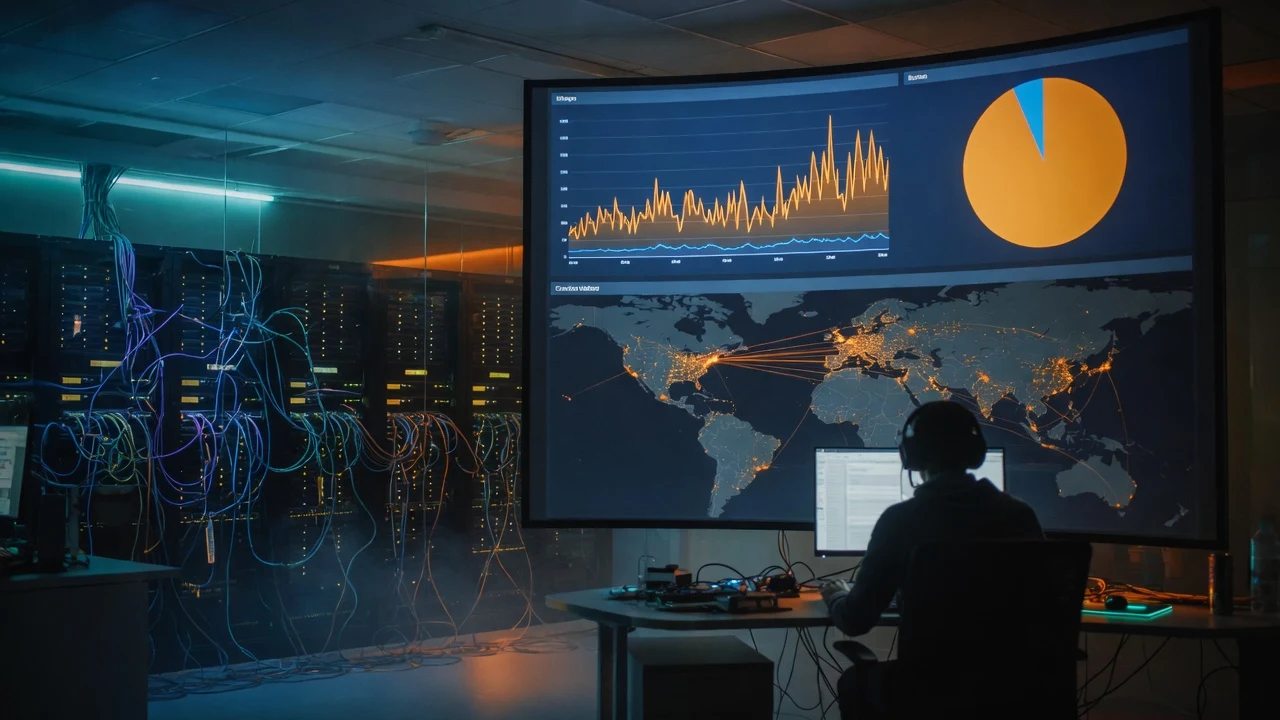
Second, characterization bandwidth. A robot can synthesize ten samples per hour but waiting on NMR, mass spec, or single-crystal XRD often blocks the loop. In-line, in-situ characterization — Raman probes mounted on reactors, UV-Vis flow cells, beamline-integrated SDLs at synchrotrons — is closing the gap, but instrument scheduling remains the rate-limiting step in many labs.
Third, data quality and FAIR-ness. SDLs only get smarter if their data is Findable, Accessible, Interoperable, and Reusable. Heterogeneous file formats, undocumented metadata, and proprietary instrument blobs still wreck downstream training. ELN and LIMS modernization, plus open standards like AnIML, SiLA 2, and Allotrope ADF, are slowly fixing the problem.
Fourth, reproducibility across labs. An optimum found at Toronto may not transfer to Berkeley because reagent purity, ambient humidity, and instrument calibration differ. Round-robin SDL benchmarks — running the same problem across multiple platforms — are emerging as the gold standard for trusting a robot-discovered result, much like multi-site clinical trials.
Fifth, safety and oversight. An autonomous chemistry lab can in principle synthesize hazardous compounds without a human looking. Safety planners screen proposed syntheses against restricted-substance lists, and dual-use review committees increasingly review SDL research programs. The OECD and several national funders have begun publishing autonomous-lab safety guidance that the field is in the early stages of adopting.
The Cloud Lab Model
A subtle but important branch of the SDL revolution is the cloud lab: a remote facility where scientists never touch hardware, but instead submit experiments through a programming API. Emerald Cloud Lab pioneered the idea with its Symbolic Lab Language (SLL), in which a chemist writes Mathematica-like code that the cloud lab compiles into robot instructions. Strateos offers a similar Python-based interface for biology workflows. Carnegie Mellon University runs the world's first academic cloud lab, the Cloud Lab at CMU, where undergraduates learn experimental science by writing code instead of pipetting.
Cloud labs lower the activation energy for autonomous experimentation dramatically. A startup with no wet lab can run rigorous chemistry or biology by paying per experiment, and large pharma can offload routine assays from busy on-site teams. In 2026, the cloud-lab market is projected to reach $1.4 billion in revenue, with rapid growth as more academic and industrial users move from "run it ourselves" to "run it on someone's robots."
A Practical SDL Roadmap for Research Leaders
- Start with the loop, not the robot. The single biggest predictor of SDL success is closing the data feedback loop end-to-end. A modest hardware setup with a tight loop beats a million-dollar robot dumped into a manual workflow.
- Pick a narrow optimization problem first. Spend the first six months on one workflow with a clear objective, fixed hardware, and well-defined success metric — then generalize.
- Pair Bayesian optimization with an LLM planner. The combination beats either alone: BO handles parameter tuning, the LLM handles literature synthesis, protocol design, and explaining results.
- Adopt open data formats from day one. AnIML, SiLA 2, ISA-Tab, and Allotrope ADF cost effort up front and save years of rework when you scale.
- Use cloud labs for spillover and prototyping. Emerald, Strateos, and university cloud labs let you de-risk before committing capital to in-house hardware.
- Plan governance early. Safety planners, dual-use review, and audit trails belong in the orchestration software from version one — they are very hard to retrofit.
A New Operating System for Science
For four hundred years, the unit of scientific progress has been the human researcher: read, hypothesize, experiment, observe, repeat. Self-driving laboratories do not abolish that loop — they delegate it, the way calculators delegated arithmetic and compilers delegated assembly code. The scientist becomes the architect of campaigns rather than the operator of pipettes, defining objectives, constraints, and stop conditions while the robot, the planner, and the optimizer collaborate to run the experiments.
In 2026, the gap between labs that have crossed into autonomy and labs that have not is becoming hard to close. A research group running a tight closed loop produces more high-quality data in a week than a manual lab does in a quarter, and that data compounds into better models, better priors, and better next-experiment choices. The deepest implication is not that we will discover materials and drugs faster — though we will. It is that the questions worth asking are about to expand, because the cost of asking them will fall by orders of magnitude. The age of autonomous science has arrived, and the labs leading it are no longer asking whether SDLs work. They are asking what they should discover first.