Massless Energy Storage in 2026: How Chalmers, Sinonus, and the Auto Industry Are Turning Car Bodies and Device Shells Into Structural Batteries
- Internet Pros Team
- July 20, 2026
- AI & Technology
Every battery you own is a passenger. It rides along inside your phone, your laptop, your car - adding weight, taking up space, and doing nothing but storing charge. The heavier the battery, the more energy it takes to haul it around, which is why a bigger battery in an electric car brings diminishing returns: some of that extra range is spent just carrying the extra cells. In 2026 one of the most elegant ideas in materials science is finally leaving the lab to fix that paradox: structural batteries, materials that bear a load and store electricity at the same time, so the frame of a thing becomes the battery itself. Researchers call the goal massless energy storage - not because the battery weighs nothing, but because it weighs nothing extra.
The Dead-Weight Problem
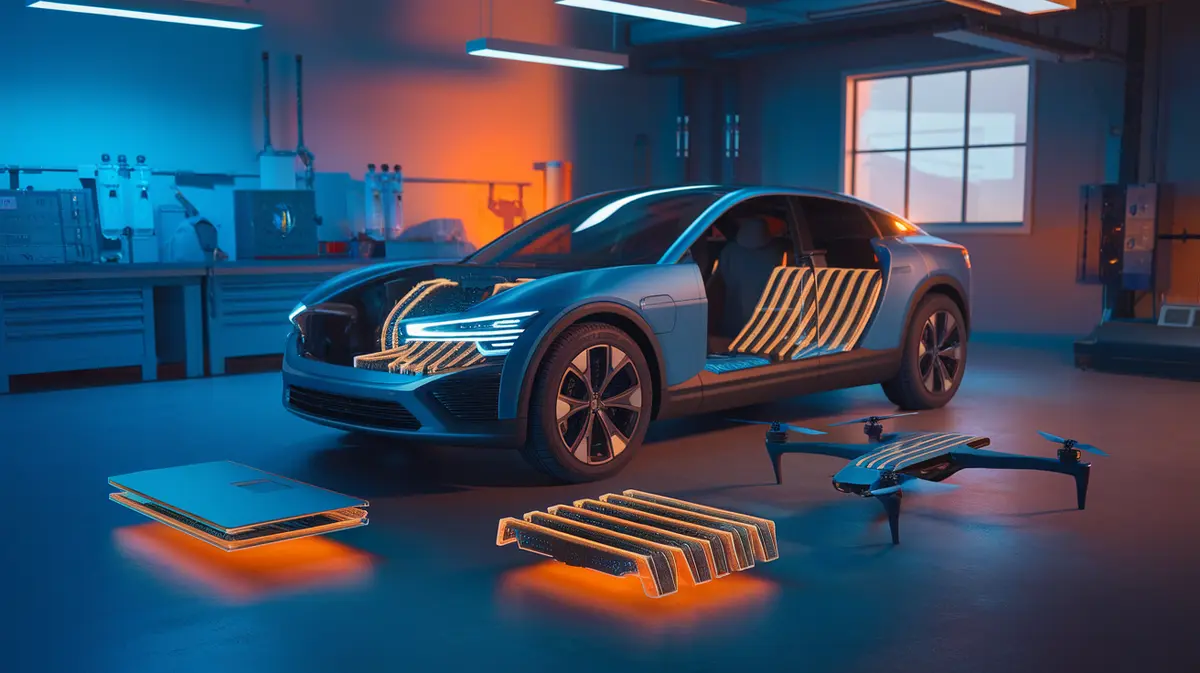
Think about what an electric car actually is: a strong body made of steel, aluminum, or carbon fiber, and - completely separate from it - a heavy slab of battery bolted to the floor. Both are heavy, and neither helps the other. The body carries the crash loads; the battery carries the charge. You are paying a weight penalty twice. The same is true of a drone that gives up half its lift capacity to a battery pack, or a satellite where every kilogram to orbit costs a fortune. The structural-battery idea asks a simple question: what if the body and the battery were the same material? Then the weight of the battery would effectively disappear, because the structure you already needed is now storing your energy for free.
"The best battery is the one you do not have to carry. If the wing, the chassis, or the phone case is also the cell, you stop paying the weight tax twice - and that changes the math for everything that moves."
Why Carbon Fiber Was Hiding a Battery All Along
The breakthrough rests on a quiet coincidence: carbon fiber, the stiff, light material already prized for making things strong, turns out to be a surprisingly good battery electrode. Carbon is what the anode of an ordinary lithium-ion battery is made from, and carbon fiber can both carry mechanical load and shuttle lithium ions. That means a single sheet of carbon fiber can do two jobs at once - hold the structure together and act as the negative electrode. Pair it with a lithium-coated fiber on the other side, separate the two with a special glass-fiber cloth, and glue the whole sandwich together with a resin that is not just a glue but also carries the ions. Suddenly the panel is a battery you can bolt to a car.
How a Structural Battery Is Built
A structural battery looks less like a cylindrical cell and more like a slab of laminate. Four ingredients make it work, each doing double duty.
1. Carbon-Fiber Anode
Ordinary structural carbon fiber that also stores lithium, carrying load and charge together. The stiffer and stronger the fiber, the better the panel performs as both beam and battery.
2. Coated-Fiber Cathode
A second fiber layer coated with a lithium compound, forming the positive electrode without giving up its structural role in the laminate.
3. Structural Separator
A thin glass-fiber cloth keeps the electrodes apart so they cannot short, while adding stiffness to the sandwich rather than dead weight.
4. Structural Electrolyte
The hardest part: a resin that both glues the composite stiff and conducts lithium ions. Normally those two demands fight each other, and taming that trade-off is the frontier of the field.
That last ingredient - the structural electrolyte - is where the whole discipline lives or dies. A good structural glue is rigid and locks everything in place; a good electrolyte is soft and lets ions swim freely. A structural battery needs a material that is somehow both at once, and every gain in stiffness tends to cost you ion flow. Cracking that compromise is exactly what the leading labs are racing to do.
Who Is Building It
This has moved from a physics curiosity to a funded engineering race, with universities and companies pushing it toward real products.
- Chalmers University of Technology - the Swedish group that defined the modern field, publishing structural battery composites with steadily rising stiffness and energy density and proving the carbon-fiber-as-electrode concept works.
- Sinonus - a Chalmers spin-out commercializing carbon-fiber structural energy storage, targeting satellites, drones, and Internet-of-Things devices where every gram saved is worth a premium.
- LG Energy Solution and major cell makers - established battery giants researching multifunctional and structural formats as the next lever for lightweighting once conventional cells hit their limits.
- Automakers and aerospace teams - carmakers and aircraft builders have publicly explored body panels, roofs, and floors that double as batteries, chasing range and payload without adding a separate pack.
- University and national labs - groups across the US, Europe, and Asia keep improving structural electrolytes, fiber coatings, and the manufacturing needed to make panels repeatably.
Conventional Pack vs Structural Battery
| Dimension | Conventional Battery Pack | Structural Battery |
|---|---|---|
| Role in the product | Dead weight, bolted on separately | The structure itself stores energy |
| Energy density (per kg of cell) | Very high, mature | Lower today, but replaces structure you needed anyway |
| System weight | Body plus battery, paid twice | One material does both jobs |
| Manufacturing maturity | Decades of scale, extremely refined | Early - lab panels and first pilots |
| Best near-term fit | Today’s EVs and electronics | Drones, satellites, gadgets where weight rules |
The Honest Trade-Offs
Structural batteries are not about to replace the slab under your car floor. Measured on their own, they store far less energy per kilogram than a modern lithium-ion cell - the trick is that they weigh nothing extra, not that they out-store a dedicated pack. The structural electrolyte still forces a painful compromise between stiffness and ion flow. Charging and discharging make the material swell and shrink slightly, which stresses a part that is also holding up a vehicle. Repair, crash safety, and recycling all get more complicated when the battery is the body. And manufacturing these laminates cheaply and repeatably at scale is still unsolved. This is a technology for places where weight is precious first, and mainstream everywhere else much later.
Why This Matters for Business
You will not buy a structural battery off a shelf in 2026, but the idea reframes how anything that moves gets designed. For drones and electric aircraft, turning the airframe into the battery can be the difference between minutes and hours of flight. For satellites, it strips launch mass at thousands of dollars per kilogram. For consumer devices, a laptop lid or phone frame that stores charge means thinner, lighter products with the same runtime. And for electric vehicles, even a modest structural contribution shaves weight that compounds into more range from less battery.
The strategic takeaway for technology leaders is that the line between "the thing" and "the battery that powers the thing" is starting to blur. The winners in weight-sensitive markets over the next decade will be the ones who stop treating energy storage as a component to bolt on and start treating it as a property of the material they build with. Massless energy storage is not science fiction anymore - it is an engineering race, and it is worth watching closely.
"For a century we designed the structure first and then found somewhere to hide the battery. The next century belongs to whoever can make the structure and the battery the same thing."
The battery has always been a passenger along for the ride. Structural batteries are the first serious attempt to make it earn its keep - to turn the walls, wings, and shells we already build into quiet reservoirs of energy. Whether the future is a carbon-fiber car roof, a self-powered drone wing, or a laptop that is its own battery, the message of 2026 is the same: the most efficient battery may be the one you can no longer point to, because it has become everything else.