Ultra-Wideband (UWB) in 2026: How Centimeter-Precise Radio From Apple, Samsung, Google, and the FiRa Consortium Is Powering Digital Car Keys, Secure Access, and Indoor Navigation
- Internet Pros Team
- June 15, 2026
- Networking & Security
For years your phone has known roughly where it is. GPS pins you to a sidewalk, Wi-Fi guesses your floor, and Bluetooth can tell that something is "nearby" - somewhere within a confusing ten-meter bubble. None of that is good enough to safely unlock your car, find a single tagged key in a couch cushion, or guide you to the exact shelf in a warehouse. In 2026, a quieter radio technology is closing that gap: Ultra-Wideband (UWB). Built into iPhones, Samsung Galaxy and Pixel phones, smartwatches, cars, and a growing wave of access readers, UWB measures distance and direction to within a few centimeters - and because it does it by timing the literal speed of light, it is far harder to fake. The result is a new layer of spatial awareness that is reshaping how we unlock, find, and navigate the physical world.
What Makes UWB Different From Bluetooth and NFC
The trick is in the name. Where Wi-Fi and Bluetooth pack their signals into narrow channels, UWB spreads extremely short radio pulses across a very wide band of spectrum - typically several gigahertz wide. Those nanosecond pulses act like a starter pistol: two UWB devices bounce timing signals back and forth and measure the time of flight down to fractions of a billionth of a second. Multiply that by the speed of light and you get distance - not a vague estimate from signal strength, but a hard, physics-based measurement.
That distinction matters enormously. Bluetooth and Wi-Fi infer proximity from how loud a signal seems, which a wall, a pocket, or a malicious amplifier can easily distort. UWB times reality itself, so it is both far more accurate and far more resistant to the relay attacks that have plagued keyless entry.
UWB (the ruler)
Measures exact distance and angle by timing short radio pulses - centimeter accuracy and a sense of direction, not just "nearby."
Bluetooth (the doorbell)
Great for low-power discovery and pairing, but estimates distance from signal strength, so it is easy to fool and accurate only to meters.
NFC (the touch)
Secure but demands physical contact at a couple of centimeters - you must tap. UWB works from across the room, hands-free.
Why 2026 Is UWB's Breakout Year
UWB is not new - the radio physics date back decades, and Apple shipped its first U1 chip years ago. What changed is the same thing that finally made every other wireless standard useful: ubiquity and interoperability. UWB radios now ship in flagship and mid-range phones from Apple, Samsung, and Google, in smartwatches and tags, and in cars from a long list of automakers. Just as important, the industry stopped building islands. The FiRa Consortium certifies that one company's UWB device can range with another's, and the Car Connectivity Consortium's Digital Key standard lets a phone act as a car key across brands. By 2026, UWB has crossed from an Apple-only party trick into a cross-vendor capability you can actually build products around.
"The magic of UWB is that it replaces guessing with measuring. Once a device knows exactly how far away you are and which direction you are facing, a whole category of interactions - unlock as I approach, point to share, guide me to the spot - stops being a gimmick and starts being reliable."
What UWB Actually Unlocks
| Use Case | The Old Way | With UWB (2026) |
|---|---|---|
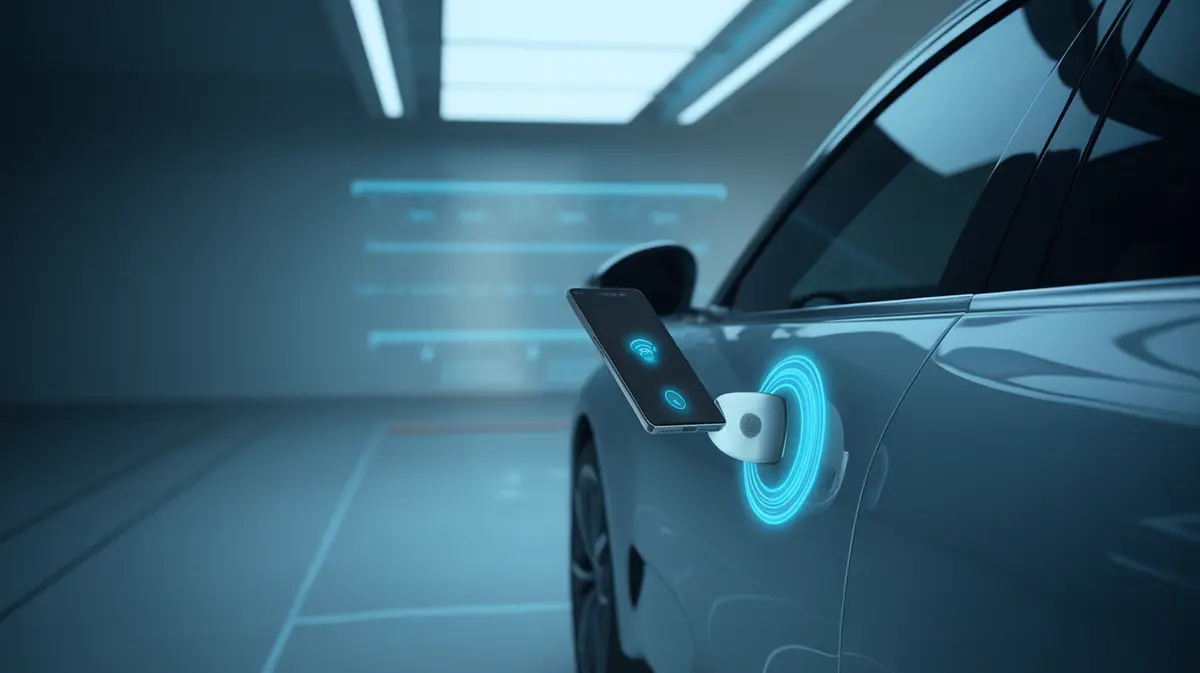
| Car keys | Fob in pocket; vulnerable to relay theft | Phone unlocks only when you are truly beside the car, and the door knows it is you |
| Finding lost items | Bluetooth beep, then a frustrating hunt | An on-screen arrow and distance guiding you to the exact spot |
| Building access | Tap a badge or fish out a card | Hands-free door unlock as you walk up, with the reader confirming you intended to enter |
| Indoor navigation | GPS dies indoors; blue dot drifts | Turn-by-turn guidance to a gate, shelf, or meeting room |
| Sharing & control | Pick from a long device list | Point your phone at the right speaker or TV and it jumps to the top |
The Security Story: Why Ranging Beats Relaying
The most consequential UWB use case is also the most security-sensitive: opening things. Traditional keyless entry is notoriously vulnerable to relay attacks, where thieves use two radios to extend the signal between a key inside your house and a car on the driveway, tricking the car into thinking the key is present. Because Bluetooth and older fobs only check that a signal is strong enough, a relayed signal sails through.
UWB shuts that door. Standardized as IEEE 802.15.4z with cryptographically protected secure ranging, it measures the genuine flight time of the pulse. A relay adds delay, and that delay is exactly what UWB is built to detect - the radio sees the extra nanoseconds and refuses to confirm proximity. You cannot fake being three feet from a car door when the math says you are three hundred feet away.
Where UWB Wins Today
- Secure, hands-free access. Cars, offices, and smart locks that open as you approach without you touching anything - and without the relay-attack risk of older systems.
- Spotlight-accurate finding. Trackers and tags you can walk directly to, instead of chasing a beep around a room.
- Indoor positioning at scale. Airports, hospitals, factories, and retail using fixed UWB anchors to navigate people and track high-value assets in real time.
- Intent-aware interactions. Because UWB knows direction, your phone can tell which device you are pointing at and act on it.
The Honest Trade-Offs
- It is not free power. UWB sips more energy than Bluetooth, so devices typically wake the UWB radio only when a Bluetooth link says something interesting is nearby - the two work as a team, not as rivals.
- Coverage is still spreading. Not every phone, lock, or car has a UWB radio yet, so experiences often fall back to Bluetooth or NFC for devices that lack it.
- Infrastructure costs money. Room-level indoor positioning needs fixed UWB anchors installed and surveyed - powerful, but a real deployment project, not a software toggle.
- Precise location is sensitive data. Centimeter tracking is a privacy responsibility; reputable implementations keep ranging on-device and require clear user intent before unlocking or sharing.
What This Means for Homeowners and Businesses
- Treat UWB as the new access standard. When you replace locks, readers, or fleet keys, ask whether they support UWB and Digital Key - it is the upgrade path that closes the relay-attack hole.
- Look for FiRa certification. Just as "Works with Matter" signals interoperability in the smart home, FiRa certification signals that UWB gear from different vendors will actually range together.
- Rethink the indoor blue dot. Venues that frustrate visitors with dead GPS - hospitals, campuses, large stores - now have a real fix in UWB wayfinding and asset tracking.
- Phones are becoming the universal key. The device everyone already carries can be the credential for the car, the office, and the front door, reducing cards, fobs, and the cost of reissuing them.
The Bottom Line
Ultra-Wideband will never trend the way a new AI model does, because its job is to disappear. You will not think about nanosecond pulse timing when your car door pops open as you reach for it, when an arrow walks you straight to a lost bag, or when a door simply knows you meant to come in. That invisibility is the goal. By replacing the old guesswork of signal strength with a hard, physics-based measurement of distance and direction, UWB turns "somewhere nearby" into "exactly here" - and does it with security that older radios cannot match.
The pieces have finally clicked into place: capable chips in mainstream phones, cross-vendor standards from FiRa and the Car Connectivity Consortium, and real products built on top. The smartphone in your pocket is quietly becoming a precise spatial sensor for the physical world, and in 2026 the things around you are starting to listen. The age of the approximate location is ending; the age of the exact one has begun.